This Plant Genetically Engineered Itself (So We Don't Have To)
TL;DR
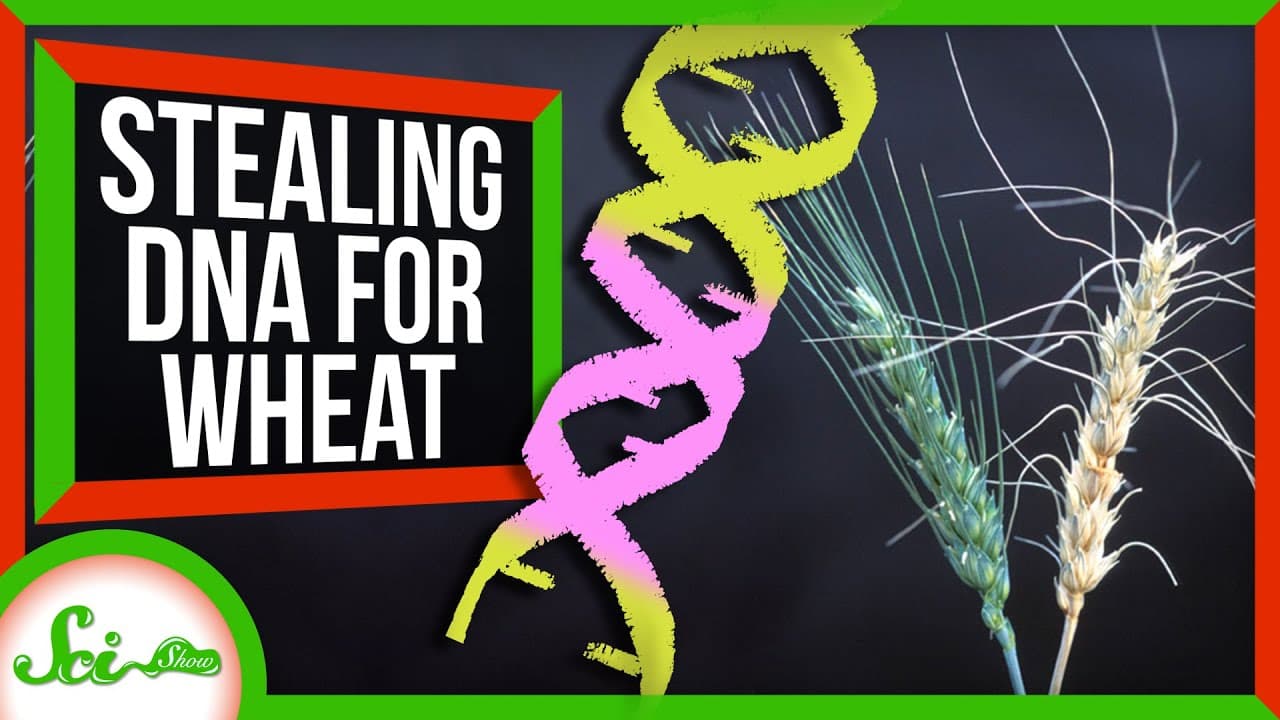
Scientists discover a protective gene in wild wheatgrass that originated from a fungus, aiding in resistance to a harmful fungal toxin in crops.
Transcript
Thanks to Brilliant for supporting this episode of SciShow. Go to Brilliant.orgscishow to check out their course on Math History. [♪ INTRO] It’s pretty fair to say that people love bread. And cookies, and pasta. And beer. So it’s unfortunate that billions of dollars worth of wheat, barley, and other grain go to waste every year due to a fungus call... Read More
Key Insights
- 🤕 Fusarium head blight (FHB) due to Fusarium graminearum causes significant crop waste annually.
- 🦻 Researchers identified the Fhb7 gene in wild wheatgrass, originating from a grass-inhabiting fungus, aiding in FHB resistance.
- 🌱 The gene transfer through horizontal gene transfer from fungus to plants revolutionizes crop protection strategies.
- 😵 Crossing Thinopyrum with commercial grain strains offers a natural solution to enhance crop resistance against fungal toxins.
- 🏑 The discovery highlights the importance of drawing from various fields for genetic engineering breakthroughs.
- 🎙️ Nature's genetic engineering through the Fhb7 gene provides a promising future for crop sustainability.
- 🎙️ Researchers aim to identify similar genes to strengthen crop resistance against FHB.
Install to Summarize YouTube Videos and Get Transcripts
Explore YouTube Video Summarizer or Get YouTube Transcript Extractor
Questions & Answers
Q: How does the fungus Fusarium graminearum impact crops?
Fusarium graminearum produces toxins causing Fusarium head blight (FHB), resulting in billions of dollars in crop waste annually.
Q: What protective gene was identified in wild wheatgrass to combat FHB?
Scientists discovered the Fhb7 gene in Thinopyrum elongatum, a wild wheatgrass species, that can break down the harmful fungal toxins before they cause damage.
Q: How did the Fhb7 gene originate in plants?
The Fhb7 gene's origin is traced back to a gene in the fungal genus Epichloë, indicating a transfer through horizontal gene transfer around 5 million years ago.
Q: How can researchers utilize the Fhb7 gene for crop improvement?
The Fhb7 gene offers a natural solution to crop resistance against FHB, as researchers can cross-breed Thinopyrum with commercial grain strains to enhance resistance.
Summary & Key Takeaways
-
Fungus Fusarium graminearum causes billions in crop waste due to toxins leading to Fusarium head blight (FHB).
-
Researchers identify Fhb7 gene in wild wheatgrass, originating from a grass-inhabiting fungus, that breaks down FHB toxins.
-
Discovery showcases a natural genetic engineering success, offering a solution to crop resistance against FHB.
Read in Other Languages (beta)
Share This Summary 📚
Summarize YouTube Videos and Get Video Transcripts with 1-Click
Try YouTube Summary with ChatGPT & Claude or YouTube Transcript Generator
Explore More Summaries from SciShow 📚


Summarize YouTube Videos and Get Video Transcripts with 1-Click
Try YouTube Summary with ChatGPT & Claude or YouTube Transcript Generator