How Does Smoking Damage Our Lungs Over Time?
TL;DR
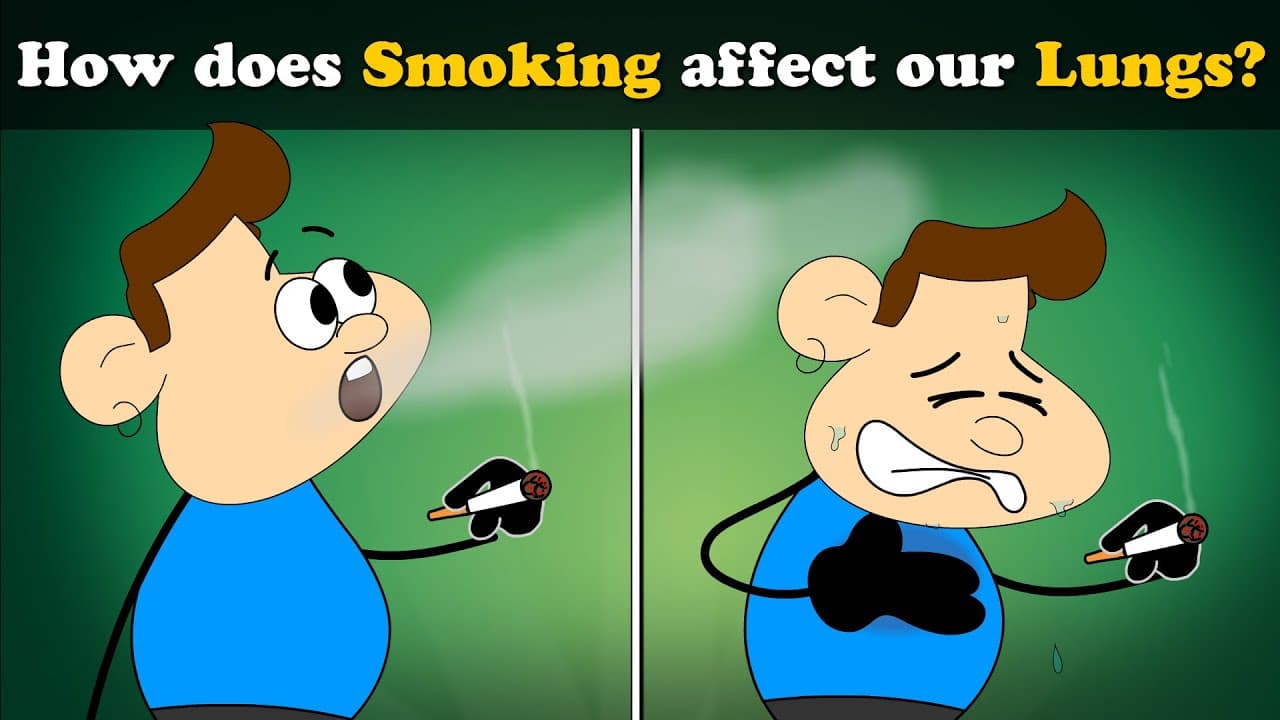
Smoking damages the lungs by introducing around 4,000 harmful chemicals that cause bronchitis, emphysema, and lung cancer. It leads to swelling of the bronchial tubes, excessive mucus production, and blockage of airflow, ultimately resulting in chronic obstructive pulmonary disease (COPD), which is irreversible and incurable.
Transcript
It's AumSum Time. What happens to our Lungs when we Smoke? They turn colorful. Nooo. Whenever we smoke cigarettes, we inhale a mix of about 4000 harmful chemicals. These chemicals cause swelling of bronchial tubes present in our lungs. Thus resulting in excess production of mucus. Also, they damage hair-like projections called cilia. Whose function... Read More
Key Insights
- 🫁 Smoking introduces about 4000 harmful chemicals to lungs, causing bronchitis and mucus production.
- 🥺 Damage to cilia from smoking leads to persistent coughing and bronchial tube blockage.
- 🚬 Alveoli damage from smoking reduces oxygen intake, causing emphysema, part of COPD.
- 💁 Chronic bronchitis and emphysema collectively form COPD, an irreversible condition due to smoking.
Install to Summarize YouTube Videos and Get Transcripts
Explore YouTube Video Summarizer or Get YouTube Transcript Extractor
Questions & Answers
Q: How does smoking affect the bronchial tubes in our lungs?
Smoking causes bronchial tube swelling and clogs them with excess mucus due to damage to cilia, resulting in chronic bronchitis with persistent coughing.
Q: What is the impact of smoking on the tiny air sacs in our lungs known as alveoli?
Smoking damages alveoli, reducing oxygen intake into the blood and leading to a condition called emphysema, which is part of COPD and irreversible.
Q: Can smoking lead to lung cancer, and how does it happen?
Yes, smoking can damage the DNA in bronchial tube and alveoli cells, potentially leading to the development of lung cancer over time.
Summary & Key Takeaways
-
Smoking cigarettes introduces harmful chemicals to lungs, causing bronchial tube swelling and excess mucus production.
-
Damage to cilia leads to mucus buildup in bronchial tubes, resulting in persistent coughing and chronic bronchitis.
-
Chemicals also harm alveoli, reducing oxygen intake and leading to emphysema, a form of COPD.
Read in Other Languages (beta)
Share This Summary 📚
Summarize YouTube Videos and Get Video Transcripts with 1-Click
Try YouTube Summary with ChatGPT & Claude or YouTube Transcript Generator
Explore More Summaries from It's AumSum Time 📚






Summarize YouTube Videos and Get Video Transcripts with 1-Click
Try YouTube Summary with ChatGPT & Claude or YouTube Transcript Generator