Why Do You Fall Backwards When a Bus Accelerates?
TL;DR
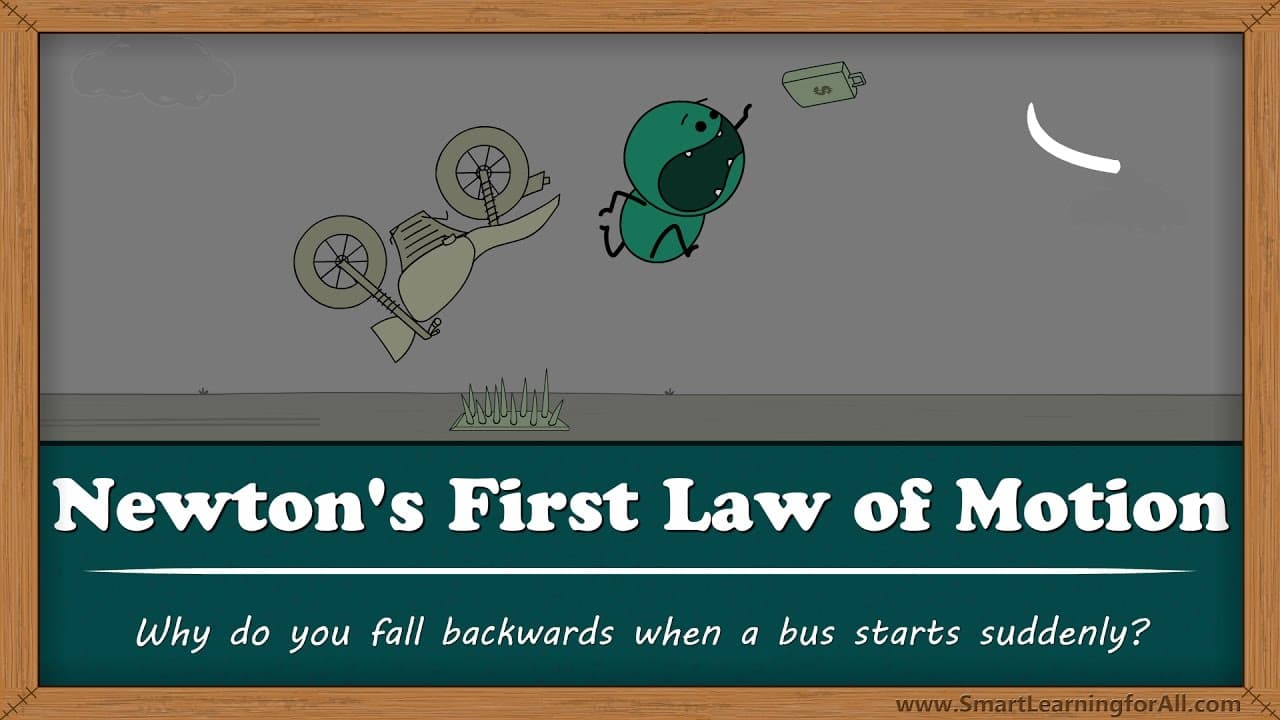
You fall backwards when a bus accelerates due to inertia, which is the tendency of an object to resist changes in its state of motion. While your lower body moves forward with the bus, your upper body tends to stay at rest, causing you to lean backward. This phenomenon is explained by Newton's first law of motion.
Transcript
Topic: Newton's First Law of Motion. Why do you fall backwards when a bus starts suddenly? Did you observe that the bag fell when brakes were applied? Do you know why this happened? This happened because of inertia. Inertia is the tendency of a body to be in a state of rest or in a state of motion. Newton's first law of motion defines inertia. It s... Read More
Key Insights
- 😣 Inertia is the resistance of objects to changes in motion or rest, as described by Newton's first law of motion.
- 🧑🏭 Objects tend to maintain their current state unless acted upon by external forces, which explains why a bag falls during sudden changes in speed.
- 🥺 Inertia of motion causes objects in motion to continue moving even when external forces try to stop them, leading to falls or spills.
- 😣 Similarly, inertia of rest causes objects at rest to resist sudden movements, resulting in falls or disruptions when acceleration occurs.
- 👨💼 Understanding inertia can help explain common observations like why we fall backward when a bus suddenly accelerates.
- 👮 Newton's first law of motion provides the foundation for understanding inertia and its impact on objects in motion.
- 🖐️ The concept of inertia plays a crucial role in various aspects of physics and everyday experiences involving motion and stability.
Install to Summarize YouTube Videos and Get Transcripts
Explore YouTube Video Summarizer or Get YouTube Transcript Extractor
Questions & Answers
Q: What is inertia, and how does it relate to Newton's first law of motion?
Inertia is an object's resistance to changes in its state of motion or rest. Newton's first law states that objects will remain still or in motion unless acted upon by an external force, which inertia helps explain.
Q: Why does a bag fall when brakes are applied suddenly on a moving bike?
When brakes are applied, the bike stops but the bag wants to maintain its forward motion due to inertia of motion, causing it to fall as it resists the sudden change in speed.
Q: Why does the bag fall again when the bike is accelerated suddenly after being stationary?
The bag falls again because it resists the sudden change from rest to motion, due to inertia of rest. While the bike accelerates forward, the bag remains at rest before falling down.
Q: Why do we fall backwards when a bus starts moving suddenly?
Our upper body tends to stay at rest as the lower body moves with the bus, causing a temporary imbalance due to inertia and leading to the sensation of falling backward.
Summary & Key Takeaways
-
Newton's first law of motion defines inertia as the tendency for objects to remain in their current state of rest or motion unless acted upon by an external force.
-
Inertia explains why objects fall or move when external forces like acceleration or deceleration are applied.
-
Falling backward when a bus starts suddenly is due to inertia, as the lower body moves with the bus while the upper body resists motion.
Read in Other Languages (beta)
Share This Summary 📚
Summarize YouTube Videos and Get Video Transcripts with 1-Click
Try YouTube Summary with ChatGPT & Claude or YouTube Transcript Generator
Explore More Summaries from It's AumSum Time 📚






Summarize YouTube Videos and Get Video Transcripts with 1-Click
Try YouTube Summary with ChatGPT & Claude or YouTube Transcript Generator