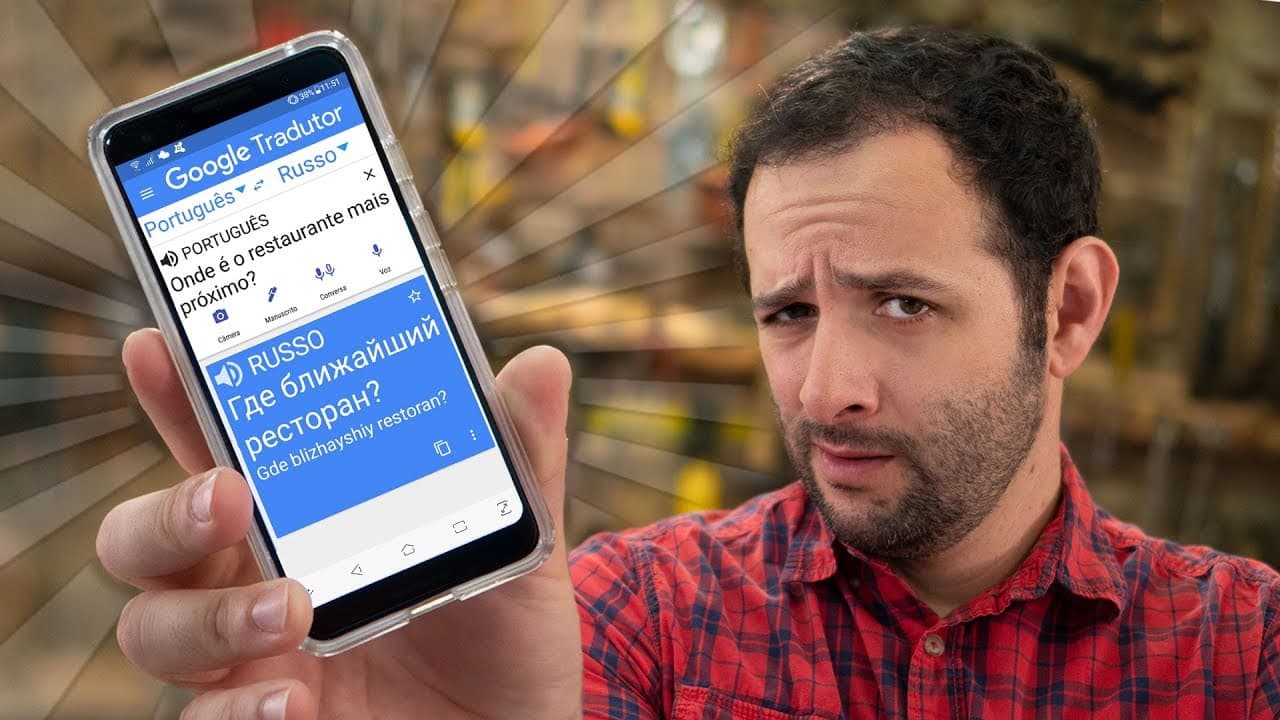
Can You Speak Russian Using Google Translate?
TL;DR
You can have basic conversations in Russian, Chinese, and German using Google Translate. The app supports over 100 languages, leveraging a vast amount of data to improve translation accuracy. However, translations often go through English as an intermediary, which can affect the quality depending on the language pair.
Transcript
no Brazil Argentina for me ever - oh gee - fighting tough Azam acquisitive food - what do you mean turkey mountain view massage - gugu on a California yeah keeping jishnu moving taro soup recipe in such Canseco V virus linguist young Gary they offer for some tests reconcile converse aqua kinky followmolly no completa means differential português So... Read More
Key Insights
- Google Translate supports over 100 languages, covering 99% of online users.
- Translations often pass through English, especially for languages with less direct translation data.
- The system uses neural networks similar to the human brain to improve translation accuracy.
- Low-resource languages benefit from being trained alongside high-resource languages.
- Google Translate processes around 140 billion words daily, focusing on improving existing language quality.
- The app uses technology to identify and translate text from images, considering color and font shape.
- Language barriers are a significant obstacle for internet users, with 50% of content in English.
- Google invests in breaking language barriers to make the internet more accessible globally.
Install to Summarize YouTube Videos and Get Transcripts
Explore YouTube Video Summarizer or Get YouTube Transcript Extractor
Questions & Answers
Q: How does Google Translate handle low-resource languages?
Google Translate improves low-resource languages by training them alongside high-resource languages. This method allows the system to leverage the extensive data available for well-documented languages to enhance the translation quality of languages with less direct data. The process mimics human brain patterns, using neural networks to understand and translate effectively.
Q: Why do translations often go through English in Google Translate?
Translations frequently pass through English because it is a well-documented language with abundant data available online. For many language pairs, especially those with less direct translation data, using English as an intermediary helps Google Translate find more reliable translation paths, improving overall accuracy despite potential quality loss in some cases.
Q: What technology does Google Translate use for image translation?
Google Translate uses neural networks to perform image translation. The system identifies text by analyzing colors and font shapes, distinguishing letters from their backgrounds. This process, called materiality, helps the app recognize and translate text accurately from images, enhancing its utility for users needing translation from visual content.
Q: What role does data play in Google Translate's accuracy?
Data plays a crucial role in Google Translate's accuracy, as the app processes around 140 billion words daily. By continuously analyzing and learning from this vast data pool, Google Translate improves its language models, enhancing translation quality. The abundance of data, especially for high-resource languages, helps refine translations and expand language support.
Q: How does Google Translate address the language barrier on the internet?
Google Translate aims to break language barriers by supporting over 100 languages, making the internet more accessible to non-English speakers. With 50% of online content in English, the app helps users understand and interact with content in different languages, addressing a significant obstacle for global internet users and promoting digital inclusivity.
Q: What challenges does Google Translate face with language translation?
One challenge Google Translate faces is the reliance on English as an intermediary for many language pairs, which can affect translation quality. Additionally, languages with limited data pose difficulties in achieving high accuracy. The app continuously works to improve by training low-resource languages alongside high-resource ones, leveraging neural networks to enhance its capabilities.
Q: How does Google Translate mimic human brain patterns?
Google Translate uses neural networks that function similarly to human brain patterns. These networks consist of millions of neuron-like layers that process and learn from language data. By mimicking the way humans understand and interpret languages, Google Translate enhances its translation accuracy, especially when dealing with complex language structures and limited data.
Q: Why is breaking language barriers important for Google?
Breaking language barriers is crucial for Google as it aligns with their goal of making information universally accessible. With only 20% of the global population having English skills, overcoming language barriers allows more people to access and benefit from online content. This effort promotes inclusivity and helps users engage with the internet more effectively, regardless of their native language.
Summary & Key Takeaways
-
Google Translate can facilitate basic conversations in languages like Russian, Chinese, and German. It supports over 100 languages and processes vast amounts of data to enhance translation quality. However, many translations are routed through English, affecting the accuracy for some language pairs.
-
The app employs neural networks to mimic human brain patterns, improving its ability to translate languages with limited direct data. By training low-resource languages alongside high-resource ones, Google Translate enhances its overall performance.
-
Google Translate also offers image translation by recognizing text through analyzing color and font shape. This feature, along with breaking language barriers, aims to make the internet more accessible to non-English speakers, addressing a significant challenge for global users.
Read in Other Languages (beta)
Share This Summary 📚
Summarize YouTube Videos and Get Video Transcripts with 1-Click
Try YouTube Summary with ChatGPT & Claude or YouTube Transcript Generator
Explore More Summaries from Manual do Mundo 📚

Summarize YouTube Videos and Get Video Transcripts with 1-Click
Try YouTube Summary with ChatGPT & Claude or YouTube Transcript Generator