What Are the Biggest Geopolitical Mistakes by the US, China, and ASEAN?
TL;DR
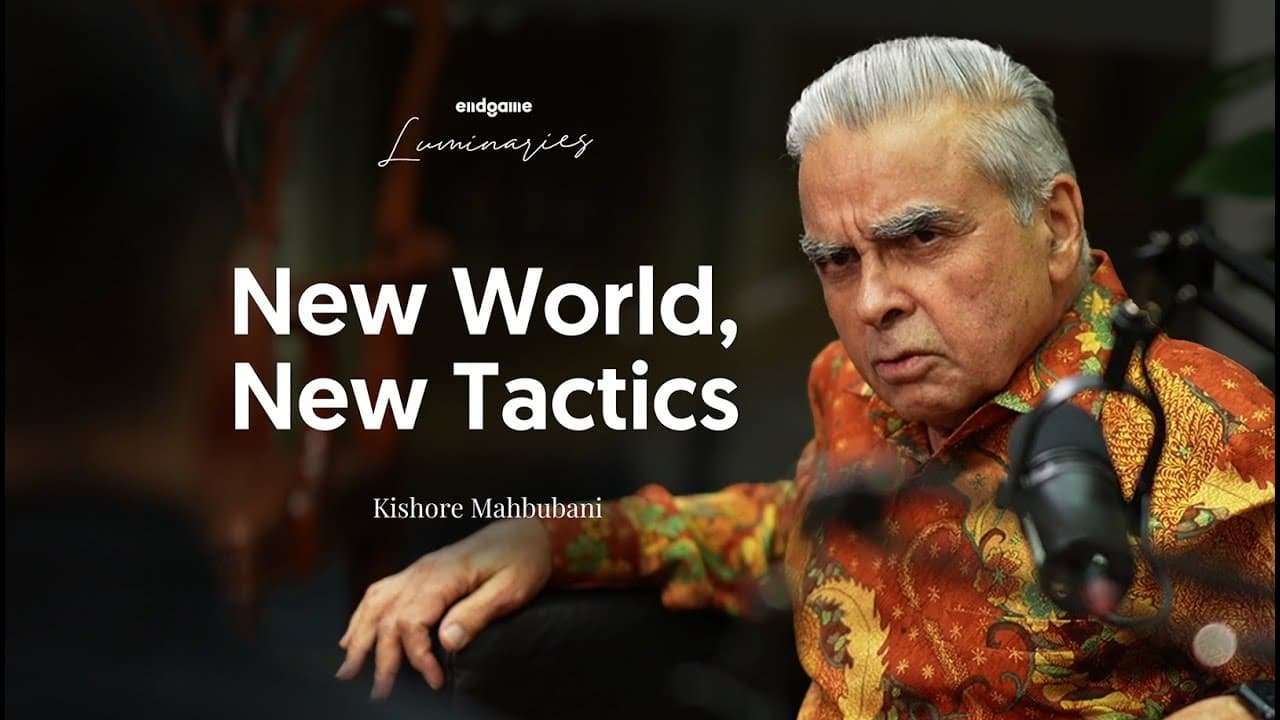
The biggest geopolitical mistakes include the West's failure to engage constructively with Russia post-Cold War, leading to resentment and conflict. Kishore Mahbubani emphasizes that Asia must reject Western pessimism and embrace optimism, while advocating for strengthened multilateral institutions like the UN. He calls for a reformed Security Council that includes emerging powers and warns that antagonizing China could create an 'angry dragon' detrimental to regional stability.
Transcript
In life, there are lots of paradoxical truths. One of the paradoxical truths that has been true for 2 ,000 years. If you want to enjoy peace, prepare for war. It is very easy for us in Asia to become infected by Western pessimism. What do you wish from the incoming leadership of Indonesia for purposes of strengthening the centrality of ASEAN? Well,... Read More
Key Insights
- Kishore Mahbubani highlights the importance of preparing for war to enjoy peace, a paradoxical truth that has been relevant for 2,000 years.
- He criticizes Western pessimism and urges Asia to project optimism, emphasizing the significance of geopolitical competence in maintaining peace.
- Mahbubani discusses the Ukraine and Gaza wars, attributing them to geopolitical incompetence and highlighting the contrasting impacts on the US, Europe, and China.
- He advocates for the strengthening of multilateral institutions, particularly the United Nations, and suggests that the US should support these to constrain future dominant powers like China.
- Mahbubani argues for a reformation of the UN Security Council to include emerging powers like India, reflecting the current global power dynamics.
- He expresses concern over the lack of long-term strategic thinking in the West, attributing it to the absence of leaders with experience in the horrors of war.
- Mahbubani sees the rise of China as inevitable and criticizes Western attempts to stop it, cautioning against creating an 'angry dragon' that could destabilize Asia.
- He emphasizes ASEAN's role as a model of multilateral cooperation and urges Southeast Asia to assert its agency in global geopolitics.
- More videos with Kishore Mahbubani:
Install to Summarize YouTube Videos and Get Transcripts
Explore YouTube Video Summarizer or Get YouTube Transcript Extractor
Questions & Answers
Q: What is Kishore Mahbubani's view on the paradoxical truth of peace?
Mahbubani emphasizes the paradoxical truth that to enjoy peace, one must prepare for war, a concept that has been relevant for over 2,000 years. He believes that having military expenditures does not necessarily lead to war, as well-armed states like the US and China understand that nuclear conflict would be a lose-lose proposition.
Q: How does Mahbubani view the impact of the Ukraine and Gaza wars?
Mahbubani views the Ukraine and Gaza wars as results of geopolitical incompetence. He believes the Ukraine war has been a setback for Europe, Russia, and China, but a positive for the US, as it has increased European dependency on American security. Conversely, he sees the Gaza war as a negative for the US due to its impact on America's moral standing.
Q: What does Mahbubani suggest about multilateral institutions?
Mahbubani advocates for the strengthening of multilateral institutions, particularly the United Nations, to manage global affairs effectively. He suggests that the US should support these institutions to constrain future dominant powers like China. He believes multilateralism is essential in a global village and criticizes American policies that have weakened these frameworks.
Q: What are Mahbubani's thoughts on reforming the UN Security Council?
Mahbubani argues for reforming the UN Security Council to include emerging powers like India, reflecting the current global power dynamics. He believes the Council should not just include the great powers of yesterday but also those of today and tomorrow. He suggests that the UK could give up its seat to India, acknowledging the changing global landscape.
Q: How does Mahbubani view the lack of long-term strategic thinking in the West?
Mahbubani attributes the lack of long-term strategic thinking in the West to the absence of leaders with experience in the horrors of war. He notes that past leaders like Kissinger and Nixon had such experience, which informed their strategic decisions. He warns that the West's inability to adapt to a changing world makes it more dangerous.
Q: What is Mahbubani's stance on China's rise?
Mahbubani sees China's rise as inevitable and criticizes Western attempts to stop it, warning against creating an 'angry dragon' that could destabilize Asia. He believes China's rise will be determined by internal forces, and external efforts to halt it are unwise. He emphasizes that Asia should voice concerns about Western policies that antagonize China.
Q: What role does Mahbubani attribute to ASEAN in global geopolitics?
Mahbubani emphasizes ASEAN's role as a model of multilateral cooperation and a living laboratory for managing a multi-civilizational, multipolar, and multilateral world. He urges Southeast Asia to assert its agency in global geopolitics and to actively communicate its success story to the world, promoting strategic harmony and cooperation.
Q: What does Mahbubani suggest for Indonesia's role in ASEAN?
Mahbubani suggests that Indonesia should take ownership of ASEAN's success story and act as its chief spokesman. He believes Indonesia, as the largest ASEAN member, should actively market ASEAN's achievements globally and emphasize its principles of consultation and consensus. He sees Indonesia playing a crucial role in strengthening ASEAN's centrality.
Summary & Key Takeaways
-
Kishore Mahbubani discusses the paradox of preparing for war to maintain peace and criticizes Western pessimism, urging Asia to embrace optimism. He highlights the geopolitical competence of Southeast Asia in maintaining peace, contrasting it with the incompetence seen in the Ukraine and Gaza conflicts.
-
He advocates for stronger multilateral institutions, particularly the UN, and suggests that the US should support these frameworks to constrain future dominant powers like China. Mahbubani calls for a reformation of the UN Security Council to reflect current global power dynamics, including emerging powers like India.
-
Mahbubani criticizes the lack of long-term strategic thinking in the West, attributing it to the absence of experienced leaders. He warns against creating an 'angry dragon' by antagonizing China and emphasizes ASEAN's role as a model of multilateral cooperation, urging Southeast Asia to assert its agency in global geopolitics.
Read in Other Languages (beta)
Share This Summary 📚
Summarize YouTube Videos and Get Video Transcripts with 1-Click
Try YouTube Summary with ChatGPT & Claude or YouTube Transcript Generator
Explore More Summaries from Gita Wirjawan 📚




Summarize YouTube Videos and Get Video Transcripts with 1-Click
Try YouTube Summary with ChatGPT & Claude or YouTube Transcript Generator