Which are more dangerous: sharks or humans? - 6 Minute English
TL;DR
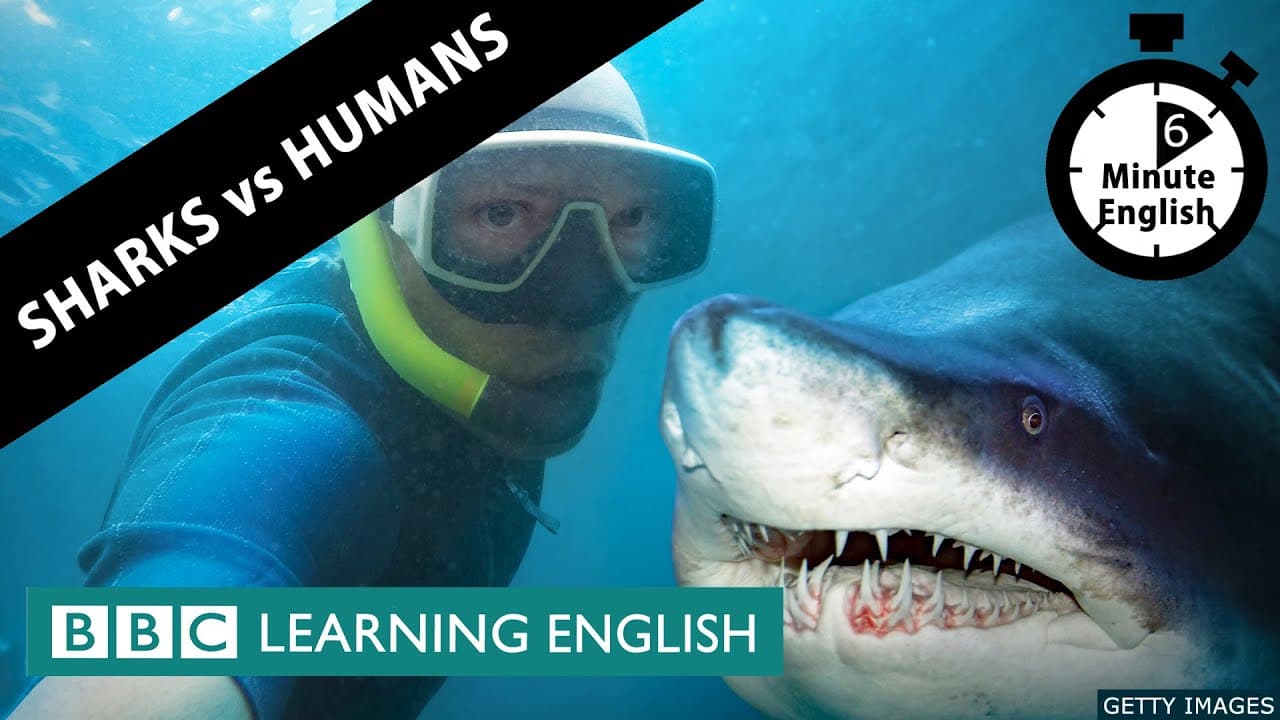
Humans kill more sharks than sharks kill humans.
Transcript
Hello. This is 6 Minute English from BBC Learning English. I'm Sam. And I'm Rob. Now, on Friday the 29th of June 1975, movie posters appeared in cinemas all over the USA with the now notorious words: 'You'll never go in the water again'. So, do you know which movie was being promoted, Sam? Yes, I think it was 'Jaws' - Steven Spielberg's infamous ho... Read More
Key Insights
- The movie 'Jaws' significantly increased public fear of sharks, portraying them as vengeful creatures, which is not based on factual behavior.
- Sharks are often misunderstood; most shark attacks on humans are cases of mistaken identity, not intentional predation.
- The annual global death toll from shark bites is low, averaging around four, compared to over 100 million sharks killed by humans each year.
- Sharks are apex predators, meaning they are at the top of the ocean food chain with no natural predators of their own.
- Sharks have evolved over 400 million years, maintaining a design that includes a cartilaginous skeleton for agility and flexibility.
- The practice of finning, where sharks' fins are cut off for soup, contributes to the endangerment of many shark species.
- There are approximately 530 different species of sharks, ranging from the giant great white to the tiny dwarf lantern shark.
- Misconceptions about sharks, fueled by media and movies, contribute to their negative image despite their ecological importance.
Install to Summarize YouTube Videos and Get Transcripts
Explore YouTube Video Summarizer or Get YouTube Transcript Extractor
Questions & Answers
Q: How did the movie 'Jaws' impact public perception of sharks?
'Jaws' significantly increased public fear of sharks by portraying them as vengeful creatures that intentionally attack humans. This portrayal is not based on factual behavior, as most shark attacks result from mistaken identity. The film's depiction has contributed to a lasting negative image of sharks.
Q: What is the reality of shark attacks on humans?
Shark attacks on humans are rare and usually occur due to mistaken identity, where sharks confuse humans for their usual prey. The annual global death toll from shark bites is low, averaging around four. Sharks do not intentionally prey on humans, contrary to popular belief fueled by media.
Q: Why are sharks considered apex predators?
Sharks are considered apex predators because they are at the top of the ocean food chain and have no natural predators of their own. This status allows them to play a crucial role in maintaining the balance of marine ecosystems by controlling the populations of other marine species.
Q: How have sharks evolved over millions of years?
Sharks have evolved over 400 million years, maintaining a design that includes a cartilaginous skeleton, which provides agility and flexibility. This evolutionary design allows them to thrive in their ocean environment, making them efficient predators and vital components of marine ecosystems.
Q: What are the threats to shark populations today?
Shark populations face significant threats from overfishing and the practice of finning, where sharks' fins are cut off for soup, leaving them to die. These practices have led to the endangerment of many shark species, highlighting the need for conservation efforts to protect these crucial marine predators.
Q: How diverse are shark species?
There are approximately 530 different species of sharks, showcasing incredible diversity. This range includes giants like the great white shark and tiny species like the dwarf lantern shark, each adapted to their unique ecological niche within marine environments.
Q: What misconceptions exist about sharks?
Misconceptions about sharks, often perpetuated by media and movies, include the belief that they are vengeful and intentionally attack humans. These misconceptions overshadow their ecological importance and role as apex predators, contributing to their negative image and hindering conservation efforts.
Q: Why is shark conservation important?
Shark conservation is crucial because sharks play a vital role in maintaining marine ecosystem balance as apex predators. Protecting them from overfishing and finning practices ensures the health of oceanic food chains and biodiversity, highlighting the need for increased awareness and conservation initiatives.
Summary & Key Takeaways
-
The 1975 film 'Jaws' created a lasting fear of sharks, portraying them as vengeful predators, which is far from reality. Sharks rarely attack humans intentionally; most incidents are cases of mistaken identity. Humans, however, kill millions of sharks annually, endangering many species.
-
Sharks are apex predators, perfectly evolved for their ocean environment over millions of years. They have a cartilaginous skeleton that provides agility and flexibility. Despite their ecological importance, overfishing and finning practices threaten their survival.
-
There are around 530 species of sharks, showcasing incredible diversity. Misconceptions about sharks, often perpetuated by media, overshadow their role in marine ecosystems. Understanding and conservation are crucial to protect these vital ocean inhabitants from extinction.
Read in Other Languages (beta)
Share This Summary 📚
Summarize YouTube Videos and Get Video Transcripts with 1-Click
Try YouTube Summary with ChatGPT & Claude or YouTube Transcript Generator
Explore More Summaries from BBC Learning English 📚

Summarize YouTube Videos and Get Video Transcripts with 1-Click
Try YouTube Summary with ChatGPT & Claude or YouTube Transcript Generator