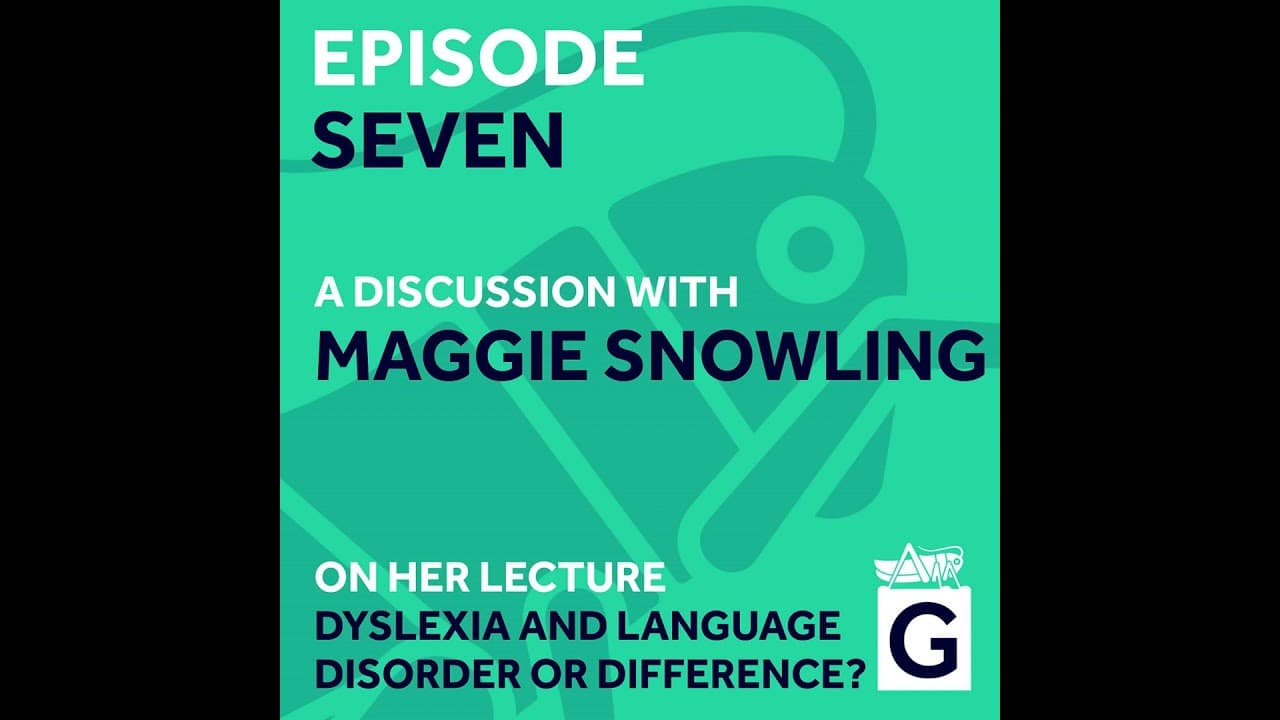
S02 Ep.7 - Dyslexia and Language - Disorder or Difference?, Maggie Snowling CBE
TL;DR
- Dyslexia is a neurodevelopmental disorder affecting reading fluency, with genetic factors, different manifestations in various languages, and potential interventions explored.
Transcript
hello and welcome my name is Richard Taver and I am your host of any further questions welcome to episode s of Series 2 joining me today is Professor Maggie snowling Maggie is a developmental psychologist specializing in language difficulties such as the topic of today's conversation dyslexia she is currently an emitus professor in Psychology at th... Read More
Key Insights
- ❓ Dyslexia is a neurodevelopmental disorder impacting reading and writing fluency, often observed with language difficulties.
- 🖐️ Genetic factors play a role in dyslexia, with demonstrated heritability and ongoing research into associated gene variations.
- ✳️ Language disorders, like developmental language disorder, share risk factors with dyslexia and increase the risk of reading difficulties.
- ❓ Dyslexia manifests differently in various languages, with English's irregular orthography posing unique challenges.
- 🔨 Assistance programs like the Nelly program and AI tools offer support for individuals with dyslexia, but response to interventions varies.
- 🧠 Myths surrounding dyslexia, like brain damage or visual stress, need dispelling through awareness and accurate information.
- 🧑🏫 Government support, screening tools, and specialized teacher training are crucial for early identification and intervention for dyslexia.
Install to Summarize YouTube Videos and Get Transcripts
Explore YouTube Video Summarizer or Get YouTube Transcript Extractor
Questions & Answers
Q: What are the key differences between dyslexia and developmental language disorder?
Dyslexia primarily affects reading fluency, while language disorder hampers spoken language acquisition, increasing the risk of reading problems in children. They share risk factors and the importance of early detection.
Q: How does dyslexia manifest in different languages, and what challenges arise in learning to read English compared to other languages?
Dyslexia manifests differently in various languages due to unique writing systems. English's irregular orthography poses challenges in establishing phoneme-grapheme mappings, affecting reading accuracy, while other languages may focus on reading rate.
Q: What are some common myths about dyslexia, and how can they be debunked to promote awareness?
Myths like dyslexia being brain damage or related to visual stress need debunking. Understanding the genetic basis and cognitive underpinnings can dispel misconceptions, promoting accurate information on dyslexia.
Q: How can AI and assistive technology aid individuals with dyslexia in their reading and writing challenges?
AI tools like chat GPT can offer support, but users need training to ensure accuracy. Combining assistive technology with literacy interventions can provide personalized assistance to individuals with dyslexia.
Summary & Key Takeaways
-
Professor Maggie Snowling discusses dyslexia, a difficulty in reading and writing fluency linked to genetic factors.
-
Dyslexia is more common in boys but might vary in sex ratio, with signs emerging early in development.
-
Language disorders and dyslexia share risk factors and underline the importance of early identification and intervention.
Read in Other Languages (beta)
Share This Summary 📚
Summarize YouTube Videos and Get Video Transcripts with 1-Click
Try YouTube Summary with ChatGPT & Claude or YouTube Transcript Generator
Explore More Summaries from Any Further Questions? - A Gresham Podcast 📚

Summarize YouTube Videos and Get Video Transcripts with 1-Click
Try YouTube Summary with ChatGPT & Claude or YouTube Transcript Generator