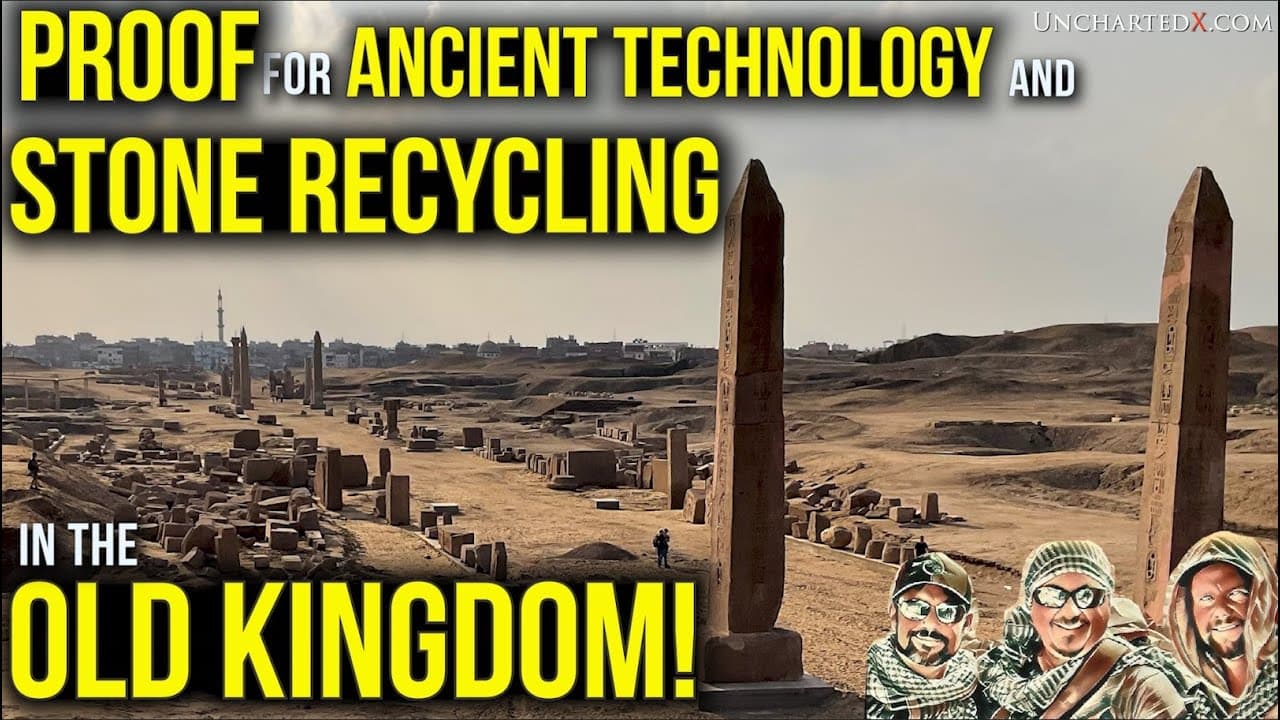
PROOF the Ancient Egyptians were Recycling ANCIENT Artifacts in the Old Kingdom!
TL;DR
- Evidence of stone recycling in ancient Egypt challenges mainstream historical narratives.
Transcript
hi all this is ben and welcome back to the uncharted x channel i've just returned from a recent trip to egypt and while spending a day up on the giza plateau i was shown something that simply put blew my mind and it's something that i think should have a significant impact on our understanding of ancient egyptian history and it's the first thing i ... Read More
Key Insights
- 🤨 Disparity between craftsmanship and inscriptions on stone artifacts raises questions about their true origins and creators.
- 🥶 Stone recycling was a common practice in dynastic Egypt, with pharaohs like Ramses II repurposing older artifacts to enhance their legacy.
- 🥌 Recent discoveries of evidence of stone recycling in ancient Egypt's earliest periods challenge mainstream historical narratives.
- 🥌 Advanced technology used in crafting stone artifacts indicates the potential existence of advanced ancient civilizations predating known ones.
- 🤍 White calcite, granite, basalt, and limestone were primary stones used in megalithic construction, implying inheritance of knowledge across generations.
- 💦 Evidence of stone recycling implies a longer timeline for advanced architectural works in ancient Egypt.
- 🥺 Mainstream archaeological interpretations may overlook evidence of stone recycling, leading to incomplete understandings of ancient civilizations.
Install to Summarize YouTube Videos and Get Transcripts
Explore YouTube Video Summarizer or Get YouTube Transcript Extractor
Questions & Answers
Q: What method is typically used to date stone artifacts in ancient Egypt?
Stone artifacts are usually dated based on inscriptions found on or near them, linking them to specific historical figures or periods.
Q: Why is evidence of stone recycling in ancient Egypt significant?
Stone recycling challenges the mainstream narrative, suggesting a longer timeline and potential existence of advanced ancient civilizations predating known ones.
Q: How did pharaohs like Ramses II repurpose older stone artifacts?
Pharaohs like Ramses II reclaimed, reused, and renamed older artifacts by chiseling their names into them, claiming credit for the existing works.
Q: What implications does evidence of stone recycling have on our understanding of ancient civilizations?
Stone recycling suggests the existence of more advanced civilizations in ancient times, challenging conventional beliefs about the capabilities of ancient peoples.
Summary & Key Takeaways
-
Stone artifacts in ancient Egypt are dated based on inscriptions, but the disparity between the craftsmanship of the artifacts and the quality of inscriptions raises questions.
-
Stone recycling was a common practice in dynastic Egypt, with pharaohs repurposing older artifacts to claim credit for them.
-
Recent discoveries show evidence of stone recycling in the earliest periods of ancient Egypt, suggesting a longer timeline and potentially advanced ancient civilizations.
Read in Other Languages (beta)
Share This Summary 📚
Summarize YouTube Videos and Get Video Transcripts with 1-Click
Try YouTube Summary with ChatGPT & Claude or YouTube Transcript Generator
Explore More Summaries from UnchartedX 📚




Summarize YouTube Videos and Get Video Transcripts with 1-Click
Try YouTube Summary with ChatGPT & Claude or YouTube Transcript Generator