The Six Steps of Making a 3D Animation from Start to Finish
TL;DR
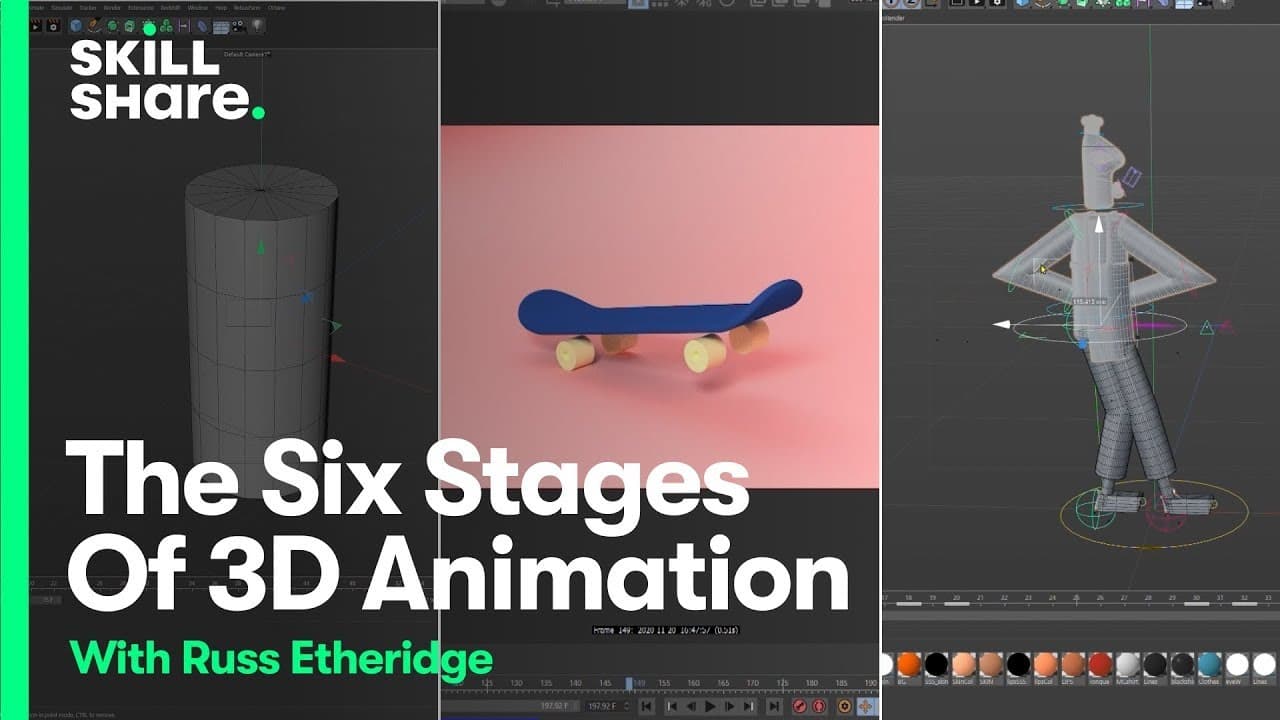
Explains the stages of 3D animation, including modeling, texturing, rigging, animating, lighting, and rendering.
Transcript
I think from the outside 3D can seem a bit mysterious and quite complicated um so I just wanted to cover what all the different stages are when you're working on a 3D animation so number one is modeling modeling is literally what it sounds like you create a model it's an object you this is how you create anything that you actually see in 3D all 3D ... Read More
Key Insights
- 🫥 Modeling involves creating 3D objects using points, lines, and faces.
- 🪜 Texturing adds color, texture, and materials to enhance the model's appearance.
- 😫 Rigging prepares the model for animation by setting up controls and joints.
- ❓ Animation involves moving and animating the 3D objects in a realistic manner.
- 😫 Lighting is crucial for setting the mood and enhancing the visual appeal of a 3D scene.
- 📽️ Rendering finalizes the 3D project by processing and producing the finished image or sequence.
- ❓ Each stage in 3D animation process contributes to creating a realistic and visually appealing final product.
Install to Summarize YouTube Videos and Get Transcripts
Explore YouTube Video Summarizer or Get YouTube Transcript Extractor
Questions & Answers
Q: What is the purpose of modeling in 3D animation?
Modeling is essential as it involves creating the actual objects in 3D space by manipulating points, lines, and faces to form complex shapes and structures.
Q: How does texturing enhance a 3D model?
Texturing adds realism and detail to a 3D model by applying colors, textures, and materials to surfaces, enabling the creation of diverse visual effects.
Q: Why is rigging important in 3D animation?
Rigging facilitates the animation process by setting up controls and joints on the model, enabling animators to manipulate the object, such as bending limbs or controlling movement.
Q: What role does lighting play in 3D animation?
Lighting is crucial in creating the mood and atmosphere of a scene by illuminating the 3D objects, enhancing their appearance, depth, and shadows for a more realistic presentation.
Summary & Key Takeaways
-
Modeling involves creating 3D objects with points, lines, and faces.
-
Texturing adds color, texture, and materials to the model.
-
Rigging prepares the model for animation by setting up controls.
Read in Other Languages (beta)
Share This Summary 📚
Summarize YouTube Videos and Get Video Transcripts with 1-Click
Try YouTube Summary with ChatGPT & Claude or YouTube Transcript Generator
Explore More Summaries from Skillshare 📚




Summarize YouTube Videos and Get Video Transcripts with 1-Click
Try YouTube Summary with ChatGPT & Claude or YouTube Transcript Generator