Biology Cell Part 4 (Shapes of Cells) Class 8 VIII
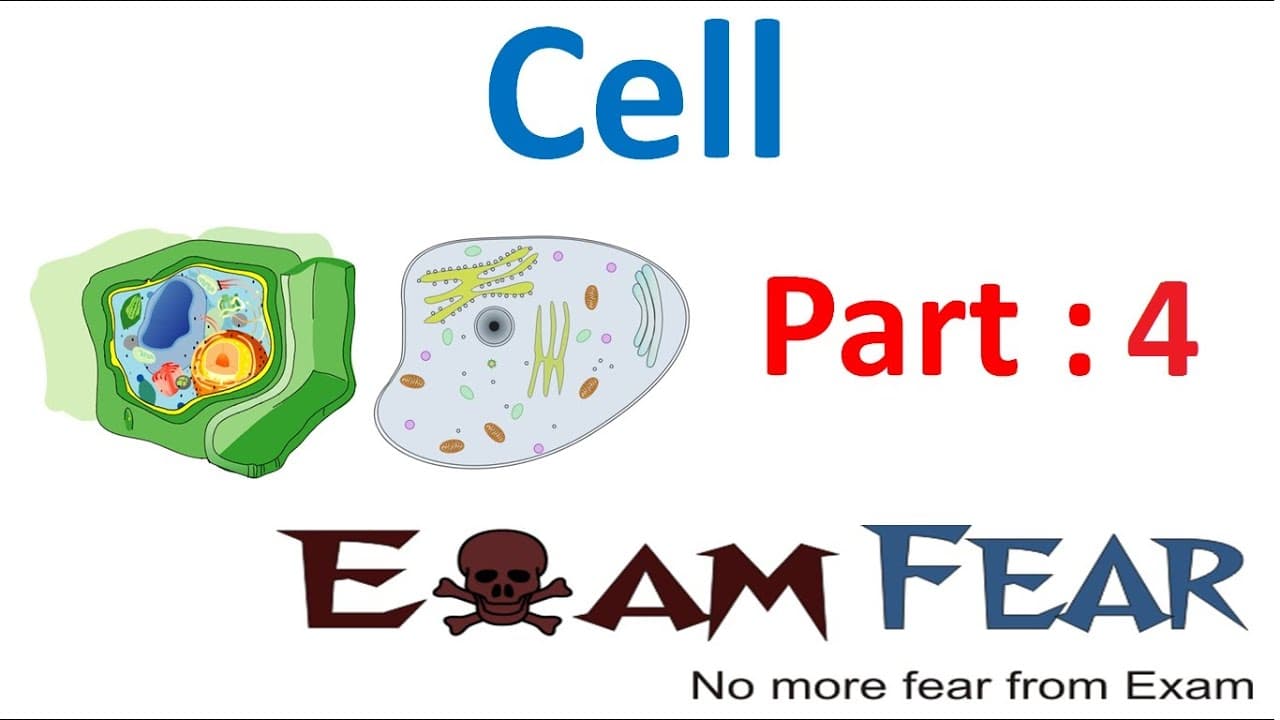
TL;DR
Cells have different shapes based on their functions, including spherical, elongated, branched, and spindle-shaped cells.
Transcript
hello friends this video on cell part 4 is brought to you by example.com no more fear from exam so now let us look at the shapes of cells so we look we looked at the number of cells now it's term for the shapes now the way we have the number of sales ranging from one to millions and billions and trillions similarly cells can have a variety of shape... Read More
Key Insights
- 💠 Cells can have various shapes, including spherical, elongated, branched, and spindle-shaped.
- 💠 The shape of a cell depends on its function in the organism.
- 💠 Different cell shapes have different purposes, such as absorption, conduction, or protection.
- 😋 Amoebas are unicellular organisms that can change shape for intake of food and locomotion.
- 💪 Cells in the human body, like nerve, smooth muscle, and ovum, exhibit different shapes.
- 🧑🏭 The shape of a cell can be influenced by factors like surface area requirements and locomotion needs.
- 🌱 Cells in plants, like mesophyll and trichomes, also have distinct shapes.
Install to Summarize YouTube Videos and Get Transcripts
Explore YouTube Video Summarizer or Get YouTube Transcript Extractor
Questions & Answers
Q: What are some examples of cells with different shapes?
Some examples include ciliated and cuboidal epithelial cells, red and white blood cells, nerve cells, cartilage and bone cells, mesophyll cells, and amoebas.
Q: How does the shape of a cell impact its function?
The shape of a cell can impact its function by enhancing surface area for absorption, allowing for the conduction of impulses, or facilitating locomotion.
Q: What is the purpose of ciliated epithelium in the respiratory tract?
Ciliated epithelium helps remove dust particles or foreign matter from the respiratory system by using cilia to move them out.
Q: Why do white blood cells change their shape?
White blood cells change their shape as they move through the body to efficiently combat infections and foreign substances.
Summary & Key Takeaways
-
Cells can have a variety of shapes that vary with their functions, such as spherical, elongated, branched, and spindle-shaped cells.
-
The shape of cells impacts their abilities, such as increasing surface area for absorption or conducting impulses.
-
Examples of different cell shapes include ciliated and cuboidal epithelial cells, red and white blood cells, nerve cells, cartilage and bone cells, mesophyll cells in plant leaves, and amoebas.
Read in Other Languages (beta)
Share This Summary 📚
Summarize YouTube Videos and Get Video Transcripts with 1-Click
Try YouTube Summary with ChatGPT & Claude or YouTube Transcript Generator
Explore More Summaries from LearnoHub - Class 11, 12 📚





Summarize YouTube Videos and Get Video Transcripts with 1-Click
Try YouTube Summary with ChatGPT & Claude or YouTube Transcript Generator