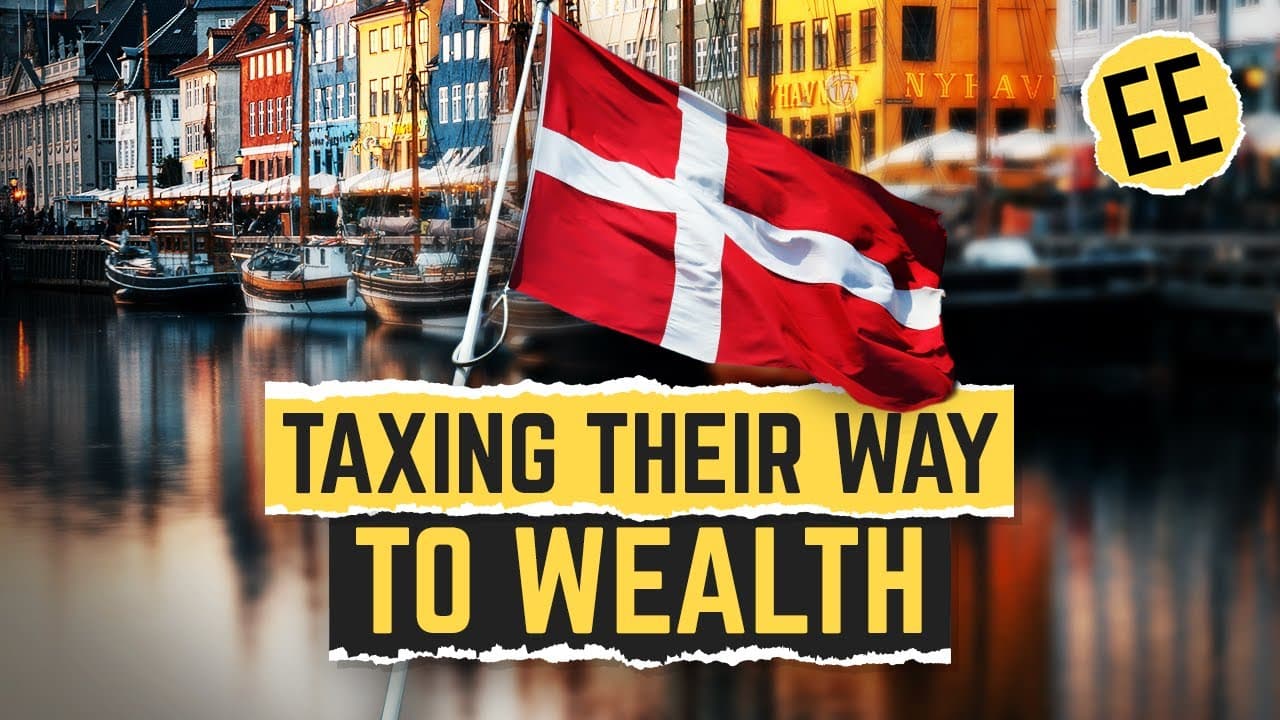
Why Is Denmark So Prosperous Despite High Taxes?
TL;DR
Denmark defies economic expectations by thriving with high taxes, limited natural resources, and a small population. Its success is attributed to a strong welfare state, strategic investments in education, healthcare, and renewable energy, and a unique flexicurity model. These factors, combined with high trust in government, enable economic stability and growth, making Denmark a model of sustainable prosperity.
Transcript
Denmark should not be rich. It's small, it's cold, it has almost no oil wealth, no vast industrial base, and it taxes nearly half of everything its economy produces. Income taxes are sky-high, there's a 25% VAT on almost everything, and Danish workers spend some of the fewest hours at their desks in the developed world. And yet, somehow, Denmark is... Read More
Key Insights
- Denmark's economy thrives despite high taxes due to strategic investments in education and healthcare.
- The Nordic model combines capitalism with a strong welfare state, supporting high living standards.
- Denmark's flexicurity system balances worker protections with business flexibility, promoting employment.
- High personal taxes are offset by lower corporate taxes, encouraging business growth and innovation.
- Denmark excels in renewable energy, with over 50% of electricity from wind power, leading in sustainability.
- Trust in government is high, with transparent spending and low corruption, fostering public support for taxes.
- Denmark's export-driven economy benefits from its strategic location in Europe, enhancing trade opportunities.
- Challenges include an aging population, immigration pressures, and global economic volatility.
Install to Summarize YouTube Videos and Get Transcripts
Explore YouTube Video Summarizer or Get YouTube Transcript Extractor
Questions & Answers
Q: How does Denmark maintain economic prosperity with high taxes?
Denmark maintains economic prosperity with high taxes by strategically investing in education, healthcare, and renewable energy. The Nordic model, combining capitalism with a strong welfare state, supports high living standards. A unique flexicurity system balances worker protections with business flexibility, promoting employment. High trust in government and transparent spending foster public support, enabling economic stability.
Q: What is the role of renewable energy in Denmark's economy?
Renewable energy plays a crucial role in Denmark's economy, with over 50% of its electricity generated from wind power. This commitment to sustainability not only enhances energy security but also positions Denmark as a global leader in renewables. Companies like Vestas export turbines worldwide, contributing to economic growth and reducing CO2 emissions per capita.
Q: Why is trust in government important for Denmark's economic model?
Trust in government is vital for Denmark's economic model as it ensures public support for high taxes and the welfare state. Transparent spending, low corruption, and high-quality services foster confidence in government efficiency. This trust enables the successful implementation of policies that support economic stability and growth, such as education and healthcare investments.
Q: How does Denmark's flexicurity system benefit its economy?
Denmark's flexicurity system benefits its economy by balancing worker protections with business flexibility. It allows for easy hiring and firing while providing a strong safety net for workers, including up to 90% of previous salary for laid-off employees. This system encourages companies to hire without fear of costly layoffs, maintaining high employment rates and economic stability.
Q: What challenges does Denmark face in sustaining its economic model?
Denmark faces challenges in sustaining its economic model, including an aging population, immigration pressures, and global economic volatility. An older population increases healthcare costs and pressures the pension system. Immigration raises questions about long-term sustainability, while global trade tensions and demand fluctuations in key sectors like pharmaceuticals and shipping pose economic risks.
Q: How does Denmark's tax system support business growth?
Denmark's tax system supports business growth by combining high personal taxes with lower corporate taxes. This structure encourages reinvestment and expansion, fostering a thriving startup scene and innovation. The World Bank ranks Denmark among the easiest countries to do business, thanks to minimal bureaucracy, digital-first administration, and streamlined regulation, attracting entrepreneurs and investors.
Q: Why is Denmark considered a model of sustainable prosperity?
Denmark is considered a model of sustainable prosperity due to its successful integration of high taxes, a strong welfare state, and strategic investments in education, healthcare, and renewable energy. Trust in government and a unique flexicurity system promote economic stability and growth. Despite challenges, Denmark's adaptability and long-term planning ensure continued prosperity and high living standards.
Q: Can other countries replicate Denmark's economic model?
Replicating Denmark's economic model is challenging for other countries due to unique factors like high trust in government, strategic location in Europe, and a small, homogenous population. While high taxes work for Denmark, other nations with different demographics, political stability, and institutional strength may struggle to implement similar systems. However, countries can learn from Denmark's emphasis on education, innovation, and labor market flexibility.
Summary & Key Takeaways
-
Denmark's economic success defies expectations, thriving with high taxes and limited resources. Key factors include strategic investments in education and healthcare, a strong welfare state, and a unique flexicurity model that balances worker protections with business flexibility. High trust in government and a focus on renewable energy further support its prosperity.
-
The Danish model combines high personal taxes with lower corporate taxes, encouraging business growth and innovation. Denmark excels in renewable energy, with over 50% of electricity from wind power, and benefits from its strategic location in Europe for trade. Challenges include an aging population and immigration pressures.
-
Denmark's success is rooted in long-term planning and adaptability, with investments in education, healthcare, and technology. Trust in government and transparent spending foster public support for taxes, while the flexicurity system promotes employment. Despite challenges, Denmark remains a model of sustainable prosperity.
Read in Other Languages (beta)
Share This Summary 📚
Summarize YouTube Videos and Get Video Transcripts with 1-Click
Try YouTube Summary with ChatGPT & Claude or YouTube Transcript Generator
Explore More Summaries from Economics Explained 📚

Summarize YouTube Videos and Get Video Transcripts with 1-Click
Try YouTube Summary with ChatGPT & Claude or YouTube Transcript Generator