Network economics and 'net neutrality' regulation by Adam Thierer
TL;DR
Explores network economics and the debate on net neutrality regulation.
Transcript
hello my name is Adam the I'm a senior research fellow at the marcada center at George Mason University this a presentation on network economics and net neutrality regulation in an earlier presentation Jerry Breo also of the mara Center discussed net neutrality as an engineering principal you should consult that slideshow for more background if nee... Read More
Key Insights
- Network economics suggest that the value of a network increases with the number of users, leading to high fixed costs but low marginal costs, which some argue makes broadband a natural monopoly.
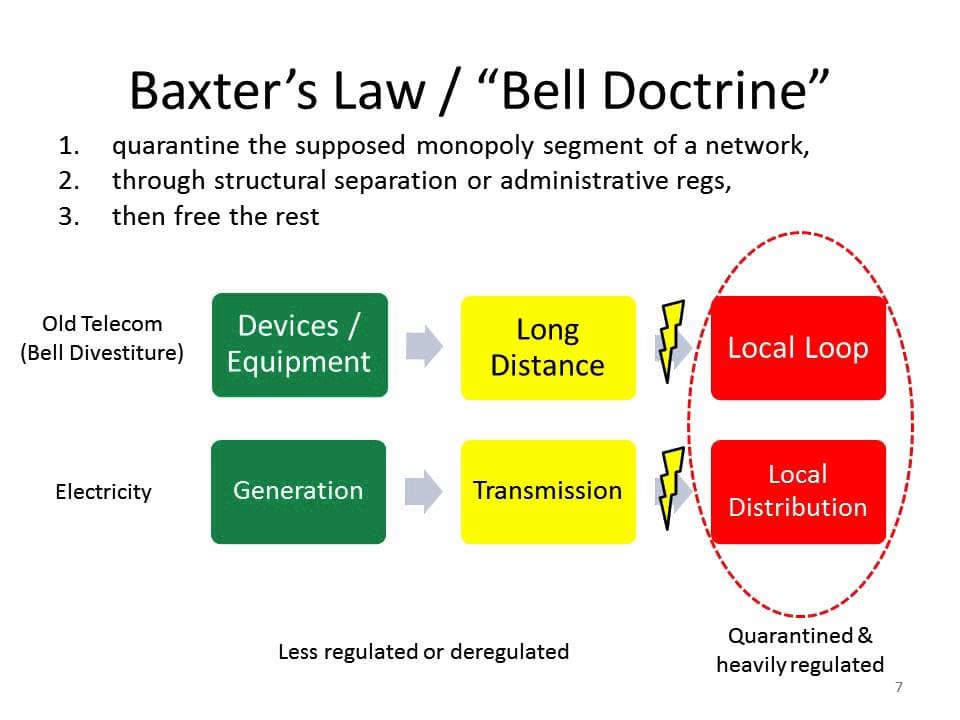
- Net neutrality regulation proposes to treat Internet Service Providers (ISPs) as natural monopolies, subjecting them to public utility-style regulation while leaving websites and applications deregulated.
- Proponents of net neutrality argue that regulation is necessary to prevent ISPs from engaging in unjust discrimination through traffic management, ensuring fair service and pricing.
- Opponents argue that net neutrality regulation could stifle innovation and investment, as ISPs may be unable to manage network traffic effectively under such constraints.
- Regulatory capture and bureaucratic inefficiency are concerns with implementing net neutrality, as historically, regulatory bodies like the FCC have been slow and prone to influence.
- The debate includes First Amendment considerations, questioning the regulation of speech platforms and the editorial discretion of platform owners.
- Self-regulation, involving voluntary multi-stakeholder approaches and oversight by watchdog groups, is proposed by net neutrality opponents as an alternative to government regulation.
- The net neutrality debate is ongoing, with strong arguments on both sides regarding its impact on innovation, competition, and consumer rights.
Install to Summarize YouTube Videos and Get Transcripts
Explore YouTube Video Summarizer or Get YouTube Transcript Extractor
Questions & Answers
Q: What are the basic principles of network economics discussed in the content?
The content discusses how network economics operate on the principle that the value of a network grows with the number of users, leading to high fixed costs but low marginal costs. This economic structure suggests that networks may function as natural monopolies, prompting debates on the need for regulation to ensure fair access and competition.
Q: How does net neutrality regulation propose to address the perceived monopolistic nature of ISPs?
Net neutrality regulation proposes to treat ISPs as natural monopolies, subjecting them to public utility-style regulation. This involves imposing mandates for fair and non-discriminatory service and pricing, while leaving websites, applications, and devices largely deregulated. The aim is to quarantine the supposed monopolistic segment of the network, ensuring fair competition and access.
Q: What are the main arguments against net neutrality regulation?
Opponents argue that net neutrality regulation could stifle innovation and investment, as ISPs may be restricted in managing network traffic effectively. Concerns include regulatory capture, bureaucratic inefficiency, and First Amendment issues related to regulating speech platforms. Opponents advocate for flexible pricing and self-regulation as alternatives to government mandates.
Q: How do proponents of net neutrality justify the need for regulation?
Proponents argue that regulation is necessary to prevent ISPs from engaging in unjust discrimination through traffic management, ensuring fair service and pricing. They claim that without regulation, ISPs could prioritize certain content or services, hindering innovation at the network's edge and disadvantaging smaller competitors and consumers.
Q: What role does regulatory capture play in the net neutrality debate?
Regulatory capture is a concern in the net neutrality debate, as regulatory bodies like the FCC have a history of being influenced by the industries they regulate. This can lead to regulations that favor established players over new entrants or consumers, undermining the intended benefits of net neutrality and potentially stalling innovation.
Q: What are the First Amendment considerations related to net neutrality regulation?
First Amendment considerations arise because net neutrality regulation involves regulating speech platforms. This raises questions about the editorial discretion of platform owners and whether such regulation infringes on free speech rights. Opponents argue that government-imposed mandates could limit the ability of platforms to manage content according to their policies.
Q: What alternative approaches to net neutrality regulation are suggested?
Alternatives to net neutrality regulation include self-regulation through voluntary multi-stakeholder approaches and oversight by watchdog groups. These methods aim to establish engineering standards and monitor compliance without government intervention. Opponents believe these approaches can effectively address concerns while allowing for flexibility and innovation in the industry.
Q: Why is the net neutrality debate likely to continue for years?
The net neutrality debate is likely to persist due to strong arguments on both sides regarding its impact on innovation, competition, and consumer rights. Differing views on the necessity and effectiveness of regulation, coupled with concerns about regulatory capture and First Amendment rights, ensure that the issue remains contentious and unresolved in the foreseeable future.
Summary & Key Takeaways
-
The presentation by Adam Thierer explores the economic principles underlying network economics and the implications of net neutrality regulation. It discusses how networks, characterized by high fixed costs and low marginal costs, are viewed by some as natural monopolies that require regulation to ensure fair access and competition.
-
Net neutrality regulation aims to treat ISPs as public utilities, imposing fair service and pricing mandates. Proponents argue it protects against discriminatory practices, while opponents claim it could hinder innovation and investment. The debate also touches on regulatory capture and First Amendment concerns.
-
Alternatives to regulation include self-regulation and oversight by watchdog groups. The presentation concludes that the net neutrality debate will persist, driven by differing views on competition, innovation, and consumer protection. It suggests further reading for those interested in exploring the topic in depth.
Read in Other Languages (beta)
Share This Summary 📚
Summarize YouTube Videos and Get Video Transcripts with 1-Click
Try YouTube Summary with ChatGPT & Claude or YouTube Transcript Generator
Explore More Summaries from Marginal Revolution University 📚

Summarize YouTube Videos and Get Video Transcripts with 1-Click
Try YouTube Summary with ChatGPT & Claude or YouTube Transcript Generator