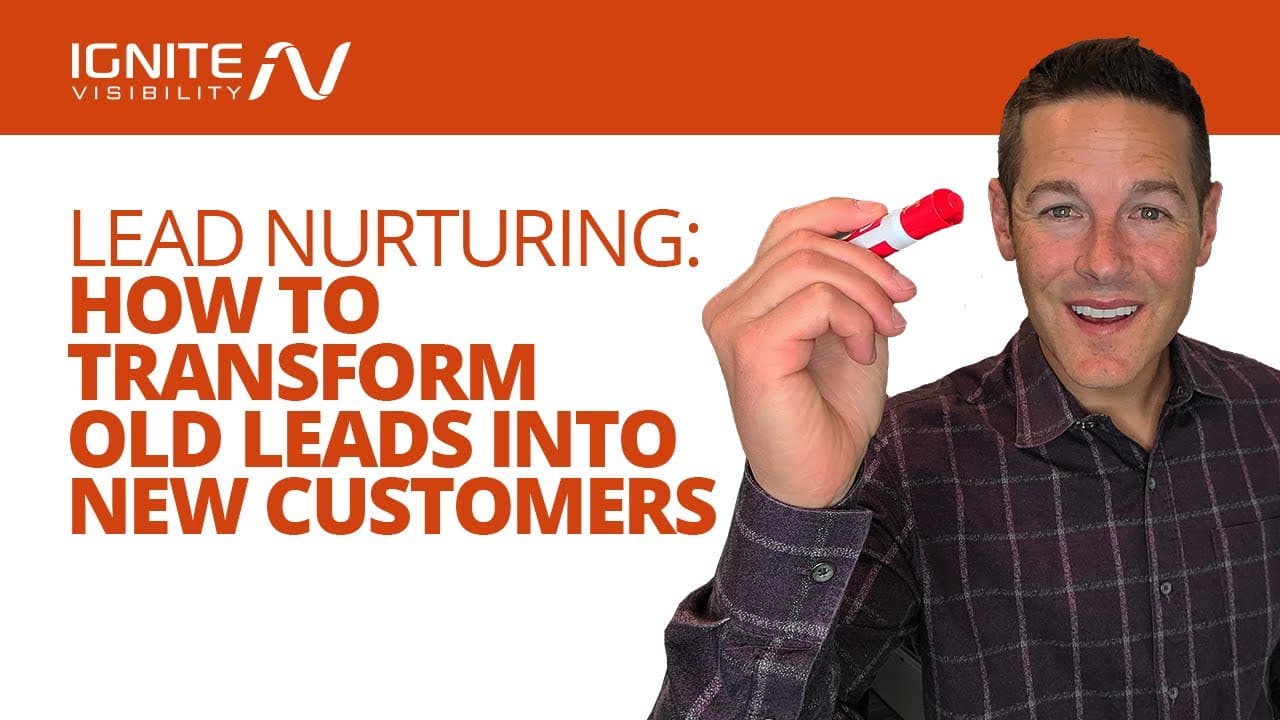
Lead Nurturing: How to Transform Old Leads Into New Customers
TL;DR
Learn how to convert old leads into new customers.
Transcript
what do you do when somebody tells you no or if they just completely disappear after becoming a lead do you just never talk to them ever again and just let them drift off into wherever they go no you don't do that at all hi everybody i'm john lakin with ignite visibility and today i'm going to talk to you a little bit about how you bring in the lea... Read More
Key Insights
- Lead nurturing involves continuous engagement with potential customers, even if they initially say no or disappear after showing interest.
- Initial email automation is crucial to ensure leads are prepared and show up for scheduled calls, enhancing conversion chances.
- Social proof and educational content in emails can strengthen the lead's interest and trust in the product or service.
- A structured call sequence, from introduction to proposal and contract discussions, helps guide leads through the conversion funnel.
- If a lead goes dark, placing them in a 'no client' bucket allows for continued engagement through targeted email sequences.
- A secondary nurturing sequence, spanning six to twelve months, can reactivate leads who initially declined to convert.
- Email sequences should include reminders, educational content, and periodic check-ins to maintain lead interest and engagement.
- Implementing a comprehensive lead nurturing strategy increases the likelihood of converting potential customers into actual clients over time.
Install to Summarize YouTube Videos and Get Transcripts
Explore YouTube Video Summarizer or Get YouTube Transcript Extractor
Questions & Answers
Q: What is the first step in the lead nurturing process?
The first step in the lead nurturing process is to set up initial email automation. This ensures that leads receive a thank you message and are scheduled for a call. The email should also include social proof, such as testimonials or videos, to reinforce the value of the product or service.
Q: How can social proof be used in lead nurturing?
Social proof can be used in lead nurturing by including testimonials, case studies, or videos in the initial email sequence. This helps to build trust and credibility with the lead, showing them that others have benefited from the product or service, and can increase their interest and likelihood of conversion.
Q: What is the purpose of the initial call in the lead nurturing strategy?
The purpose of the initial call in the lead nurturing strategy is to introduce the lead to the business, learn about their goals, and provide information about the product or service. The main objective is to move the lead from this introductory call to a secondary call where a proposal can be discussed.
Q: What happens if a lead goes dark or says no?
If a lead goes dark or says no, they are placed in a 'no client' bucket. This allows the business to continue engaging with them through a secondary email nurturing sequence. This sequence can include educational content and periodic check-ins over six to twelve months to encourage re-engagement.
Q: How long should the secondary email nurturing sequence last?
The secondary email nurturing sequence should last between six to twelve months. During this time, the lead receives a series of emails designed to re-engage them with the business. This sequence increases the chances of converting the lead into a customer at a later date.
Q: Why is it important to have a structured call sequence?
Having a structured call sequence is important because it provides a clear path for the lead to follow through the conversion funnel. It ensures that each call has a specific purpose, from introduction to proposal and contract discussions, making it easier to guide the lead towards becoming a customer.
Q: What role does education play in lead nurturing?
Education plays a crucial role in lead nurturing by providing the lead with valuable information about the product or service. It helps to address any questions or concerns they may have, reinforces the benefits, and keeps them engaged and interested in the business throughout the nurturing process.
Q: How can businesses increase the likelihood of lead conversion?
Businesses can increase the likelihood of lead conversion by implementing a comprehensive lead nurturing strategy. This includes initial email automation, social proof, structured call sequences, and a secondary email nurturing sequence for leads who initially decline. Continuous engagement and education are key to maintaining interest and encouraging conversion.
Summary & Key Takeaways
-
John Lincoln outlines a lead nurturing strategy that involves continuous engagement with potential customers, even if they initially say no or disappear. The strategy includes initial email automation, social proof, and structured call sequences to guide leads through the conversion funnel.
-
The lead nurturing process involves setting up email sequences that remind, educate, and engage leads. If a lead goes dark, they are placed in a 'no client' bucket, where they receive targeted emails over six to twelve months to encourage re-engagement.
-
By implementing a comprehensive lead nurturing system, businesses can ensure leads show up for initial calls and have a plan to re-engage leads who initially declined to convert, ultimately increasing the chances of converting them into customers.
Read in Other Languages (beta)
Share This Summary 📚
Summarize YouTube Videos and Get Video Transcripts with 1-Click
Try YouTube Summary with ChatGPT & Claude or YouTube Transcript Generator
Explore More Summaries from IgniteVisibility 📚

Summarize YouTube Videos and Get Video Transcripts with 1-Click
Try YouTube Summary with ChatGPT & Claude or YouTube Transcript Generator