Products
Features
YouTube Video Summarizer
Summarize YouTube videos
Web & PDF Highlighter
Highlight web pages & PDFs
Chat with PDF
Ask any PDF questions with AI
Ask AI Clone
Chat with your highlights & memories
Audio Transcriber
Transcribe audio files to text
Glasp Reader
Read and highlight articles
Kindle Highlight Export
Export your Kindle highlights
Idea Hatch
Hatch ideas from your highlights
Integrations
Obsidian Plugin
Notion Integration
Pocket Integration
Instapaper Integration
Medium Integration
Readwise Integration
Snipd Integration
Hypothesis Integration
Apps & Extensions
Chrome Extension
Safari Extension
Edge Add-ons
Firefox Add-ons
iOS App
Android App
Discover
Discover
Ideas
Discover new ideas and insights
Articles
Curated articles and insights
Books
Book recommendations by great minds
Posts
Essays and notes from readers
Quotes
Inspiring quotes collection
Videos
Curated videos and summaries
Explore Glasp
Glasp Newsletter
Weekly insights and updates
Glasp Talk
Interview series with great minds
Glasp Blog
Latest news and articles
Glasp Use Cases
Learn how others use Glasp
Build & Support
Glasp API
Access Glasp's API for developers
MCP Connector
Connect Glasp to Claude & ChatGPT
Community
Glasp Reddit Community
Students
Student discount and benefits
FAQs
Frequently Asked Questions
AboutPricing
DashboardLog inSign up

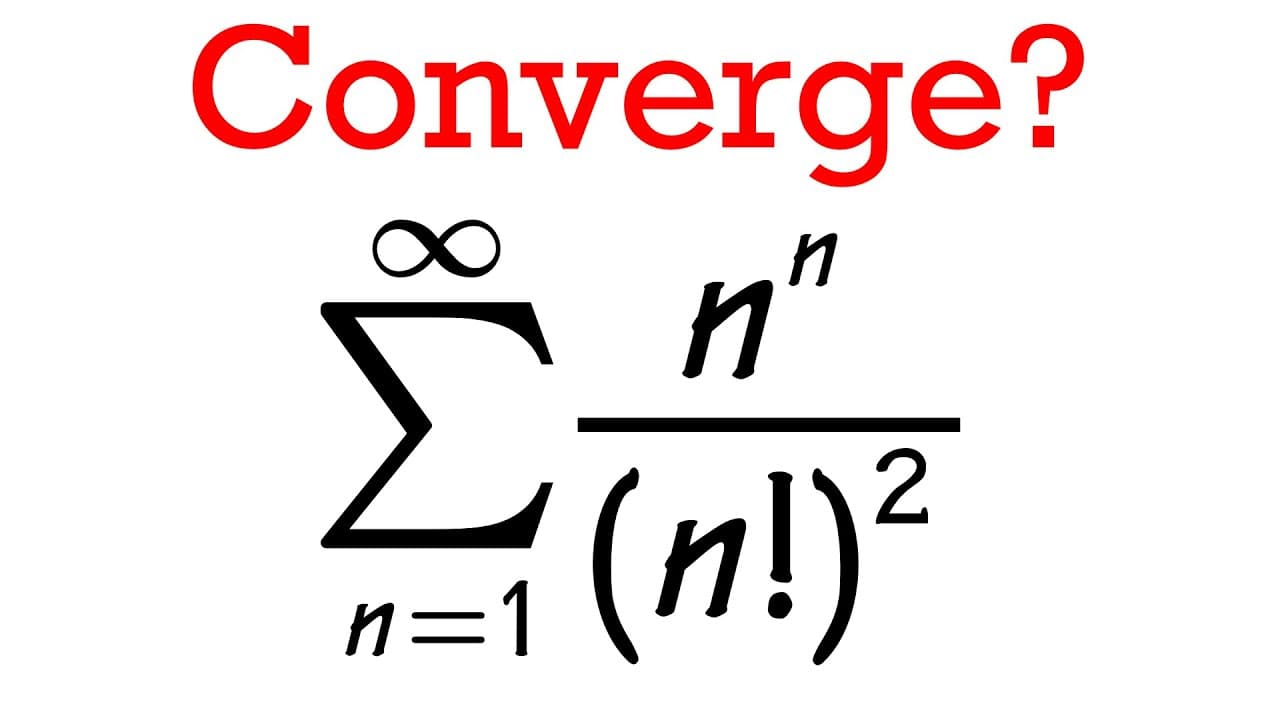
series of n^n/(n!)^2, converge or diverge?
37.7K views
•
December 8, 2017
by
blackpenredpen
YouTube video player
series of n^n/(n!)^2, converge or diverge?

TL;DR

Analyzing a power series for convergence using the ratio test, concluding that the series converges.

Transcript

okay comfort a perch we have the series as n goes from 1 to infinity of intense power over n factorial in the parenthesis and then to the second power imagine if we do not have the second power right here this is actually pretty easy because it's that project because and to the nth power divided by n factorial that will go to infinity since n to th... Read More

Key Insights

  • 🏆 The ratio test is a fundamental method for testing the convergence of power series.
  • 💭 Convergence of a power series is indicated by the limit of the nth term approaching zero.
  • 🥳 Understanding the ratio test is essential in analyzing the convergence behavior of mathematical series.
  • 🏆 The importance of confirming the convergence of a power series using appropriate tests like the limit comparison test is emphasized.
  • 🥳 The ratio test provides a systematic approach to evaluating the convergence of power series.
  • ⛔ Utilizing algebraic simplifications and limit calculations is essential in convergence analysis.
  • 🖐️ In determining series convergence, comparisons between the limit of terms and zero play a critical role.

Install to Summarize YouTube Videos and Get Transcripts

Explore YouTube Video Summarizer or Get YouTube Transcript Extractor

Questions & Answers

Q: How is the convergence of a power series tested?

The convergence of a power series can be tested using the ratio test, where the limit of the ratio of consecutive terms is calculated to determine convergence.

Q: What does it mean for a power series to converge?

A power series converges if the limit of the nth term of the series goes to zero, indicating that the series approaches a finite value as the number of terms increases.

Q: Why is the limit comparison test important in determining convergence?

The limit comparison test is crucial as it ensures that the limit of the nth term of the series approaches zero, confirming the convergence of the power series.

Q: How does the ratio test help in analyzing power series convergence?

The ratio test enables the comparison of terms in a power series, determining if the series converges based on the limit of the ratio of consecutive terms.

Summary & Key Takeaways

  • The video explains how to test the convergence of a power series using the ratio test.

  • By applying the ratio test to the power series, it is determined that the series converges.

  • The limit comparison test is also discussed, emphasizing the importance of the limit of the nth term going to zero for convergence.


Read in Other Languages (beta)

English

Share This Summary 📚

Summarize YouTube Videos and Get Video Transcripts with 1-Click

Download browser extensions on:

Try YouTube Summary with ChatGPT & Claude or YouTube Transcript Generator

Explore More Summaries from blackpenredpen 📚
Convert a polar equation to a cartesian equation: circle! thumbnail
Convert a polar equation to a cartesian equation: circle!
blackpenredpen
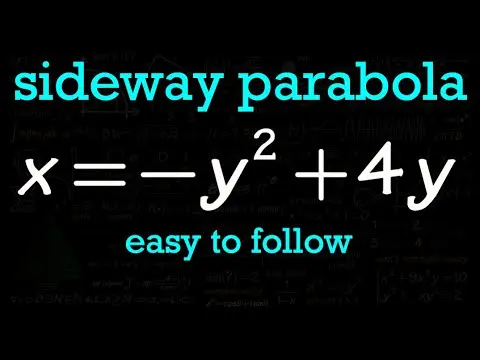
How to graph a side-way parabola thumbnail
How to graph a side-way parabola
blackpenredpen
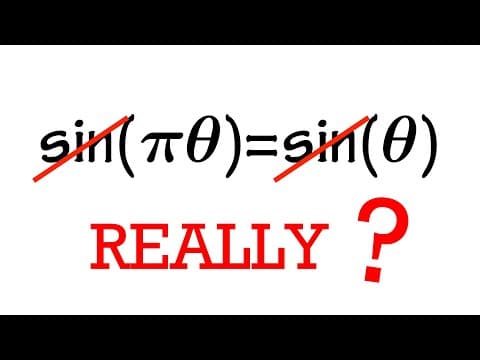
Precalculus challenge: can we just cancel out the sine? thumbnail
Precalculus challenge: can we just cancel out the sine?
blackpenredpen
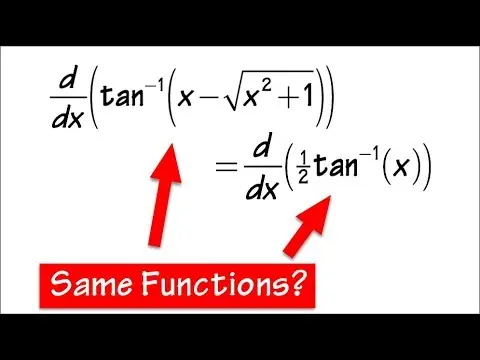
Same Derivatives Implies Same Functions? thumbnail
Same Derivatives Implies Same Functions?
blackpenredpen
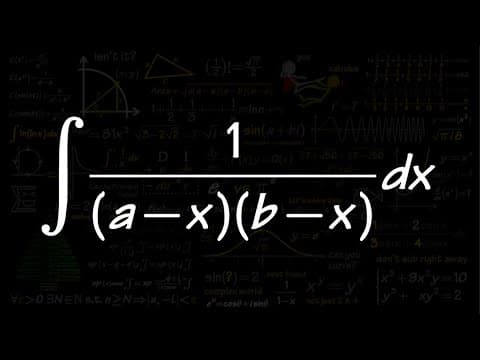
integral of 1/((a-x)(b-x)) thumbnail
integral of 1/((a-x)(b-x))
blackpenredpen
Calculating Work, pumping water out of a tank, calculus 2 tutorial, application of integration thumbnail
Calculating Work, pumping water out of a tank, calculus 2 tutorial, application of integration
blackpenredpen

Summarize YouTube Videos and Get Video Transcripts with 1-Click

Download browser extensions on:

Try YouTube Summary with ChatGPT & Claude or YouTube Transcript Generator

Apps & Extensions

  • Chrome Extension
  • Safari Extension
  • Edge Add-ons
  • Firefox Add-ons
  • iOS App
  • Android App

Key Features

  • YouTube Video Summarizer
  • Web & PDF Summarizer
  • Web & PDF Highlighter
  • Chat with PDF
  • Ask AI Clone
  • Audio Transcriber
  • Glasp Reader
  • Kindle Highlight Export
  • Idea Hatch

Integrations

  • Obsidian Plugin
  • Notion Integration
  • Pocket Integration
  • Instapaper Integration
  • Medium Integration
  • Readwise Integration
  • Snipd Integration
  • Hypothesis Integration

More Features

  • APIs
  • MCP Connector
  • Blog & Post
  • Embed Links
  • Image Highlight
  • Personality Test
  • Quote Shots

Company

  • About us
  • Blog
  • Community
  • FAQs
  • Job Board
  • Newsletter
  • Pricing
Terms

•

Privacy

•

Guidelines

© 2026 Glasp Inc. All rights reserved.