The Microscopic Insect Smaller Than a Single Cell
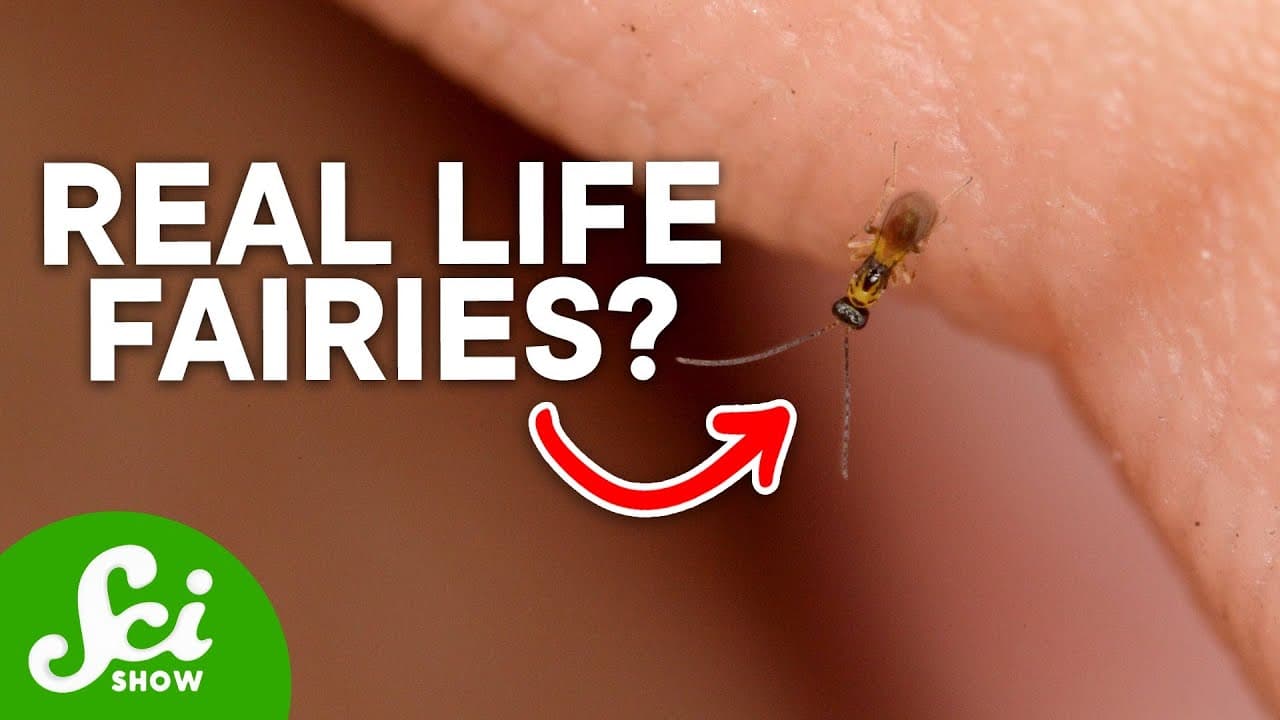
TL;DR
Fairyflies, the smallest insects, showcase extreme miniaturization, unique adaptations, and potential for scientific insights.
Transcript
[♪ INTRO] You might say fairies aren’t real, but fairyflies beg to differ. They’re flying around us all the time, but they largely go unnoticed thanks to their own kind of magic: miniaturization! This group includes the smallest insects on the planet! And scientists are eagerly studying them in the hopes of learning more of their teeny tiny sec... Read More
Key Insights
- 🫒 Fairyflies are the smallest insects, living worldwide with around 1400 species, showcasing intricate adaptations for miniaturization.
- 😘 Extreme miniaturization in fairyflies involves simplifying anatomical structures, unique wings for flight, and downsizing the brain and reproductive systems.
- 👻 Parasitic lifestyle of fairyflies aids in pest control by exploiting hosts, showcasing their ecological significance.
- 🧠 Study of fairyflies offers potential insights into brain circuitry complexity and inspires designs for smaller technology.
Install to Summarize YouTube Videos and Get Transcripts
Explore YouTube Video Summarizer or Get YouTube Transcript Extractor
Questions & Answers
Q: Why are fairyflies considered as real-life fairies?
Fairyflies, the smallest insects on Earth, exhibit extreme miniaturization and unique adaptations, resembling mythical fairies but existing in the natural world.
Q: How do fairyflies adapt to their tiny size?
Fairyflies simplify their anatomical structures, possess unconventional wings for flight, and miniaturize their brain and reproductive systems to cope with extreme miniaturization challenges.
Q: What ecological role do fairyflies play?
Fairyflies parasitize other insect eggs, aiding in pest control, but their unique adaptations also offer potential scientific insights into brain circuitry and technological advancements.
Q: How can studying fairyflies benefit scientific research?
By unraveling the secrets of fairyflies' extreme miniaturization, scientists can gain insights into brain complexity, inspire tech designs, and understand the limits of multicellular life.
Summary & Key Takeaways
-
Fairyflies, tiny wasps, constitute around 1400 species with most being only a millimeter long, possessing complex organ systems.
-
They adapt by simplifying structures, possess unconventional wings for flight efficiency, and miniaturize their brain and reproductive systems.
-
Fairyflies are parasitic, aiding in pest control, and their extreme miniaturization offers insights into brain circuitry and technology design.
Read in Other Languages (beta)
Share This Summary 📚
Summarize YouTube Videos and Get Video Transcripts with 1-Click
Try YouTube Summary with ChatGPT & Claude or YouTube Transcript Generator
Explore More Summaries from SciShow 📚


Summarize YouTube Videos and Get Video Transcripts with 1-Click
Try YouTube Summary with ChatGPT & Claude or YouTube Transcript Generator