Why Are Periodical Cicadas So ... Periodical?
TL;DR
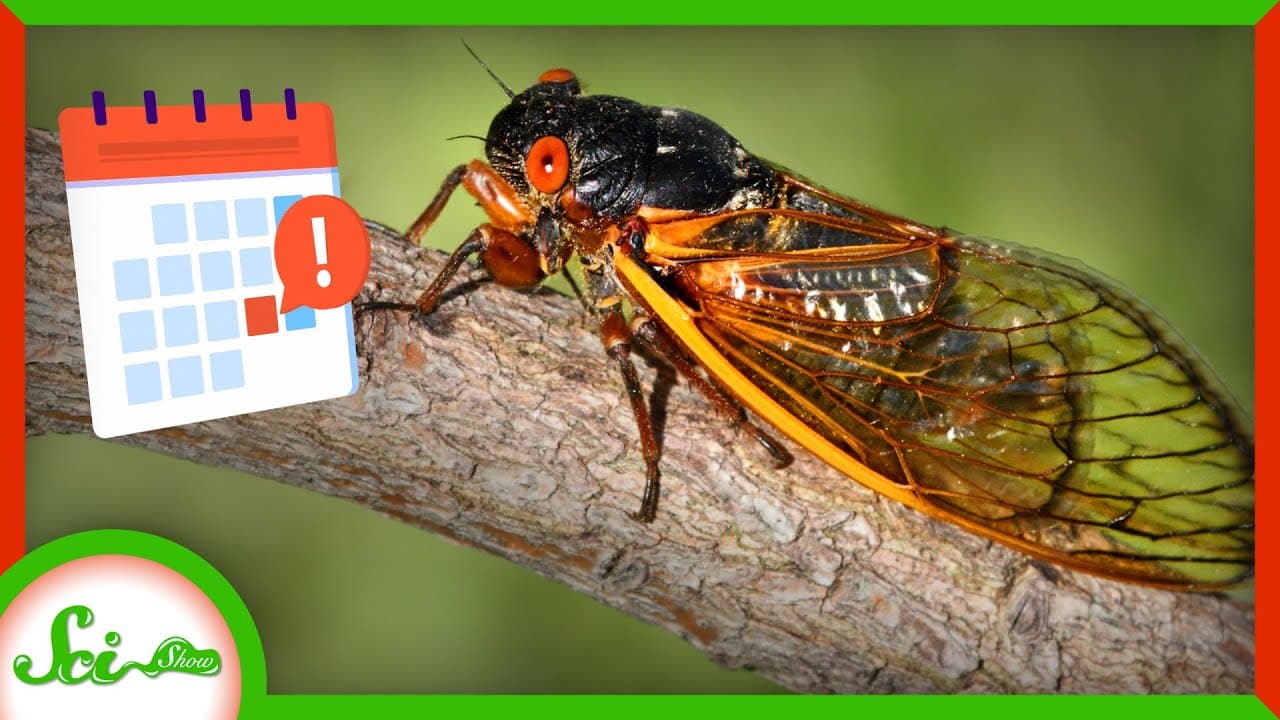
Cicadas, with their long underground childhood and synchronized prime number emergence, influence ecosystems in mysterious ways.
Transcript
Thanks to Brilliant for supporting this episode of SciShow. Go to Brilliant.org/SciShow to learn how you can level up your STEM skills. [♪ INTRO] Once you know what you’re hearing, the buzzing of cicadas is unmistakable. And while these insects are famous for their raucous arrival in the spring, their intensely loud chorus is far from the stra... Read More
Key Insights
- 🧑 Cicadas spend most of their lives underground as nymphs, emerging as adults after long periods of 13 or 17 years.
- 🏍️ Periodical cicadas emerge in massive numbers, overwhelming predators during synchronized mating cycles.
- 🏍️ The prime number lifecycles of cicadas may have evolved to avoid synchronization with predator population cycles.
- 🌱 Cicadas leave behind nutrients after their deaths, influencing plant and tree growth and supporting small mammals.
- 🐦 The synchronized emergence of cicadas can cause fluctuations in bird populations over 13-17 year cycles.
- 👨🔬 Research suggests that cicadas may have evolved long lifecycles in response to climate conditions and predator pressures.
- 🤔 Cicadas showcase how mathematical thinking can provide insights into biological phenomena.
Install to Summarize YouTube Videos and Get Transcripts
Explore YouTube Video Summarizer or Get YouTube Transcript Extractor
Questions & Answers
Q: Why do cicadas spend most of their lives underground?
Cicadas spend most of their lives underground as nymphs to avoid predators and complete their development before emerging as adults.
Q: What are periodical cicadas, and why do they emerge in synchronized cycles?
Periodical cicadas are cicadas that emerge in massive numbers every 13 or 17 years to mate, lay eggs, and overwhelm predators through synchronized emergence.
Q: How do prime number lifecycles benefit cicadas?
The prime number lifecycles of cicadas may prevent predators with shorter population cycles from syncing up with their emergence, providing a survival advantage.
Q: How do cicadas influence ecosystems beyond being a food source for predators?
Cicadas leave behind nutrients after their deaths, influencing plant growth, tree health, and supporting small mammal populations in the aftermath.
Summary & Key Takeaways
-
Cicadas spend most of their lives underground as nymphs before emerging as adults, some after 13 or 17 years.
-
Periodical cicadas emerge in massive numbers in synchronized cycles to mate and lay eggs before dying.
-
The prime number lifecycles of cicadas may have evolved to avoid predators, influence bird populations, and impact ecosystems.
Read in Other Languages (beta)
Share This Summary 📚
Summarize YouTube Videos and Get Video Transcripts with 1-Click
Try YouTube Summary with ChatGPT & Claude or YouTube Transcript Generator
Explore More Summaries from SciShow 📚


Summarize YouTube Videos and Get Video Transcripts with 1-Click
Try YouTube Summary with ChatGPT & Claude or YouTube Transcript Generator