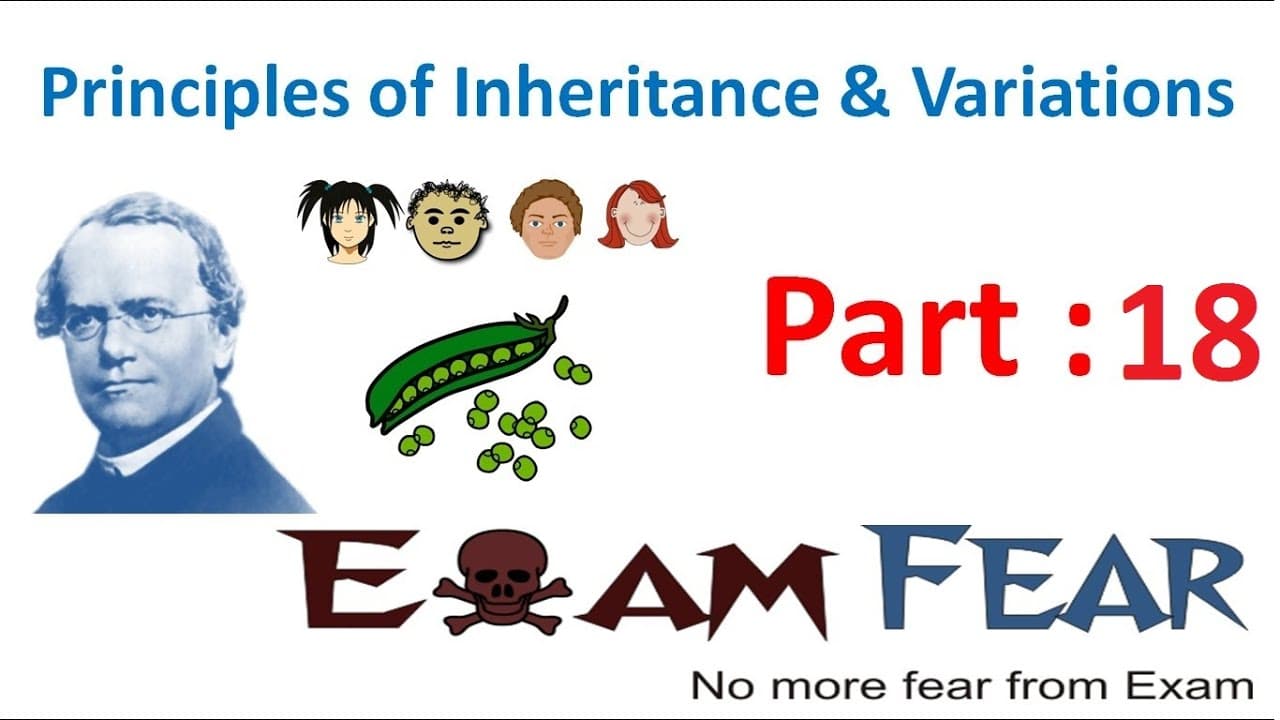
Biology Inheritance Principle part 18 (Principle of independent assortment) class 12 XII
TL;DR
The principle of independent assortment states that during gamete formation, the segregation of alleles for one trait is independent of the segregation of alleles for another trait in a dihybrid cross.
Transcript
hello friends this video on principles of inheritance part 18 is brought to you by example.com no more fear from exam now based on this experiment on dihybrid cross mendel came up with another principle that is the principle of independent assortment so what is the meaning of independent assortment that means here we consider two traits right so he... Read More
Key Insights
- 😵 The principle of independent assortment states that the segregation of alleles for one trait is independent of the segregation of alleles for another trait in a dihybrid cross.
- 💁 During gamete formation, different combinations of alleles can occur due to independent assortment.
- 💁 The parental generation of Mendel's experiment showed that the possible gametes formed had one representative allele for each trait, confirming independent assortment.
Install to Summarize YouTube Videos and Get Transcripts
Explore YouTube Video Summarizer or Get YouTube Transcript Extractor
Questions & Answers
Q: What is the principle of independent assortment?
The principle of independent assortment states that during gamete formation, the segregation of alleles for one trait is independent of the segregation of alleles for another trait in a dihybrid cross. This means that the traits are not dependent on each other and segregate randomly.
Q: How did Mendel demonstrate the principle of independent assortment in his experiments?
Mendel showed the principle of independent assortment through his experiments on dihybrid crosses. He observed that when considering two traits, the alleles for each trait segregate independently during gamete formation. This was evident in the gamete formation of the parental and F1 generations.
Q: What are the possible gametes formed in the parental generation of Mendel's experiment?
In the parental generation, which consisted of homozygous round and yellow seeds, and heterozygous wrinkled and green seeds, the possible gametes formed were "ry" for the round and yellow trait and "Ry" for the wrinkled and green trait. These gametes had one representative allele for each trait.
Q: How did Mendel's experiment show independent assortment in the F1 generation?
In the F1 generation of Mendel's experiment, which had heterozygous round and yellow seeds, the gamete formation demonstrated independent assortment. The possible gametes formed were "RY," "Ry," "rY," and "ry," showing that the segregation of alleles for each trait was independent of the other trait.
Summary & Key Takeaways
-
Mendel proposed the principle of independent assortment based on his experiments on dihybrid crosses, which showed that traits segregate independently during gamete formation.
-
Gamete formation in the parental generation of the experiment resulted in the formation of gametes with representative alleles for each trait, showing independent assortment.
-
Gamete formation in the F1 generation of the experiment also demonstrated independent assortment, with equal probabilities of all possible combinations of alleles.
Read in Other Languages (beta)
Share This Summary 📚
Summarize YouTube Videos and Get Video Transcripts with 1-Click
Try YouTube Summary with ChatGPT & Claude or YouTube Transcript Generator
Explore More Summaries from LearnoHub - Class 11, 12 📚


Summarize YouTube Videos and Get Video Transcripts with 1-Click
Try YouTube Summary with ChatGPT & Claude or YouTube Transcript Generator