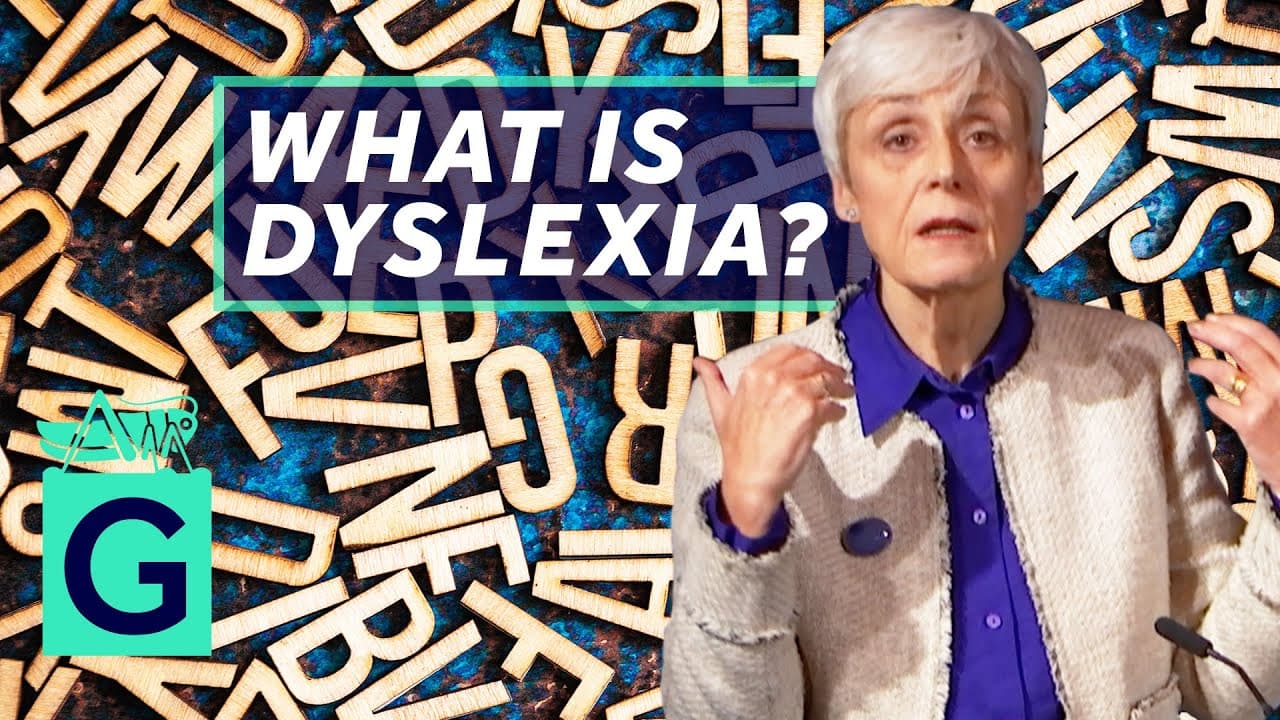
Dyslexia and Language - Disorder or Difference? - Maggie Snowling CBE
TL;DR
Dyslexia, a neurodevelopmental disorder, presents as difficulty in reading and spelling fluency with complex genetic and environmental factors.
Transcript
I guess many of you in the audience will uh guess all of you will know someone with dyslexia some of you may be dyslexic yourself um everyone has their own personal experience of Dyslexia and this evening we're going to consider therefore whether dyslexia should be considered a difference or a disorder so what is dyslexia the frham College lecture ... Read More
Key Insights
- ❓ Dyslexia is a neurodevelopmental disorder characterized by difficulty in reading and spelling fluency, with early onset and lifetime persistence.
- 🖐️ Genetic factors contribute to dyslexia's heritability, while environmental influences and interactions between genes play a role in its manifestation.
- 💌 Interventions focusing on phology awareness, letter knowledge, and language development are effective in supporting individuals with dyslexia.
Install to Summarize YouTube Videos and Get Transcripts
Explore YouTube Video Summarizer or Get YouTube Transcript Extractor
Questions & Answers
Q: How does dyslexia transition from being perceived as a difference to a disorder?
Dyslexia has been historically controversial due to the lack of clear-cut distinctions between individuals with dyslexia and typical readers. However, understanding dyslexia as a dimensional disorder with a phological deficit and co-occurring language impairments has shifted views on its classification.
Q: What are the genetic and environmental factors influencing dyslexia?
Dyslexia has a genetic component, with familial studies showing high heritability. However, interactions between genes and environments play a crucial role in the manifestation of dyslexia. Environmental factors like home literacy environments also impact reading development.
Q: How effective are interventions for dyslexia?
Interventions that focus on training phony awareness, letter knowledge, and the alphabetic principle have shown efficacy in helping children with dyslexia. Early language interventions and structured reading programs have been successful in improving language and literacy skills.
Q: How do cultural and societal factors influence the perception and diagnosis of dyslexia?
Cultural factors, such as varying values of literacy and education systems, impact the perception and diagnosis of dyslexia. Socioeconomic disparities can also affect access to interventions and support for individuals with dyslexia.
Summary & Key Takeaways
-
Dyslexia is a neurodevelopmental disorder characterized by difficulty in acquiring reading and spelling fluency.
-
The disorder has its onset early in life, with lifetime persistence and high heritability.
-
Poor reading and spelling skills in primary school can lead to disengagement, poor academic achievement in secondary school, limited job prospects, and reduced adult productivity.
Read in Other Languages (beta)
Share This Summary 📚
Summarize YouTube Videos and Get Video Transcripts with 1-Click
Try YouTube Summary with ChatGPT & Claude or YouTube Transcript Generator
Explore More Summaries from Gresham College 📚

Summarize YouTube Videos and Get Video Transcripts with 1-Click
Try YouTube Summary with ChatGPT & Claude or YouTube Transcript Generator