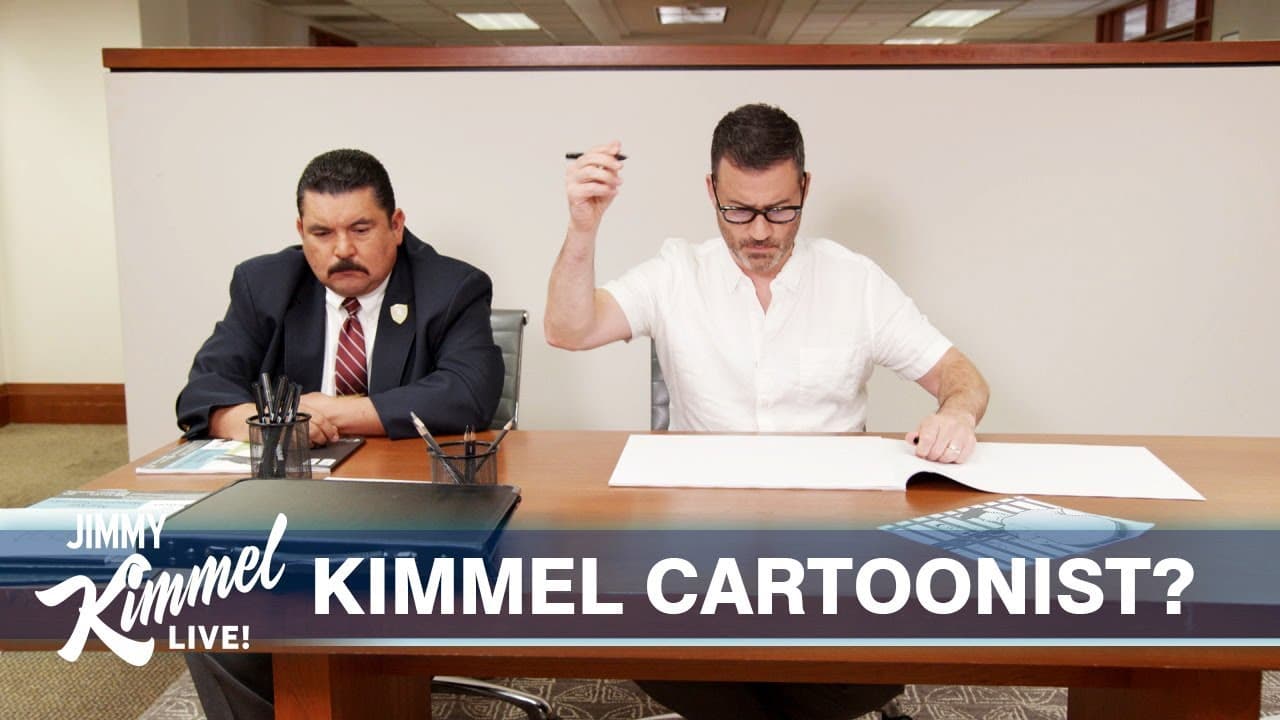
Jimmy Kimmel & Guillermo Pitch Cartoons to The New Yorker
TL;DR
Jimmy Kimmel attempts to pitch cartoons to The New Yorker but faces rejection.
Transcript
CARTOONS. THAT DIDN'T COME TO PASS OBVIOUSLY, SINCE WE ARE IN NEW YORK I THOUGHT IT WOULD BE FUN TO SEE IF I COULD GET AND YOU COULD GET A CARTOON PUBLISHED IN "THE NEW YORKER." WE CAME UP WITH SOME IDEAS AND SOME PITCHES. AND WE WENT TO THE NEW YORKER MAGAZINE ♪ ♪ >> Jimmy: GOOD LUCK. >> YOU TOO. >> HI. WE'RE READY TO SEE YOU. COME THIS WAY... Read More
Key Insights
- 🇳🇨 The competitive nature of cartoon submissions to The New Yorker highlights the selective standards established by prominent publications.
- 🚚 The creative process involved in cartooning requires balancing visual humor with clever captions for successful delivery.
- 🥺 Rejection can be a humbling experience for artists, often leading to feelings of embarrassment and self-doubt.
- 🖐️ Support and motivation from friends can play a crucial role in overcoming creative setbacks and emotional challenges.
- ❓ The journey of pitching cartoons reveals the multifaceted nature of humor, including social commentary and cultural references.
- ❓ Capturing the essence of contemporary issues through humor can resonate powerfully, albeit not always in the expected avenues.
- ❓ The importance of persistence in artistic endeavors is critical, as opportunities can arise even after initial rejections.
Install to Summarize YouTube Videos and Get Transcripts
Explore YouTube Video Summarizer or Get YouTube Transcript Extractor
Questions & Answers
Q: What inspired Jimmy Kimmel to pitch cartoons to The New Yorker?
Jimmy was motivated by the challenge of getting published in such an esteemed magazine, seeking to engage in a fun and creative process of comic creation alongside his sidekick, Guillermo. Their interaction highlighted not only the humor found in cartooning but also the nature of artistic ambition.
Q: How does the submission process for The New Yorker work, according to the interview?
The interview detailed that The New Yorker receives about a thousand submissions weekly, from which the editor narrows it down to around 50 or 60. Ultimately, only 15 to 20 cartoons are selected for publication, emphasizing the competitive nature of cartoon submissions.
Q: What kind of cartoons did Kimmel and Guillermo propose during their pitch?
They presented a variety of sketches, including funny takes on biblical figures, airline situations, and pop culture references like King Kong. Their goal was to add humor and commentary, often seeking clever captions to enhance the comedic potential of their drawings.
Q: How did Kimmel feel after receiving feedback on his cartoon submission?
Kimmel felt humiliated and discouraged after his cartoon was rejected, expressing his disappointment and frustration on stage. This reaction highlighted the emotional challenges artists face when their work does not meet expectations, emphasizing the vulnerability in creative endeavors.
Q: What key piece of advice did Jon provide to Kimmel after the rejection?
Jon encouraged Kimmel to not let the rejection define him, reminding him of past accomplishments and resilience. His motivational speech sought to uplift Kimmel, igniting the notion that despite setbacks, his talent and presence were valuable and needed by the audience.
Q: What was the ultimate outcome for Kimmel's cartoon after the rejection?
Surprisingly, Kimmel later learned that his cartoon would be featured in a more prominent location in Times Square, revealing that despite the rejection from The New Yorker, the cartoon gained recognition elsewhere and would reach a broader audience.
Q: How did Kimmel's interaction with the New Yorker editor demonstrate the difficulties in the cartooning industry?
The interaction illustrated the high standards and subjective nature of humor within the cartooning world. Kimmel had to grapple with critique and the reality that creative projects may not always resonate, highlighting the tough landscape for artists striving for publication.
Q: What role did humor play throughout the pitch process and the rejection?
Humor was central to the entire process, from brainstorming cartoon ideas to Kimmel's candid reactions following rejection. It underscored a lighthearted approach to a serious topic—creative failure—and served to bond Kimmel, Guillermo, and the audience through shared laughter.
Summary & Key Takeaways
-
Jimmy Kimmel and Guillermo attempt to create cartoon pitches for The New Yorker, navigating the submission process to showcase their comedic ideas.
-
The duo presents sketches, aiming for witty captions that convey humor beyond the visuals, reflecting the publication's high standards.
-
Despite enthusiasm and creative effort, Kimmel faces rejection from The New Yorker, leading to a humorous yet relatable moment of embarrassment on stage.
Read in Other Languages (beta)
Share This Summary 📚
Summarize YouTube Videos and Get Video Transcripts with 1-Click
Try YouTube Summary with ChatGPT & Claude or YouTube Transcript Generator
Explore More Summaries from Jimmy Kimmel Live 📚


Summarize YouTube Videos and Get Video Transcripts with 1-Click
Try YouTube Summary with ChatGPT & Claude or YouTube Transcript Generator