How to Draw Salt Shakers
TL;DR
Learn how to draw a detailed salt shaker with shading and reflections.
Transcript
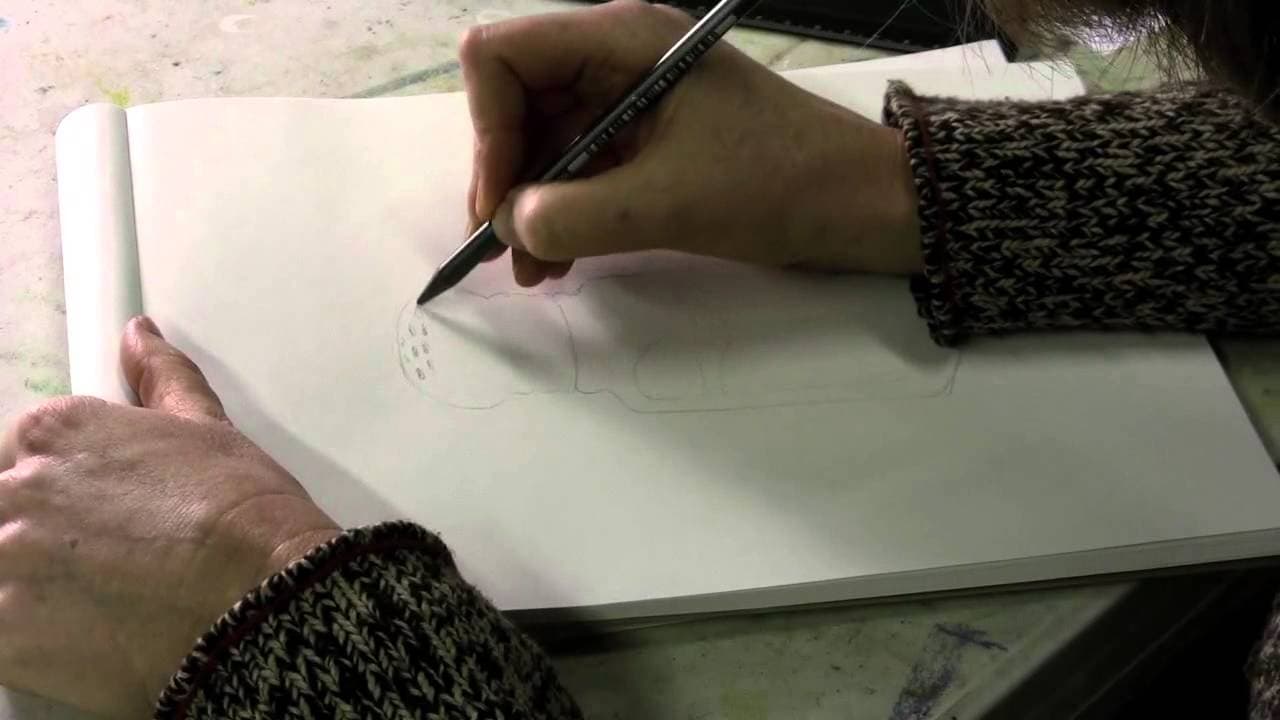
hi I'm Dorothy Camila's from Red gallery today we're gonna learn how to draw a salt shaker okay for a salt shaker I'm gonna start with the head with a cap or the lid it's got some threads here where it screws on the glass has a little bit of a lip here we're going to draw a little bit of an angle so it's gonna come down and this will be the corner ... Read More
Key Insights
- 🧂 Start by sketching the basic shape of the salt shaker and then add details like lid, threads, glass, and salt level.
- 🙂 Use shading techniques to create depth and volume, paying attention to light sources and shadows.
- 🪜 Adding reflections to the drawing can enhance its realism and bring out the metallic or glassy appearance.
- 🙂 Vary the intensity of shading to create a sense of light and shadow, adding dimension to the salt shaker drawing.
- 🙂 Consider the direction of light to determine where shadows fall and how reflections are cast on the surface.
- 🦔 Fine-tune details like creases, edges, and shadows to make the salt shaker drawing more realistic and visually striking.
- 😵 Experiment with different shading techniques, such as cross-hatching or stippling, to add texture and depth to the drawing.
Install to Summarize YouTube Videos and Get Transcripts
Explore YouTube Video Summarizer or Get YouTube Transcript Extractor
Questions & Answers
Q: What are the key elements to focus on when drawing a salt shaker?
When drawing a salt shaker, pay attention to details like the lid, threads, glass shape, shadows, and salt placement to capture its unique features accurately.
Q: How can shading be used to enhance the realism of a salt shaker drawing?
Shading can be applied strategically to create depth, shadows, and highlights, making the salt shaker drawing more realistic and three-dimensional.
Q: What are some tips for adding reflections to a salt shaker drawing?
To add reflections, observe light sources and reflective surfaces, use lighter shades for reflections, and consider the direction of light for a more convincing effect in the drawing.
Q: Why is it important to vary the intensity of shading in a salt shaker drawing?
Varying shading intensity helps create a sense of volume and texture, making the salt shaker drawing visually appealing and realistic by emphasizing light and shadow areas.
Summary & Key Takeaways
-
Artist demonstrates drawing a salt shaker, emphasizing details like lid, glass, threads, and salt.
-
Shading techniques are used to create depth and realism, with a focus on light and shadow.
-
Tips on adding reflections and fine details to enhance the drawing.
Read in Other Languages (beta)
Share This Summary 📚
Summarize YouTube Videos and Get Video Transcripts with 1-Click
Try YouTube Summary with ChatGPT & Claude or YouTube Transcript Generator
Explore More Summaries from ehow 📚

Summarize YouTube Videos and Get Video Transcripts with 1-Click
Try YouTube Summary with ChatGPT & Claude or YouTube Transcript Generator