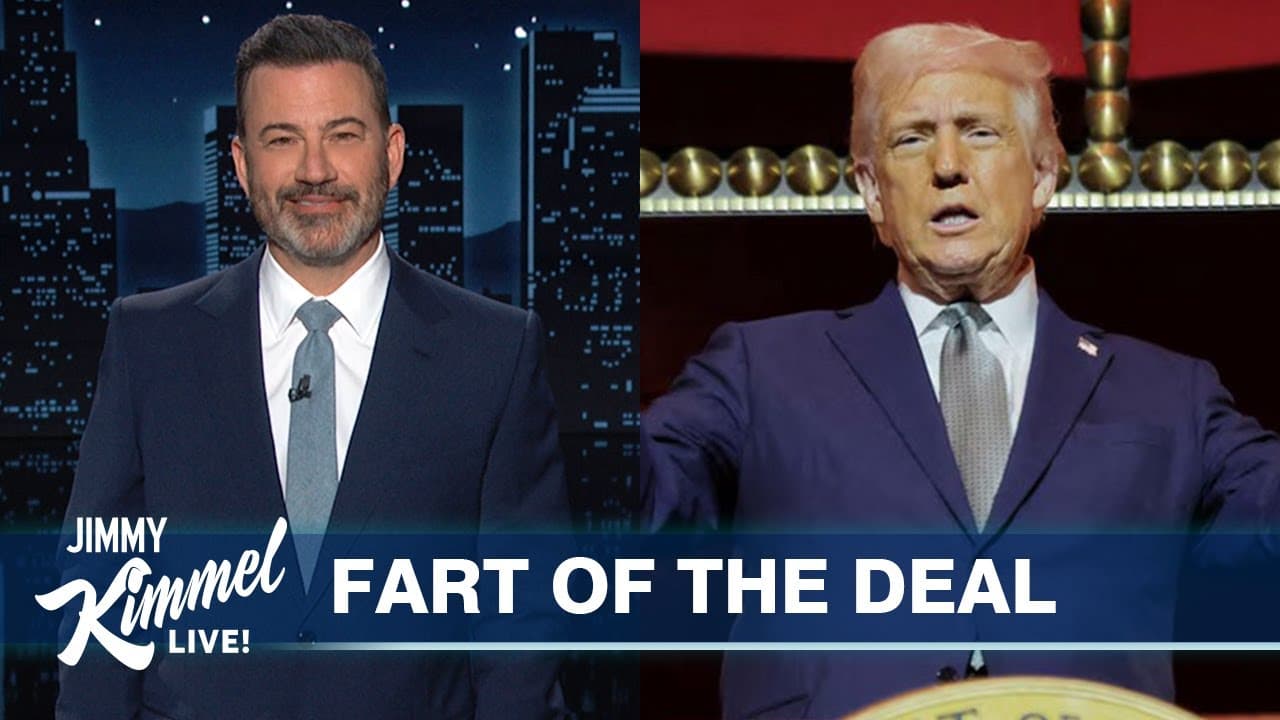
Trump Getting Played by Putin, Wants to Host Kennedy Center Honors & His Ass Kisser of the Week
TL;DR
Trump’s antics at the Kennedy Center overshadow the JFK file release news.
Transcript
jimy on your H thank you for watching thanks for joining us thank for coming to Hollywood California on a um really an interesting day a day today is a day on on which all eyes were on Washington even more so than usual for the long anticipated release of the JFK assassination files after 60 years of books and movies and deep investigations today t... Read More
Key Insights
- ✋ The JFK assassination files' release elicited high public interest, but Trump's antics captured more media attention.
- 👾 Trump's influence over the Kennedy Center sparked concerns regarding artistic integrity and the politicization of cultural spaces.
- 🥰 His disdain for the Hamilton musical exemplifies a broader cultural clash between conservative and liberal values in the arts.
- 🛄 The absurdity of Trump's claims and public persona often diminishes the seriousness of political discourse.
- 🎮 Trump's attempts to take credit for actions by the Biden Administration reveal a contentious political landscape and narrative control.
- ❓ Legislative efforts to classify "Trump Derangement Syndrome" highlight the ongoing polarization and stigmatization of political dissent.
- 🛟 Humor and satire in political commentary can serve as valuable tools for engagement and critique.
Install to Summarize YouTube Videos and Get Transcripts
Explore YouTube Video Summarizer or Get YouTube Transcript Extractor
Questions & Answers
Q: What were the JFK assassination files, and why were they significant?
The JFK assassination files refer to a large collection of documents related to the investigation of President John F. Kennedy's assassination in 1963. After years of secrecy and speculation, their release aimed to shed light on the events surrounding Kennedy's death. The files are especially significant for conspiracy theorists who believe that hidden information could reveal truths about the assassination, leading to public intrigue and debates about historical narratives.
Q: How did Trump influence the Kennedy Center following his appointment?
Trump significantly altered the Kennedy Center by dismissing past board members and replacing them with his supporters, thus shifting the organization’s vision. His controversial statements about upcoming shows indicate a move to align the center more closely with his political beliefs and cultural preferences, raising concerns about the artistic integrity of the venue moving forward.
Q: What was Trump's stance on the Hamilton musical, and why is it notable?
Trump has frequently criticized the Hamilton musical, stating that he believed it was overrated and suggesting that he never cared for it. This stance is notable because Hamilton has become a cultural phenomenon, praised for its innovative approach to storytelling and representation. Trump's dismissal reflects his broader opposition to cultural works that challenge his views or those he associates with liberal activism.
Q: Why did the author connect Trump’s activities to a sense of absurdity?
The author highlights the absurdity of Trump’s behavior by juxtaposing serious political events, like the JFK file release, with Trump’s frivolous actions at the Kennedy Center. This absurdity is further emphasized by his bizarre comments and interactions during board meetings, indicating a disconnect between the gravity of political matters and Trump’s entertainment-focused mindset.
Q: How did the astronauts’ return intersect with political narrative during Trump's presidency?
The astronauts’ return was framed within a political narrative as Trump took credit for the rescue mission, despite it being planned by the Biden Administration. This incident served to illustrate the ongoing conflict between Trump and the current administration, revealing how narrative control plays a significant role in political discourse, particularly for a former president looking to maintain influence.
Q: What does the term "Trump Derangement Syndrome" refer to, and how was it used politically?
"Trump Derangement Syndrome" is a pejorative term used by some political commentators to describe what they perceive as irrational and extreme reactions by some individuals toward Donald Trump’s actions and presidency. Recently, Minnesota lawmakers proposed legislation to classify it as a mental illness, reflecting a politically charged effort to dismiss legitimate criticism of Trump by labeling it as a psychological condition.
Q: What role does humor play in the commentary style within the content?
Humor serves as a key element in the commentary style, allowing the author to critique Trump’s actions and the political climate more effectively. The use of satire and absurdity highlights the contradictions and follies in politics, making the commentary engaging while provoking thought about serious issues. This approach can help audiences process complex political dynamics in a more digestible format.
Summary & Key Takeaways
-
The release of the JFK assassination files generated significant public interest, but Trump’s actions overshadowed this moment with absurd antics at the Kennedy Center.
-
Trump appointed his supporters to the Kennedy Center board, teasing potential Broadway shows while displaying a lack of respect for art and artists.
-
The political landscape remains turbulent as Trump's press appearances and absurd claims continue to dominate headlines, including bizarre remarks about his leadership and other politicians.
Read in Other Languages (beta)
Share This Summary 📚
Summarize YouTube Videos and Get Video Transcripts with 1-Click
Try YouTube Summary with ChatGPT & Claude or YouTube Transcript Generator
Explore More Summaries from Jimmy Kimmel Live 📚


Summarize YouTube Videos and Get Video Transcripts with 1-Click
Try YouTube Summary with ChatGPT & Claude or YouTube Transcript Generator