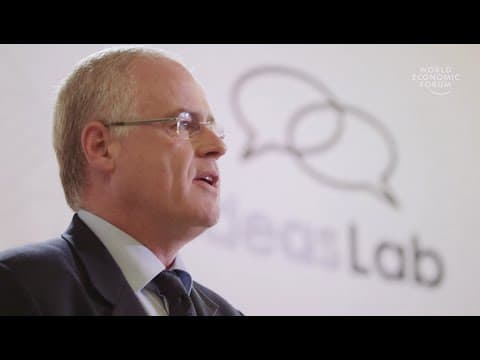
Davos 2010 - IdeasLab with Harvard - Toshiko Mori

TL;DR
Students collaborate on community healthcare project in remote Senegalese village, empowering locals with education and resources.
Transcript
We’ll talk about experience of... architecture student took place in rural Senegal, ten hours drive from capital Dakar. Now Senegal 78 percent are farming community, 20 is in the bushes, has no electricity. It’s completely remote community. And then we worked with... which is an NGO based in Paris and French community which operated about 15 years ... Read More
Key Insights
- 🛟 Healthcare infrastructure in rural areas can serve as the foundation for community development and sustainability.
- 🎓 Empowering local communities through education and skills training is essential for successful healthcare projects.
- 🍉 Sustainable practices, such as utilizing local materials and customs, are crucial for the long-term viability of infrastructure projects.
- 🥺 Collaborative efforts between students, NGOs, and local communities can lead to impactful and sustainable outcomes.
- 🤩 Addressing cultural sensitivities and community needs is key to gaining trust and support for healthcare initiatives.
- 🤳 Training local individuals in healthcare and agriculture can foster economic viability and self-sufficiency within rural communities.
- 👨🏫 Incorporating educational initiatives, like kindergartens and farming schools, can promote holistic community development and empowerment.
Install to Summarize YouTube Videos and Get Transcripts
Explore YouTube Video Summarizer or Get YouTube Transcript Extractor
Questions & Answers
Q: What were some of the key challenges faced in implementing healthcare infrastructure in the remote Senegalese community?
Implementing healthcare infrastructure in a remote Senegalese village involved overcoming challenges such as community fears, cultural differences, and lack of resources, but through collaborative efforts, these obstacles were addressed.
Q: How did training local individuals contribute to the success of the healthcare project in Senegal?
Training local individuals in healthcare operations and sustainable farming not only empowered the community but also created a sense of ownership and sustainability for the project's long-term success.
Q: What initiatives were undertaken to promote education and comprehensive community development in the Senegalese village?
Initiatives such as building kindergartens, a farming school, and empowering the local community through education and skills training were implemented to promote holistic community development in Senegal.
Q: How did the project aim to create sustainable infrastructure while respecting local customs and culture?
By utilizing local materials, skills, and customs, the project aimed to create sustainable infrastructure that not only met the community's needs but also respected and preserved their cultural heritage.
Summary & Key Takeaways
-
Students work with an NGO in a remote Senegalese village to establish healthcare facilities and empower the community.
-
The project includes building clinics, kindergartens, shelters, and a farming school to address medical needs and promote sustainable practices.
-
Local materials, skills, and customs are utilized to create infrastructure that supports community development and economic viability.
Read in Other Languages (beta)
Share This Summary 📚
Summarize YouTube Videos and Get Video Transcripts with 1-Click
Try YouTube Summary with ChatGPT & Claude or YouTube Transcript Generator
Explore More Summaries from World Economic Forum 📚
Summarize YouTube Videos and Get Video Transcripts with 1-Click
Try YouTube Summary with ChatGPT & Claude or YouTube Transcript Generator