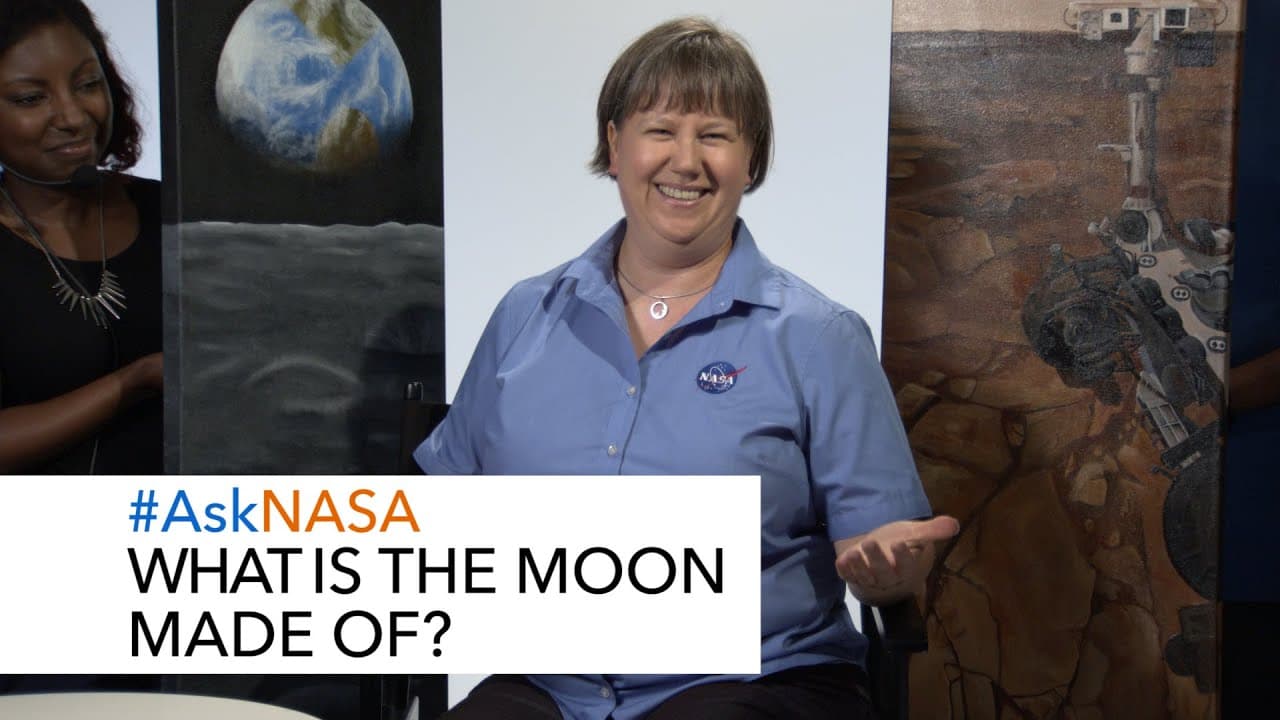
#AskNASA┃ What is the Moon Made of?
TL;DR
NASA expert answers questions about the moon, including its composition, potential for human habitation, presence of water, past missions, and filming techniques.
Transcript
[ MUSIC ] >> HI, I'M SARAH NOBLE. I STUDY THE MOON, AND THIS IS "ASK NASA." OUR FIRST QUESTION IS, "WHAT IS THE MOON MADE OF?" THE MOON IS MADE OF MOST OF THE SAME STUFF THAT THE EARTH IS MADE OF. THE MOON FORMED, UH, MANY YEARS AGO WHEN THE EARTH WAS STILL, SORT OF, MOLTEN, AND IT WAS HIT BY SOMETHING ABOUT THE SIZE OF MARS, AND IT KICKED OFF A LO... Read More
Key Insights
- 💥 The moon is believed to have formed from material ejected during a collision between Earth and a Mars-sized object.
- 😒 Potential human habitation on the moon necessitates the use of technology and the ongoing Artemis program.
- 🤔 Water is thought to be present in permanently shadowed craters at the moon's poles, and its exploration is a goal of the Artemis program.
- 🎟️ NASA has a history of lunar missions, including six successful landings during the Apollo program.
- 🎥 Filming techniques employed during the moon landings involved multiple cameras documenting the historic events.
- 🌑 The moon's surface is covered in craters, with new impacts sometimes obliterating older craters.
- 😚 The moon's age is estimated to be about 4.5 billion years, close to that of the Earth.
Install to Summarize YouTube Videos and Get Transcripts
Explore YouTube Video Summarizer or Get YouTube Transcript Extractor
Questions & Answers
Q: What is the moon made of?
The moon is composed of materials similar to those found on Earth. It was formed when the Earth was hit by a Mars-sized object, and the resulting material formed the moon.
Q: Can we live on the moon?
While the moon lacks an atmosphere, technology can enable human habitation. NASA's Artemis program aims to prepare for future human presence on the moon.
Q: Is there real water on the moon?
NASA believes there is water hidden in permanently shadowed craters at the moon's poles. Artemis will investigate the extent of water presence on the moon.
Q: How many times did NASA go to the moon?
NASA sent six landers to the moon during the Apollo program. In addition, there are several orbiters, such as the Lunar Reconnaissance Orbiter, currently studying the moon.
Summary & Key Takeaways
-
The moon is made of similar materials as the Earth and was formed when the Earth was hit by a Mars-sized object.
-
Humans can potentially live on the moon with the help of technology brought from Earth and the ongoing Artemis program.
-
There is believed to be water on the moon in permanently shadowed craters at the poles, and Artemis will investigate the presence of water.
-
NASA has sent six landers to the moon during the Apollo program and currently has several orbiters, including the Lunar Reconnaissance Orbiter.
Read in Other Languages (beta)
Share This Summary 📚
Summarize YouTube Videos and Get Video Transcripts with 1-Click
Try YouTube Summary with ChatGPT & Claude or YouTube Transcript Generator
Explore More Summaries from NASA 📚

Summarize YouTube Videos and Get Video Transcripts with 1-Click
Try YouTube Summary with ChatGPT & Claude or YouTube Transcript Generator