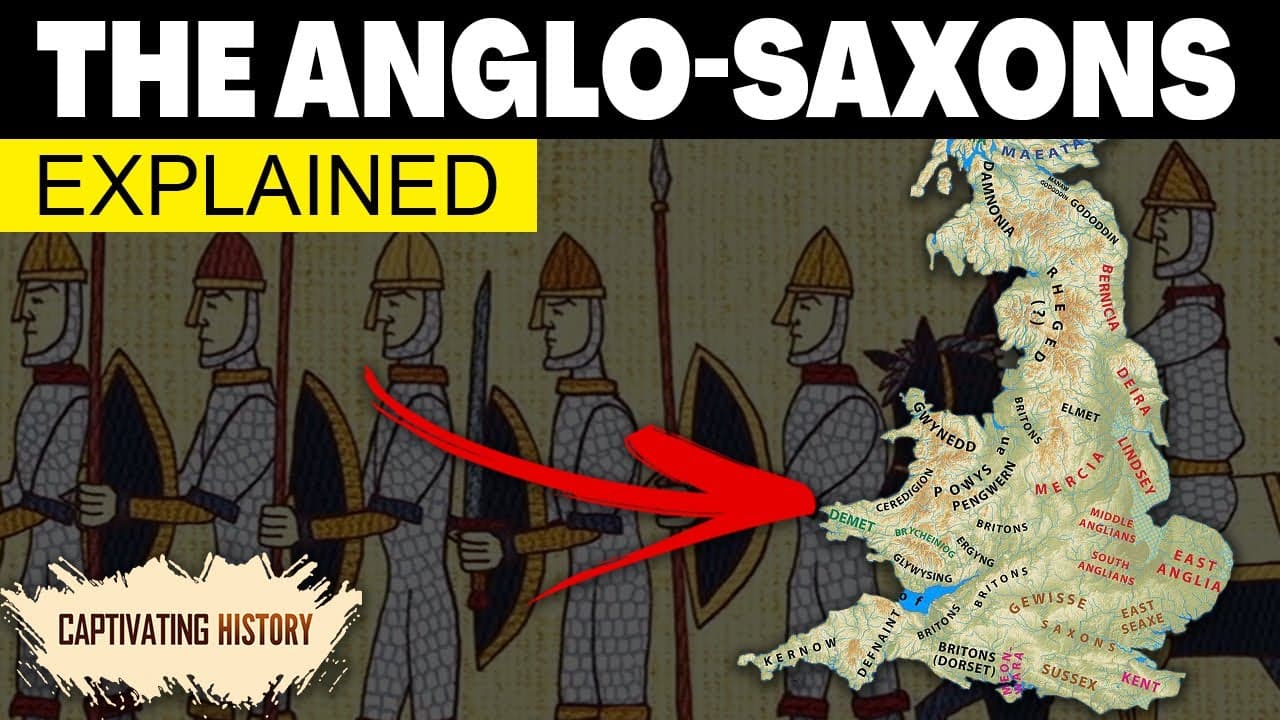
Anglo Saxons Explained in 10 Minutes
TL;DR
The Anglo-Saxons played a significant role in shaping the history of England and Europe, with their conquests, cultural influence, and eventual merger into a unified English identity.
Transcript
this video is brought to you by captivating history for people living centuries ago it would have been impossible to imagine that a small island off the coast of continental europe would one day be epicenter of world power and prestige a kingdom that would have control over about one quarter of the planet's land and its population although the unit... Read More
Key Insights
- 👻 The fall of Roman rule in Britain in 410 CE allowed the Anglo-Saxons to establish their presence and ultimately merge with the native population.
- 👔 The Anglo-Saxons had a distinct pagan belief system, closely tied to nature and evident in their naming of settlements after deities.
- 💱 The conversion to Christianity brought about significant changes, including the initiation of religious conversion among allies and the establishment of trade relations.
- 😉 The Anglo-Saxons organized themselves into social classes, with chieftains and kings at the top, and developed a rich storytelling tradition.
- 🎠 The Anglo-Saxons made notable contributions to warfare, innovations such as large organized armies, various weaponry, and the use of shields and horses.
- ❤️🩹 The Norman invasion in 1066 marked the end of Anglo-Saxon rule in England, but their influence and identity remained significant.
Install to Summarize YouTube Videos and Get Transcripts
Explore YouTube Video Summarizer or Get YouTube Transcript Extractor
Questions & Answers
Q: How did the Anglo-Saxons come to rule England after the Roman departure?
After the Romans left Britain, the Anglo-Saxons, consisting of tribes like the Angles, Saxons, and Jutes, established permanent settlements on the British Isles through raids and intermarriage with the native Britons.
Q: What was the impact of the Anglo-Saxons' conversion to Christianity?
The Anglo-Saxons' conversion to Christianity allowed for the merging of different kingdoms and the initiation of the conversion of their pagan allies. It also facilitated the negotiation of foreign relations and the establishment of a booming trade.
Q: How did the Anglo-Saxons organize themselves socially?
The Anglo-Saxons had a hierarchical social structure with chieftains or kings at the top, passing their position through male bloodlines. The ruling class relied on hereditary succession, maintaining a link to their chief deity Woden.
Q: What were some notable cultural contributions of the Anglo-Saxons?
The Anglo-Saxons had a rich storytelling tradition and produced legendary tales like Beowulf. They also developed battlefield innovations, including large organized fighting units, archers, javelin throwers, and the use of shields and horses in battle.
Key Insights:
- The fall of Roman rule in Britain in 410 CE allowed the Anglo-Saxons to establish their presence and ultimately merge with the native population.
- The Anglo-Saxons had a distinct pagan belief system, closely tied to nature and evident in their naming of settlements after deities.
- The conversion to Christianity brought about significant changes, including the initiation of religious conversion among allies and the establishment of trade relations.
- The Anglo-Saxons organized themselves into social classes, with chieftains and kings at the top, and developed a rich storytelling tradition.
- The Anglo-Saxons made notable contributions to warfare, innovations such as large organized armies, various weaponry, and the use of shields and horses.
- The Norman invasion in 1066 marked the end of Anglo-Saxon rule in England, but their influence and identity remained significant.
- The Anglo-Saxons played a crucial role in shaping England's history and contributed to the formation of a unified English identity.
Summary & Key Takeaways
-
The Anglo-Saxons emerged in England after the Romans withdrew in 410 CE, merging with native Britons and establishing their rule over the land.
-
They introduced new religious beliefs, military tactics, literature, and a unified attitude, leading to a different path for Britain that eventually led to world domination.
-
The Anglo-Saxons had a pagan belief system closely tied to nature, organized themselves into social classes, and developed a strong storytelling tradition.
Read in Other Languages (beta)
Share This Summary 📚
Summarize YouTube Videos and Get Video Transcripts with 1-Click
Try YouTube Summary with ChatGPT & Claude or YouTube Transcript Generator
Explore More Summaries from Captivating History 📚



Summarize YouTube Videos and Get Video Transcripts with 1-Click
Try YouTube Summary with ChatGPT & Claude or YouTube Transcript Generator