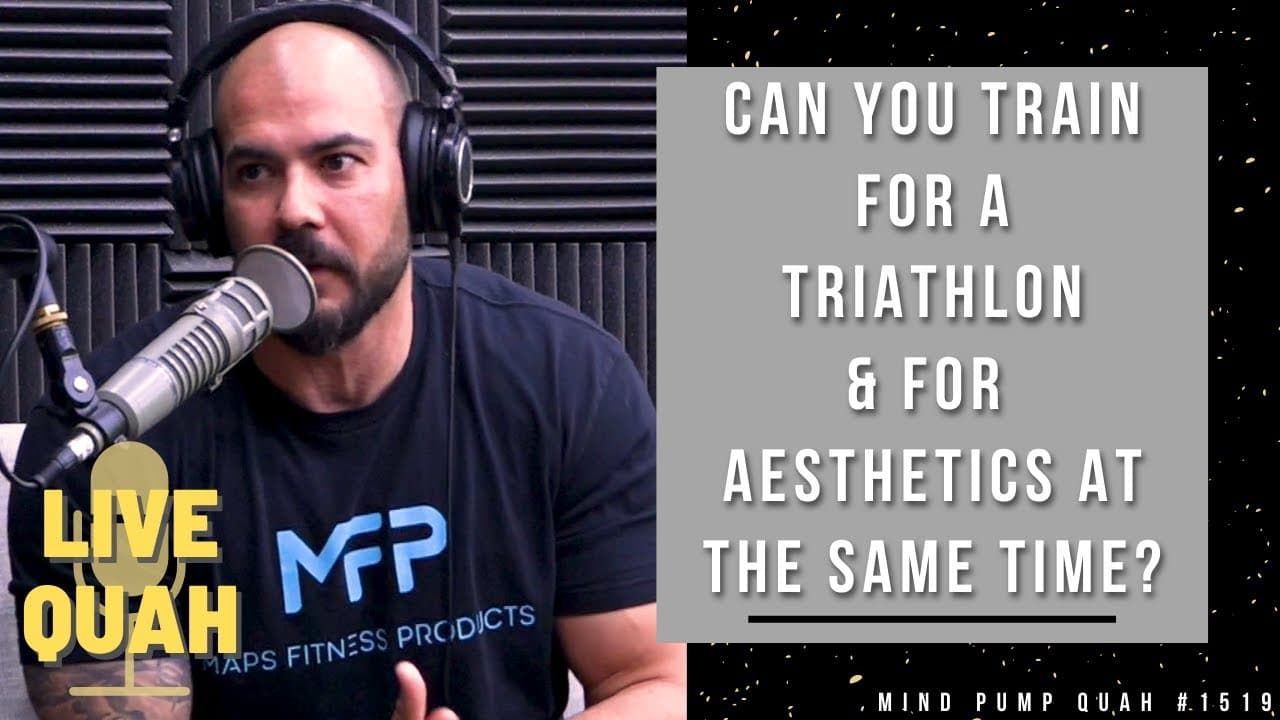
How to Train for a Triathlon and Build Muscle
TL;DR
When training for a triathlon, prioritize endurance activities like running, biking, and swimming, while minimizing strength training to once a week. Focus on compound lifts to maintain muscle mass. As the competition approaches, reduce resistance training and concentrate on mobility exercises to prevent injuries.
Transcript
our next caller is clark from tennessee hey clark how can we help you hey so first off uh a huge fan i really love you guys podcast and everything you guys do and thank you for taking my question uh so i recently finished map strong had a lot of really good strength gains with it i had to take a month off of lifting for a non-injury procedure and n... Read More
Key Insights
- Triathlon training requires a focus on endurance activities such as running, biking, and swimming.
- Strength training should be limited to once a week to avoid overtraining and injury.
- Compound lifts like squats and lunges can help maintain overall strength.
- As the triathlon approaches, reduce resistance training and increase mobility exercises.
- Training for a triathlon and building muscle are conflicting goals that require careful balancing.
- Corrective exercises and mobility work are crucial to prevent injuries during triathlon training.
- Endurance training should take precedence over strength training when preparing for a triathlon.
- It's important to adjust training intensity based on the proximity of the competition.
Install to Summarize YouTube Videos and Get Transcripts
Explore YouTube Video Summarizer or Get YouTube Transcript Extractor
Questions & Answers
Q: How to balance triathlon training with muscle building?
Balancing triathlon training with muscle building involves prioritizing endurance activities such as running, biking, and swimming, while limiting strength training to once a week. Focus on compound lifts like squats and lunges to maintain muscle mass. As the triathlon approaches, reduce resistance training and concentrate on mobility exercises to prevent injuries.
Q: Why should strength training be limited during triathlon preparation?
Strength training should be limited during triathlon preparation to avoid overtraining and injury. Triathlon training demands significant endurance work, which can be compromised by excessive strength training. Limiting strength sessions to once a week helps maintain muscle mass without hindering endurance performance. Focus on compound lifts and adjust intensity as the event nears.
Q: What exercises are recommended for triathletes to maintain strength?
Triathletes should focus on compound lifts to maintain strength, such as barbell squats, lunges, and overhead presses. These exercises help build overall strength without overloading the body. Incorporate single-leg exercises and mobility work to support endurance training and prevent injuries. Adjust exercise intensity based on the proximity of the competition.
Q: How does mobility work benefit triathletes?
Mobility work benefits triathletes by preventing injuries and ensuring optimal joint function during endurance activities. It helps maintain flexibility and range of motion, crucial for swimming, biking, and running. As the competition approaches, prioritizing mobility exercises over resistance training ensures peak performance and reduces the risk of injury during the event.
Q: When should resistance training be reduced in triathlon preparation?
Resistance training should be reduced as the triathlon competition date approaches. Approximately four weeks before the event, decrease the frequency and intensity of strength training sessions, focusing more on mobility and corrective exercises. This adjustment allows the body to recover and adapt to the increased demands of endurance training, minimizing the risk of injury.
Q: What are the conflicting goals in triathlon training and muscle building?
The conflicting goals in triathlon training and muscle building stem from the need for extensive endurance work versus the desire to build and maintain muscle mass. Endurance activities like running, biking, and swimming can lead to muscle loss if not balanced with adequate strength training. Prioritizing endurance while maintaining minimal strength sessions helps manage these conflicting goals.
Q: Why is corrective exercise important for triathletes?
Corrective exercise is important for triathletes to prevent injuries and address muscle imbalances caused by repetitive endurance activities. These exercises enhance joint stability, flexibility, and overall movement efficiency, reducing the risk of injury during training and competition. They complement endurance training by maintaining the body's structural integrity and performance capabilities.
Q: How should triathletes adjust training intensity near competition?
Triathletes should adjust training intensity near competition by reducing resistance training and focusing more on mobility and endurance exercises. As the event approaches, prioritize activities that enhance endurance capacity and recovery, such as swimming, biking, and running, while minimizing strength training to prevent fatigue and ensure optimal performance on race day.
Summary & Key Takeaways
-
Triathlon training should focus on endurance activities like running, biking, and swimming. Strength training should be limited to once a week to avoid overtraining. As the competition approaches, reduce resistance training and focus on mobility exercises to prevent injuries.
-
Balancing triathlon training and muscle building is challenging due to conflicting goals. Prioritize endurance training while maintaining muscle mass through minimal strength training, focusing on compound lifts. Gradually reduce resistance training as the event nears.
-
Corrective exercises and mobility work are essential to prevent injuries during triathlon training. As the competition date approaches, emphasize mobility exercises and reduce resistance training to ensure peak performance and injury prevention.
Read in Other Languages (beta)
Share This Summary 📚
Summarize YouTube Videos and Get Video Transcripts with 1-Click
Try YouTube Summary with ChatGPT & Claude or YouTube Transcript Generator
Explore More Summaries from Mind Pump Show 📚

Summarize YouTube Videos and Get Video Transcripts with 1-Click
Try YouTube Summary with ChatGPT & Claude or YouTube Transcript Generator