Why Do Cities Thrive While Companies Fail?

TL;DR
Cities tend to thrive and grow due to superlinear scaling, meaning larger urban areas exhibit greater economic output, creativity, and efficiency. In contrast, companies experience sublinear scaling, leading to diminishing profits as they grow. Both entities face challenges and require continuous innovation to sustain growth and avoid collapse, but cities are generally more resilient over time.
Transcript
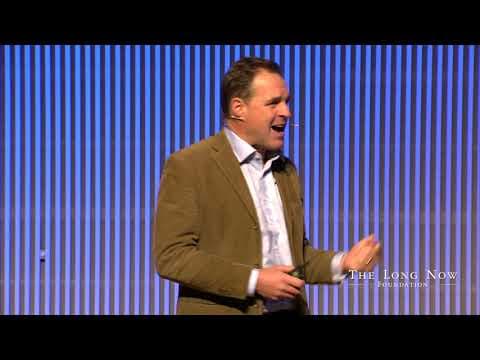
good evening I'm Alexander Rose the director here at long now tonight's long short came to us I think the first person that sent it to me was Austin in our office but then several more people sent it after that it's by Josh Owens and and even Stewart I think even sent it but it's a it's a once again it's a cop-out to doing a film about long-term th... Read More
Key Insights
- 🏙️ Scaling behavior is a universal characteristic observed in cities and companies, driven by network structures and the clustering of individuals or operations.
- 🏙️ Cities exhibit superlinear scaling, with larger cities experiencing proportionally greater economic output and creative activity.
- 🌥️ Companies show sublinear scaling, with larger companies experiencing proportionally fewer profits per capita.
- 😀 Both cities and companies face challenges in sustaining growth and avoiding collapse, with innovation being a crucial factor in their resilience.
- 👾 The pace of life and the need for continual innovation increase as cities and companies grow, but sustainability becomes a crucial concern.
Install to Summarize YouTube Videos and Get Transcripts
Explore YouTube Video Summarizer or Get YouTube Transcript Extractor
Questions & Answers
Q: How do cities and companies differ in terms of scaling behavior?
Cities exhibit superlinear scaling behavior, with larger cities having proportionally more wages, patents, and creative output. Companies, on the other hand, show sublinear scaling behavior, with larger companies having proportionally fewer profits per capita.
Q: What factors contribute to the growth and decline of cities and companies?
The growth of cities is driven by their ability to attract and cluster creative individuals, leading to increased innovation and economic activity. Companies rely on continuous innovation and adaptation to sustain growth, but eventually face challenges of bureaucracy and organizational constraints that impede further growth.
Q: Why do cities and companies have finite lifespans?
Both cities and companies have finite lifespans due to the nature of growth and innovation. Cities eventually reach a point where the challenges of managing a large population and infrastructure outweigh the benefits, leading to stagnation or decline. Companies face increasing competition, market changes, and organizational complexities that make it difficult to maintain growth over time.
Q: How can cities and companies sustain growth and avoid collapse?
Both cities and companies need continuous innovation and adaptability to sustain growth. Cities can prioritize investment in infrastructure, public services, and fostering a creative environment. Companies can prioritize research and development, talent acquisition, and market adaptation to stay competitive and avoid stagnation.
Key Insights:
- Scaling behavior is a universal characteristic observed in cities and companies, driven by network structures and the clustering of individuals or operations.
- Cities exhibit superlinear scaling, with larger cities experiencing proportionally greater economic output and creative activity.
- Companies show sublinear scaling, with larger companies experiencing proportionally fewer profits per capita.
- Both cities and companies face challenges in sustaining growth and avoiding collapse, with innovation being a crucial factor in their resilience.
- The pace of life and the need for continual innovation increase as cities and companies grow, but sustainability becomes a crucial concern.
- Both cities and companies have finite lifespans, with cities being more resilient and longer-lasting due to their ability to adapt and evolve over time.
Summary & Key Takeaways
-
Cities exhibit scaling behavior, with larger cities having higher wages, more patents, and greater creative output per capita. However, they also face challenges such as crime and pollution, which also scale with size.
-
Companies also display scaling behavior, with larger companies having higher sales and assets. However, profits per capita decrease, indicating the challenges of sustaining growth.
-
Both cities and companies require continuous innovation to avoid collapse and maintain growth. Cities are more resilient and long-lasting, while companies have finite lifespans.
Read in Other Languages (beta)
Share This Summary 📚
Summarize YouTube Videos and Get Video Transcripts with 1-Click
Try YouTube Summary with ChatGPT & Claude or YouTube Transcript Generator
Explore More Summaries from Long Now Foundation 📚





Summarize YouTube Videos and Get Video Transcripts with 1-Click
Try YouTube Summary with ChatGPT & Claude or YouTube Transcript Generator