How Will Covid-19 Change the Future of Cities?
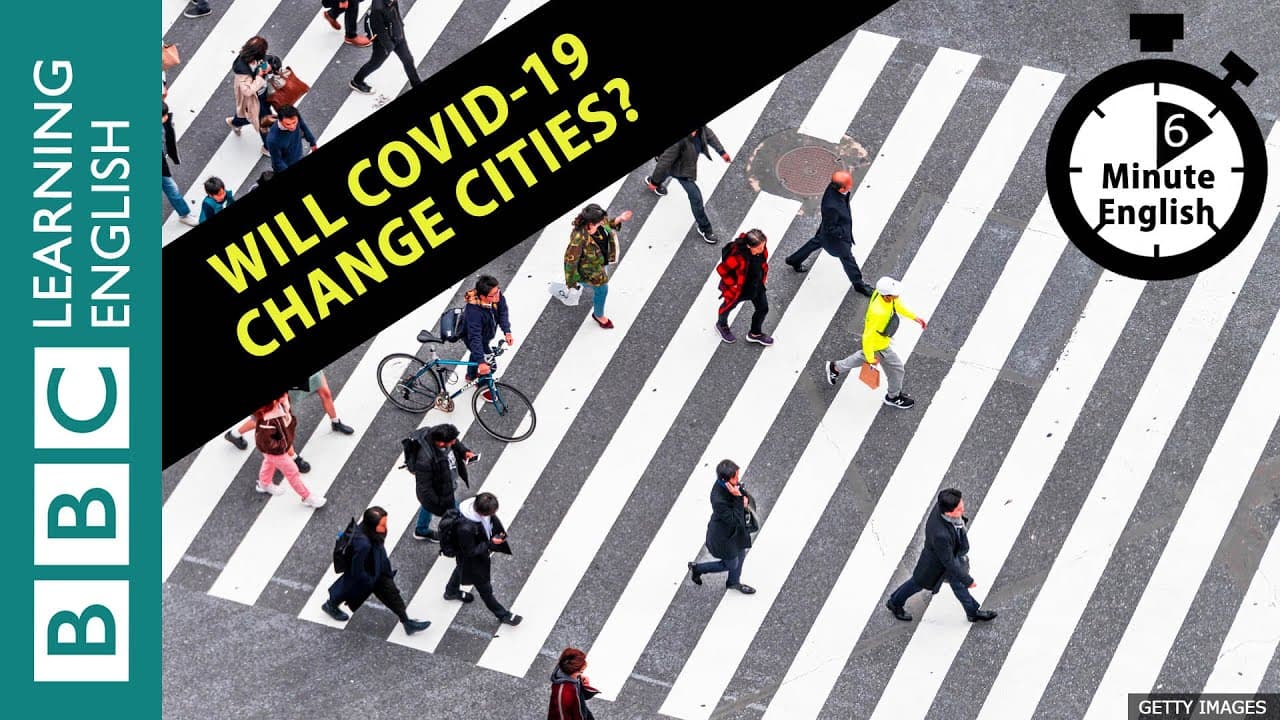
TL;DR
Covid-19 is reshaping urban living by reducing pollution and allowing nature to thrive in cities during lockdowns, highlighting the need for redesign. Concepts like the '15-minute city' in Paris aim to improve access to services and reduce commuting, but moving people from city centers may threaten their livelihoods as many rely on proximity to work.
Transcript
Hello. This is 6 Minute English from BBC Learning English. I’m Neil. And I’m Rob. From the bubonic plague to cholera and tuberculosis, disease and pandemics have changed the way cities have been built. For example, buildings in 19th century Paris were designed with large, high-up windows to allow plenty of sunlight. They were supposed to stop the s... Read More
Key Insights
- Pandemics have historically influenced city architecture, such as 19th-century Paris, which adapted its buildings to combat tuberculosis.
- The Covid-19 lockdowns transformed cities worldwide, reducing pollution and allowing nature to reclaim urban spaces.
- Mumbai, with a population of approximately 20 million, exemplifies the challenges of social distancing in densely populated metropolises.
- Beatriz Colomina highlights that airborne diseases like tuberculosis spread rapidly in densely populated cities, unlike diseases like cholera.
- The '15-minute city' concept in Paris aims to localize public services, reducing the need for long commutes and supporting remote work.
- Dr. Vaidehi Tandel argues that moving people away from city centers can disrupt their livelihoods due to increased commuting costs.
- Antibiotics, discovered too late for many past epidemics, highlight the importance of timely medical advancements in combating airborne diseases.
- Efforts to make cities less crowded must balance health concerns with economic realities, as many residents rely on city proximity for employment.
Install to Summarize YouTube Videos and Get Transcripts
Explore YouTube Video Summarizer or Get YouTube Transcript Extractor
Questions & Answers
Q: How have pandemics historically influenced city design?
Pandemics have historically prompted changes in city design to combat the spread of diseases. For example, 19th-century Paris adapted its architecture with large windows to allow sunlight, aiming to prevent tuberculosis spread. Similarly, cholera outbreaks led to improved sewage systems in London, showcasing how health crises drive urban planning innovations.
Q: What changes did cities experience during Covid-19 lockdowns?
During Covid-19 lockdowns, cities worldwide experienced significant transformations. With reduced human activity, pollution levels dropped, and wildlife began to reclaim urban spaces. The quiet streets, free from traffic noise, allowed natural sounds like birdsong to become prominent, highlighting the potential for greener, quieter urban environments post-pandemic.
Q: Why is social distancing challenging in cities like Mumbai?
Social distancing is challenging in cities like Mumbai due to their high population density. With approximately 20 million residents, maintaining physical distance becomes difficult in crowded urban areas. This density exacerbates the spread of airborne diseases, reflecting the need for strategic urban planning to manage public health in large metropolises.
Q: What is the '15-minute city' concept, and where is it being implemented?
The '15-minute city' concept is being implemented in Paris, aiming to make all essential services accessible within a 15-minute walk from home. This urban planning approach supports remote work, reduces the need for long commutes, and encourages localized living, promoting sustainability and improving residents' quality of life in the post-Covid era.
Q: What challenges arise from moving people away from city centers?
Moving people away from city centers presents challenges related to livelihoods. Many residents depend on proximity to urban areas for employment, as commuting from further distances can be costly and time-consuming. This economic reality complicates efforts to decongest cities, as individuals prioritize job access over potential health benefits of reduced crowding.
Q: How did historical diseases like tuberculosis spread in cities?
Historical diseases like tuberculosis spread rapidly in cities due to high population density and airborne transmission. In urban environments with closely packed housing, such as tenements, the disease could spread 'like wildfire.' The lack of effective antibiotics until later exacerbated the impact, underscoring the need for architectural and medical responses to airborne health threats.
Q: What role did antibiotics play in combating historical epidemics?
Antibiotics played a crucial role in combating historical epidemics, but their discovery came too late for many past outbreaks. For instance, tuberculosis spread unchecked until the development of antibiotics like penicillin in 1928. This delay highlights the importance of timely medical advancements in controlling disease spread and improving public health outcomes in urban settings.
Q: Why do many residents prefer living in city centers despite health risks?
Many residents prefer living in city centers despite health risks because of economic factors. Proximity to employment opportunities reduces commuting costs and time, making city living more practical for those reliant on urban jobs. This preference reflects the balance individuals must strike between economic survival and potential health benefits associated with less crowded living environments.
Summary & Key Takeaways
-
Pandemics have historically reshaped urban landscapes, with Covid-19 continuing this trend by transforming cities during lockdowns. The reduction in pollution and the return of wildlife highlighted potential changes for future city planning.
-
Mumbai's dense population of 20 million poses challenges for social distancing, illustrating the broader issue of managing health risks in large metropolises. Historical parallels with tuberculosis emphasize the ongoing impact of airborne diseases.
-
Efforts to redesign cities post-Covid include concepts like the '15-minute city' in Paris, aiming to localize services. However, moving people from city centers can disrupt livelihoods, as many rely on proximity to work for economic survival.
Read in Other Languages (beta)
Share This Summary 📚
Summarize YouTube Videos and Get Video Transcripts with 1-Click
Try YouTube Summary with ChatGPT & Claude or YouTube Transcript Generator
Explore More Summaries from BBC Learning English 📚

Summarize YouTube Videos and Get Video Transcripts with 1-Click
Try YouTube Summary with ChatGPT & Claude or YouTube Transcript Generator