Meet the Options Greeks
TL;DR
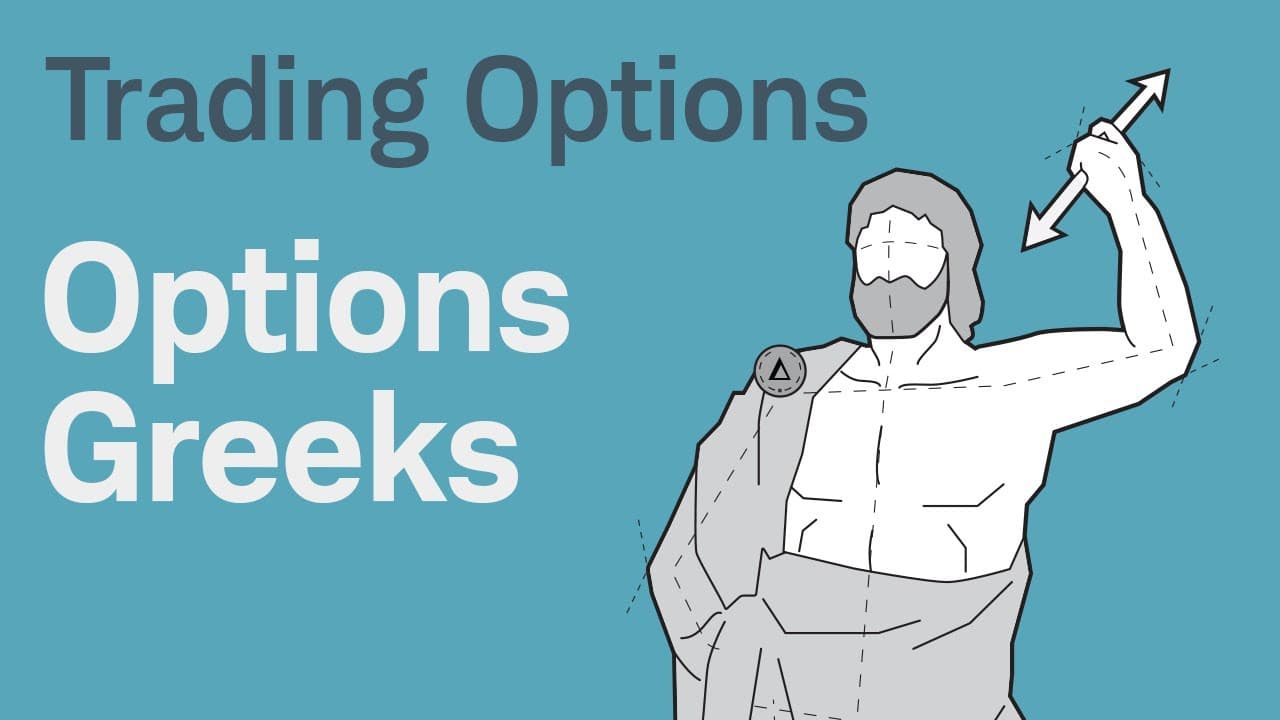
Options Greeks estimate how an option’s premium may respond to changes in the underlying price, time, implied volatility, and interest rates. Delta, gamma, theta, vega, and rho each measure a different sensitivity; for example, a .40 delta suggests the premium may rise $0.40 after a $1 increase in the underlying. Read on to see how each Greek works through concrete examples.
Transcript
If you dig deep down into your high school memories, you can probably uncover some facts about Greek mythology. Like Zeus, the ruler of Olympus, and all the gods. Hades, lord of the underworld. And…all those other guys in between. Well, those memories aren't so clear anymore. But don't worry. Today, we'll focus on a different group of greeks—the op... Read More
Key Insights
- 🖐️ Delta plays a crucial role in options trading by measuring the impact of underlying price changes on option premiums.
- ☠️ Gamma complements delta by showing the expected rate of change in delta with underlying price movements.
- 🥳 Theta is important for managing time decay risk, indicating how an option's value erodes with each passing day.
- 💱 Vega estimates the impact of changes in implied volatility on option premiums, helping traders navigate volatility fluctuations.
- ☠️ Rho tracks how interest rate changes may affect options premiums, though it is often overlooked in discussions of Options Greeks.
- 🧑🏭 Understanding Options Greeks helps traders make informed decisions, manage risk, and analyze the sensitivity of options to various factors.
- 😒 The combined use of Delta, Gamma, Theta, Vega, and Rho can provide insights into the potential impact of price, time, volatility, and interest rate changes on options premiums.
Install to Summarize YouTube Videos and Get Transcripts
Explore YouTube Video Summarizer or Get YouTube Transcript Extractor
Questions & Answers
Q: What are the Options Greeks?
The Options Greeks are measures that estimate how changes in certain factors may affect an option’s price. Delta and gamma address price movements, theta covers time decay, vega tracks implied volatility, and rho addresses interest-rate changes.
Q: What does delta measure in options trading?
Delta estimates how much an option’s premium may change when the underlying price changes by $1. For example, a call option with a delta of .40 would be expected to gain $0.40 if the underlying rose $1.
Q: Can delta estimate the probability that an option expires in the money?
Some traders use delta to estimate the probability that an option will expire in the money. Under this interpretation, a delta of .40 suggests a 40% chance of expiring in the money, while a lower delta indicates lower odds.
Q: How does gamma affect delta?
Gamma measures delta’s expected rate of change as the underlying price moves. If delta is .40 and gamma is .05, the first $1 move has an expected $0.40 premium impact, and adding gamma produces a new delta of .45 for the next dollar move.
Q: What does theta measure in options trading?
Theta estimates how much value an option may lose with each passing day. An option with a theta of negative .04 would be expected to lose $0.04 daily, with time decay working against buyers and for sellers.
Q: What does vega measure in options trading?
Vega estimates how much an option’s premium may change for each one-percentage-point change in implied volatility. If vega is .03 and implied volatility falls by one percentage point, the premium would be expected to decline by $0.03.
Q: How does expiration affect an option’s vega?
The further away an option’s expiration is, the higher its vega will be. Therefore, options with longer expirations may react more strongly to changes in implied volatility.
Q: What does rho measure in options trading?
Rho identifies how much an option’s premium may move when interest rates change. Because rates change slowly, the transcript says they have a smaller impact on options trading, so rho is often omitted from discussions of the Greeks.
Summary & Key Takeaways
-
Options Greeks are metrics used in options trading to predict how changes in factors like price, time, and volatility will affect option prices.
-
Delta measures price impact, gamma calculates rate of change, theta evaluates time decay, vega estimates volatility impact, and rho tracks interest rate sensitivity.
-
Understanding and using Options Greeks can help traders make informed decisions and manage risk in options trading.
Read in Other Languages (beta)
Share This Summary 📚
Summarize YouTube Videos and Get Video Transcripts with 1-Click
Try YouTube Summary with ChatGPT & Claude or YouTube Transcript Generator
Explore More Summaries from Charles Schwab 📚





Summarize YouTube Videos and Get Video Transcripts with 1-Click
Try YouTube Summary with ChatGPT & Claude or YouTube Transcript Generator