How to Attach a Ceramic Mug Handle
TL;DR
- Watch a ceramic artist demonstrate how to craft and attach unique mug handles, emphasizing design and functionality.
Transcript
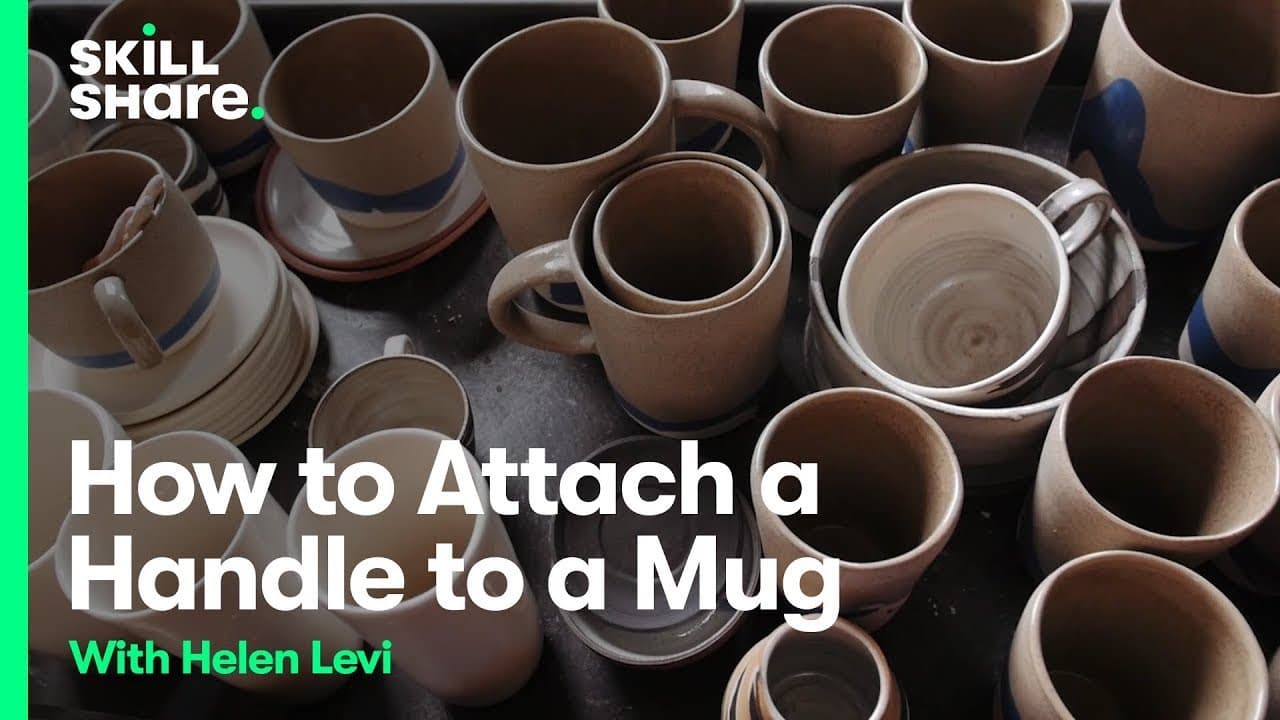
I'm Helen Levy uh we're in my studio in Red Hook Brooklyn where I make Ceramics with my business partner Billy hey okay when the handles are dry you can see I can touch it without getting my fingerprints all over it and smooshing it but it's still soft enough that I can move it around that's a good time and I would put plastic over the ones you're ... Read More
Key Insights
- ☠️ Proper drying techniques, like plastic wrapping, prevent uneven drying rates and ensure handle adhesion.
- 💯 Slip, a water-clay mixture, acts as a glue to securely attach scored clay pieces together.
- 😏 Designing mug handles involves balancing comfort, aesthetics, and creative exploration to complement each mug's unique form.
- ❓ Scoring clay surfaces before attachment is essential to create rough surfaces for better adhesion.
- 🍵 Adequate pressure during attachment ensures firm bonding while preserving the handle's shape and design integrity.
- 😏 The attachment step is crucial in the ceramic process, transforming individual components into a cohesive, functional mug design.
- 😍 Rushing the handle attachment process may lead to cracks or detachment, impacting the mug's quality and functionality.
Install to Summarize YouTube Videos and Get Transcripts
Explore YouTube Video Summarizer or Get YouTube Transcript Extractor
Questions & Answers
Q: How does Helen Levy ensure proper drying of ceramic mug handles?
Levy emphasizes protecting handles with plastic to prevent uneven drying rates, minimizing the risk of detachment or cracking.
Q: What is slip, and how does it aid in attaching clay pieces?
Slip is a mixture of water and dry clay particles, serving as a glue to bind scored clay surfaces together securely during attachment.
Q: What factors does Helen Levy consider when designing mug handles?
Levy focuses on balancing comfort, visual aesthetics, and experimentality in handle design, tailoring each handle to complement specific mug shapes.
Q: Why is scoring clay surfaces crucial before attaching them?
Scoring clay creates rough surfaces for better adhesion, ensuring that attached pieces stay firmly in place as the clay dries and shrinks.
Summary & Key Takeaways
-
Helen Levy showcases the process of crafting and attaching ceramic mug handles in her Brooklyn studio with partner Billy.
-
Techniques include shaping handles, scoring, attaching with slip, and ensuring proper drying for stability.
-
Levy highlights the balance between aesthetic appeal and functionality in designing mug handles.
Read in Other Languages (beta)
Share This Summary 📚
Summarize YouTube Videos and Get Video Transcripts with 1-Click
Try YouTube Summary with ChatGPT & Claude or YouTube Transcript Generator
Explore More Summaries from Skillshare 📚






Summarize YouTube Videos and Get Video Transcripts with 1-Click
Try YouTube Summary with ChatGPT & Claude or YouTube Transcript Generator