How I'd Learn AI If I Could Start Over!
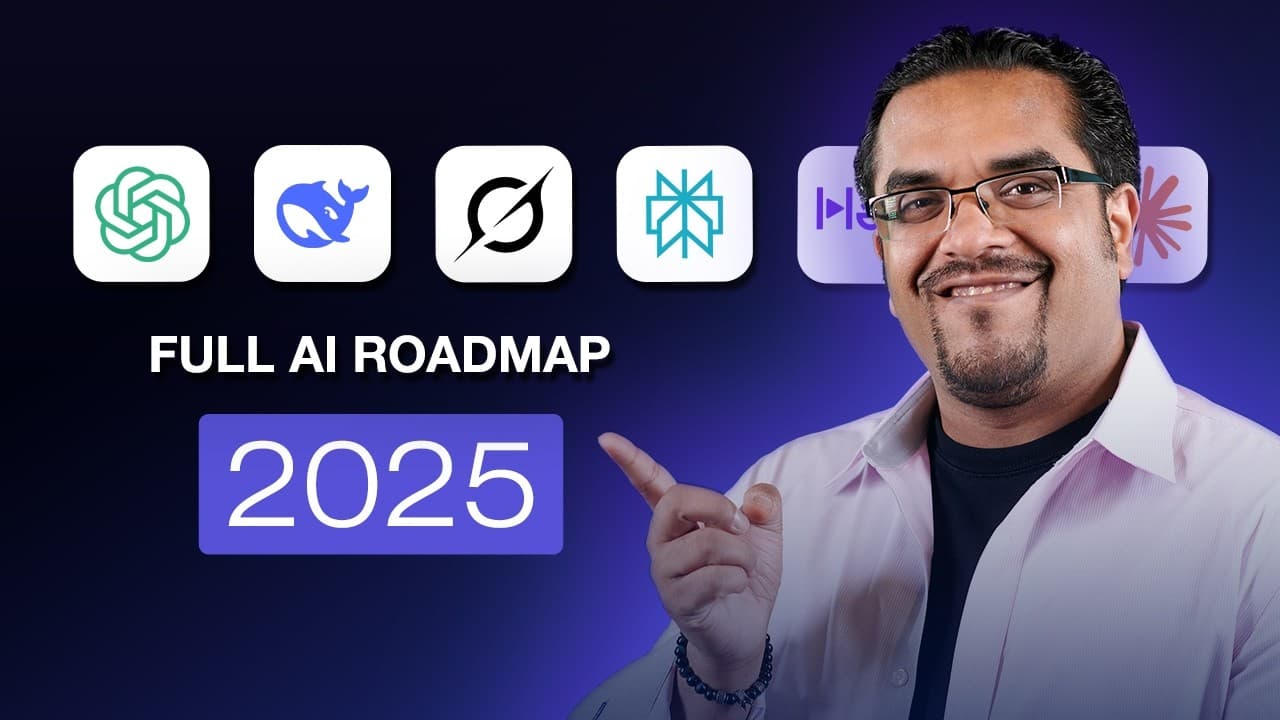
TL;DR
Learn AI strategically to stay relevant by 2026.
Transcript
by 2026 there will be two types of professionals those who've mastered AI and those struggling to remain relevant the skills gap isn't coming it's already here hey there this is Onyx AI clone while the real Anick is out there running multiple businesses scaling companies and working with clients I'm here to share his knowledge look we're witnessing... Read More
Key Insights
- By 2026, AI will automate 50% of work, making mastery essential for professionals to remain relevant.
- The AI skills gap is rapidly widening, requiring a strategic approach to learning and adaptation.
- AI is transitioning from a tool to an autonomous agent, reshaping industries at an unprecedented pace.
- Prompt engineering is foundational, but future skills will focus on AI orchestration and strategic implementation.
- The most valuable AI skills are shifting from technical implementation to strategic direction and orchestration.
- AI's evolution demands a shift in learning from technical mastery to adaptability and strategic problem framing.
- The strategic path to AI mastery involves understanding interaction, creating value, and implementing strategically.
- Future AI roles will focus on orchestration, workflow architecture, and human-AI interface design.
Install to Summarize YouTube Videos and Get Transcripts
Explore YouTube Video Summarizer or Get YouTube Transcript Extractor
Questions & Answers
Q: What is the predicted impact of AI on the workforce by 2026?
By 2026, AI is expected to automate up to 50% of work activities, creating a significant shift in the job market. Professionals who master AI will have a competitive edge, while those who do not adapt may struggle to remain relevant. This transformation necessitates a strategic approach to AI learning and application.
Q: What are the three approaches to learning AI mentioned in the content?
The content outlines three approaches to learning AI: the traditional path, which involves university degrees and certifications; the hacker path, characterized by trial and error with the latest tools; and the strategic path, which focuses on deliberate skill stacking based on future trends. The strategic path is recommended for its efficiency and alignment with evolving AI demands.
Q: How does the content suggest using AI for learning AI?
The content suggests using AI itself as a learning tool by creating a custom learning assistant. This involves building a personal library of AI prompts, using tools like Prompt Perfect, and systematically testing and refining prompts. The approach emphasizes practical application and continuous learning, leveraging AI to enhance understanding and skill development.
Q: What is the role of prompt engineering in AI learning?
Prompt engineering is highlighted as a foundational skill in AI learning. It involves crafting precise and effective prompts to interact with AI systems, ensuring high-quality outputs. The content stresses the importance of building a personal library of proven prompts and using structured frameworks like the CRISPY framework to enhance AI communication and application.
Q: What are the key strategic skills for future AI roles?
Key strategic skills for future AI roles include problem framing, quality assurance, value measurement, and understanding AI limitations and failure modes. These skills emphasize the importance of strategic thinking and human judgment in directing AI applications and ensuring successful implementation, as AI systems become more integrated into workflows.
Q: How does the content propose addressing the AI skills gap?
The content proposes addressing the AI skills gap through a strategic learning path that focuses on foundational AI interaction skills, application development, and strategic implementation. It emphasizes the importance of adaptability, continuous learning, and building real-world applications to stay competitive in the evolving AI landscape.
Q: What is the significance of AI orchestration in future roles?
AI orchestration is identified as a critical discipline in future roles, involving the coordination of multiple specialized AI systems. It emphasizes the strategic direction of AI applications, focusing on enhancing human-AI collaboration and ensuring seamless integration into workflows. This skill will be essential as AI systems become more autonomous and interconnected.
Q: How should individuals prepare for the future AI economy?
Individuals should prepare for the future AI economy by focusing on strategic skill stacking, continuous learning, and building real-world AI applications. The content advises developing a lifelong learning system that incorporates new AI developments and emphasizes the importance of adaptability and strategic thinking to leverage AI capabilities effectively in various fields.
Summary & Key Takeaways
-
AI is evolving rapidly, with predictions that by 2026, 50% of work could be automated. The content outlines a strategic approach to learning AI, focusing on foundational skills, application development, and strategic implementation to stay competitive.
-
The video emphasizes the importance of prompt engineering as a starting point and highlights the need for adaptability in learning AI. It suggests a 90-day roadmap for building AI skills, focusing on real-world applications and strategic thinking.
-
Future AI roles will require skills in AI orchestration and strategic problem framing. The content advises building a personal library of AI prompts and using AI to enhance learning, stressing the importance of continuous adaptation and strategic skill stacking.
Read in Other Languages (beta)
Share This Summary 📚
Summarize YouTube Videos and Get Video Transcripts with 1-Click
Try YouTube Summary with ChatGPT & Claude or YouTube Transcript Generator
Explore More Summaries from Anik Singal 📚




Summarize YouTube Videos and Get Video Transcripts with 1-Click
Try YouTube Summary with ChatGPT & Claude or YouTube Transcript Generator