4 Plants that Hunt Underground
TL;DR
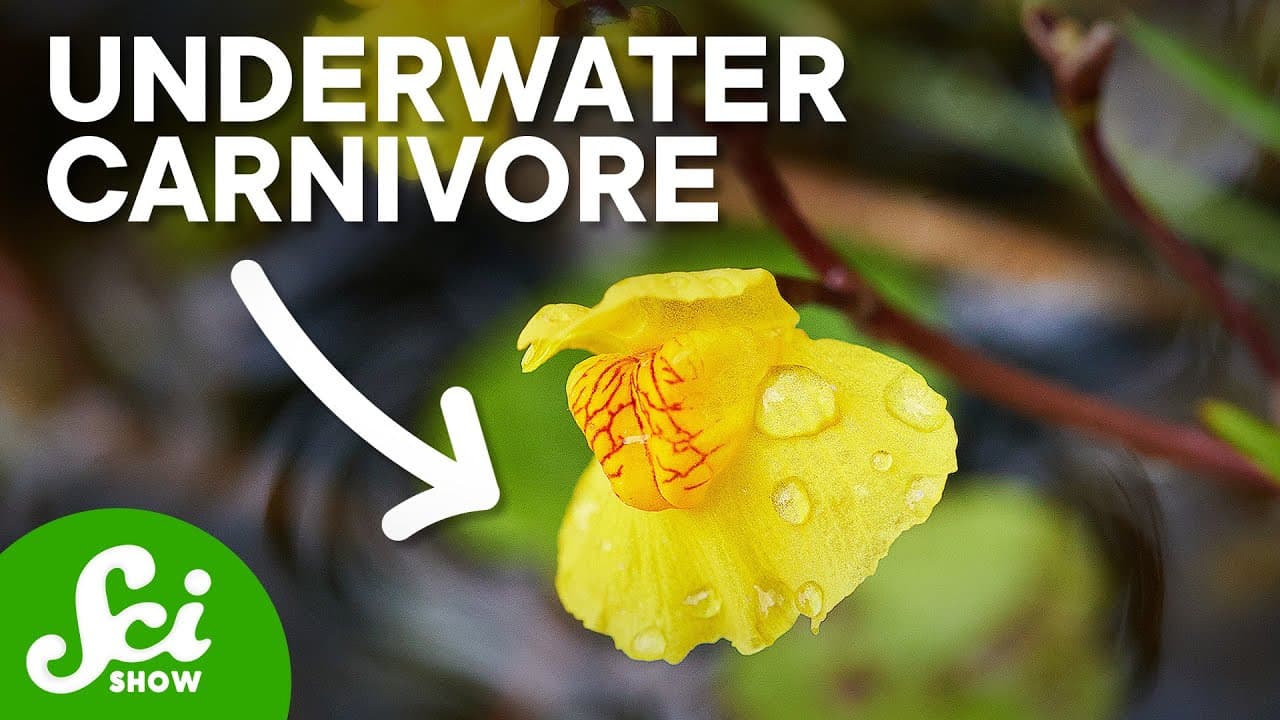
Carnivorous plants have evolved underground traps to catch prey in low-nutrient environments.
Transcript
[♪ INTRO] When you hear the term carnivorous plant, your mind might conjure up a few dramatic images. Like a Venus fly trap snapping its jaws around its prey, or a small mammal using a pitcher plant as a toilet. But in the nearly 100 million years carnivorous plants have been on Earth, they’ve evolved a bunch of different tricks for catching ... Read More
Key Insights
- 😘 Carnivorous plants have evolved underground traps to catch prey in low-nutrient environments.
- 🌱 Different carnivorous plants like Philcoxia, Genlisea, and Nepenthes pitcher plants use unique underground trapping mechanisms.
- 🪤 The underground traps range from passive traps like Genlisea's eel traps to active suction traps like Bladderworts'.
- 🤪 Philcoxia's tiny underground traps produce sticky goo to catch microscopic prey efficiently.
- 🧑🦼 Genlisea's eel traps prevent prey from turning around with inward-pointing hairs.
- 🌱 Nepenthes pitcher plants underground traps catch larger prey like ants.
- 🧑🔬 Scientists confirm a plant's carnivorous nature by conducting experiments to ensure active digestion of prey.
Install to Summarize YouTube Videos and Get Transcripts
Explore YouTube Video Summarizer or Get YouTube Transcript Extractor
Questions & Answers
Q: Why do some carnivorous plants have evolved underground traps?
Carnivorous plants develop underground traps to catch prey in low-nutrient environments where the soil cannot provide essential nutrients like nitrogen and phosphorus.
Q: How do Genlisea's eel traps work?
Genlisea's eel traps are long tubes lined with hairs pointing inward, making it hard for prey to turn around; they blend in with the soil and offer a surface for prey to crawl along.
Q: How do scientists confirm if a plant is carnivorous?
Scientists confirm a plant's carnivorous nature by ensuring it traps, kills, digests, and absorbs nutrients from prey to aid its growth using experiments like feeding them nitrogen-15 labeled prey.
Q: What is unique about Bladderworts' trapping mechanism?
Bladderworts use active suction traps that rely on negative pressure. When prey touches a trigger hair, the trap door opens, and the prey is sucked in within milliseconds.
Summary & Key Takeaways
-
Carnivorous plants have evolved various underground traps to catch prey in low-nutrient environments.
-
Philcoxia, Genlisea, and Nepenthes pitcher plants are examples of carnivorous plants with different underground trapping mechanisms.
-
Bladderworts use active suction traps, while Genlisea's eel traps and Nepenthes pitcher traps are passive and catch larger prey.
Read in Other Languages (beta)
Share This Summary 📚
Summarize YouTube Videos and Get Video Transcripts with 1-Click
Try YouTube Summary with ChatGPT & Claude or YouTube Transcript Generator
Explore More Summaries from SciShow 📚


Summarize YouTube Videos and Get Video Transcripts with 1-Click
Try YouTube Summary with ChatGPT & Claude or YouTube Transcript Generator