Bootstrap sweep Circuit | PDC | Lec-83
TL;DR
The video explains bootstrap speed circuits and their relationship with Miller circuits.
Transcript
hi everyone in this video I am going to explain about the bootstrap speed circuit in the previous video we have seen Miller's sweep circuit so this bootstrap sweeps are cute and Miller sweeps are cute both are coming from the standard bootstrap and Miller circuit bootstrap circuit and as well as Miller circuits in the standard Circuit of this boots... Read More
Key Insights
- 🐎 Bootstrap speed circuits leverage grounding techniques to affect voltage behavior, crucial for stability and performance.
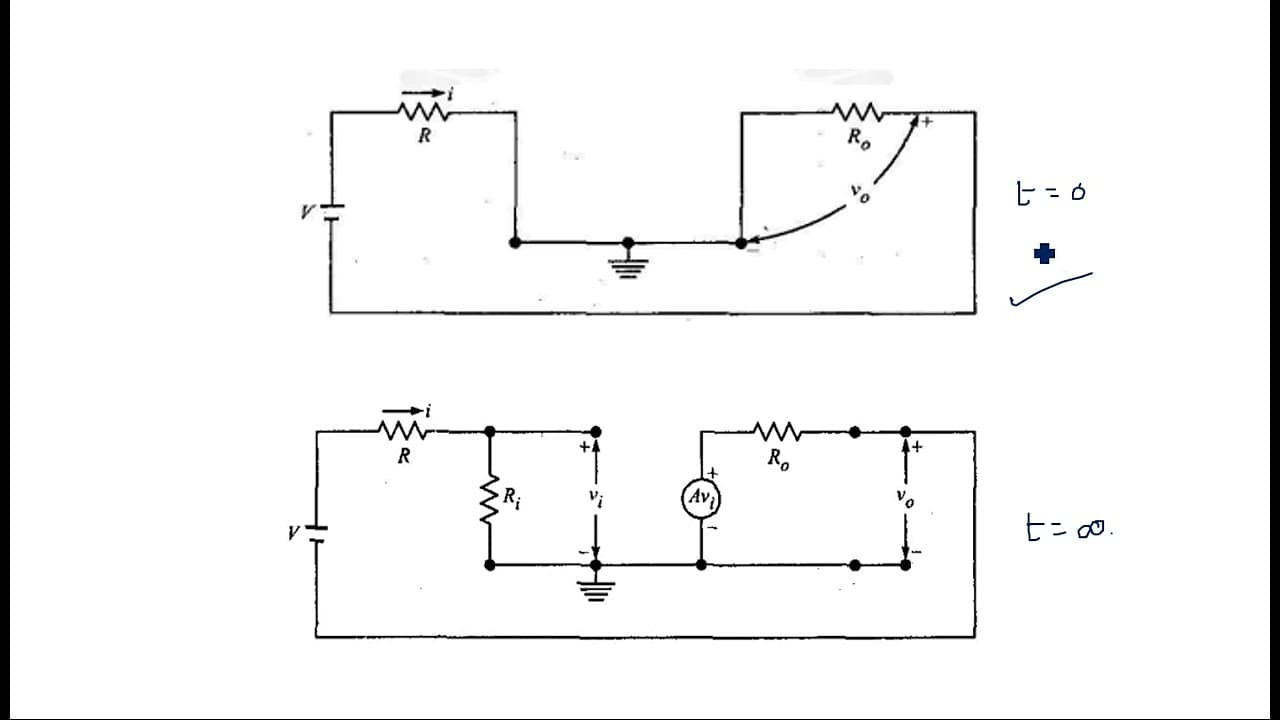
- 🦖 The distinction between T=0 and T=Infinity reveals the time-dependent behavior of capacitors and their influence on output characteristics.
- 🦻 Understanding Thevenin's models helps in simplifying complex circuit analysis, aiding in practical applications.
- 🤗 Maintaining an open-loop gain of unity ensures accurate signal transmission without distortion across circuits.
- 🧑🏭 Slope error is a critical factor influenced by resistance values, impacting the linearity and steepness of output signals.
- 📡 Resistor selection is essential for optimizing circuit performance, ultimately affecting slope error and signal fidelity.
- 🎨 Capacitors must charge linearly to achieve the desired response in timing circuits, highlighting the need for careful design.
Install to Summarize YouTube Videos and Get Transcripts
Explore YouTube Video Summarizer or Get YouTube Transcript Extractor
Questions & Answers
Q: What is the main focus of the video about bootstrap speed circuits?
The main focus of the video is to explain the design and functioning of bootstrap speed circuits alongside Miller circuits. It outlines how these circuits function within standard circuit designs, the grounding methods utilized, and how these influence their behavior over time.
Q: How does the equivalent circuit differ at T=0 and T=Infinity?
At T=0, the circuit's output voltage maintains its value due to the capacitor's inability to change instantaneously. Conversely, at T=Infinity, the capacitor behaves as an open circuit, and calculations are made to establish the output voltage based on KVL, showing significant differences in circuit behavior over time.
Q: What is the significance of voltage gain in bootstrap and Miller circuits?
The voltage gain, often set to unity in these circuits, ensures that the input voltage accurately appears at the output without distortion. Understanding this relationship is crucial for optimizing circuit design and performance.
Q: What factors influence the slope error in bootstrap circuits?
Slope error depends significantly on the values of resistances in the circuit. The input resistance and resistance chosen for capacitor charging are pivotal in optimizing slope error to maintain accurate waveform output.
Q: How do grounding techniques influence circuit design?
Grounding methods determine the circuit's functionality and stability. By grounding specific terminals, designers can affect feedback and capacitance behavior, which is essential for achieving desired amplification and transient response.
Q: What role does Thevenin's Theorem play in circuit analysis?
Thevenin's Theorem simplifies complex circuits into equivalent circuits, making it easier to analyze circuit behavior and determine output voltages and currents under various conditions, particularly at critical time points such as T=0 and T=Infinity.
Q: In what way does the output voltage behave at T=0 and T=∞?
At T=0, the output voltage remains unchanged, indicating stability. At T=Infinity, the capacitor acts as an open circuit, resulting in a different voltage that can be calculated, showcasing how the circuit evolves over time due to capacitive effects.
Q: Why is it essential to select the proper resistance values in circuit design?
Proper resistance selection is vital to minimize slope error, allowing for more precise control over timing and signal fidelity in the output. This directly impacts the circuit’s performance in real-time applications.
Summary & Key Takeaways
-
The video discusses bootstrap and Miller speed circuits, and how they both stem from standard circuit designs. It highlights grounding techniques that impact circuit functionality.
-
Key concepts such as Thevenin's models and equivalent circuit behaviors at two time points, T=0 and T=Infinity, are explained to illustrate voltage changes over time in the circuits.
-
The video concludes with a detailed calculation of slope error, emphasizing the importance of proper resistance selection in optimizing circuit performance.
Read in Other Languages (beta)
Share This Summary 📚
Summarize YouTube Videos and Get Video Transcripts with 1-Click
Try YouTube Summary with ChatGPT & Claude or YouTube Transcript Generator