Can climate change cause more disease? ⏲️ 6 Minute English
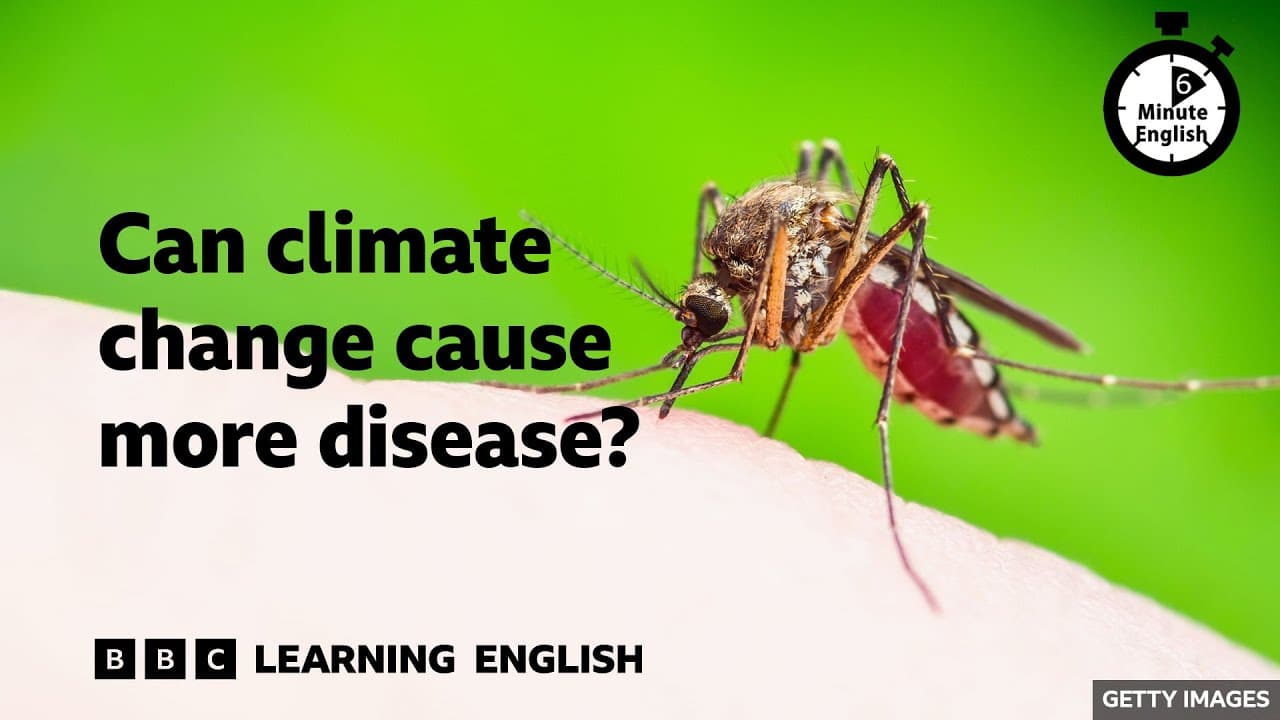
TL;DR
Climate change may increase mosquito-borne diseases like dengue.
Transcript
Hello. This is 6 Minute English from BBC Learning English. I’m Beth. And I’m Neil. Here at 6 Minute English, we discussed animals adapting their behaviour in response to climate change in earlier programmes, but we didn’t focus on one species in detail. So, in this programme, we’ll take a look at an especially unwelcome insect: the mosquito. Ev... Read More
Key Insights
- Mosquito-borne diseases kill around three-quarters of a million people globally each year, with children under five being the most affected.
- Climate change is causing mosquitoes to spread to new regions, including Europe, potentially increasing the incidence of diseases like dengue fever.
- Dengue fever symptoms include fever, muscle aches, and red spots on the skin, with a critical window for treatment between days five and seven.
- Periods of drought, exacerbated by climate change, force people to collect water in containers, providing breeding grounds for mosquitoes.
- Higher temperatures accelerate the replication of viruses within mosquitoes, increasing the rate at which they can transmit diseases.
- Poverty and urbanization contribute to the spread of dengue, as overcrowded living conditions with poor sanitation create ideal environments for mosquitoes.
- The domino effect of dengue means it is spreading to new areas, including parts of Europe like France, Spain, and Italy.
- Technological advancements, such as early warning systems and vaccine development, offer hope in controlling the spread of dengue and similar diseases.
Install to Summarize YouTube Videos and Get Transcripts
Explore YouTube Video Summarizer or Get YouTube Transcript Extractor
Questions & Answers
Q: What are the symptoms of dengue fever?
Dengue fever symptoms include fever, muscle aches, and red spots on the skin. These symptoms indicate the presence of the disease in the body. A critical treatment window exists between days five and seven of infection, during which prompt medical attention is crucial for survival.
Q: How does climate change affect the spread of mosquito-borne diseases?
Climate change affects the spread of mosquito-borne diseases by enabling mosquitoes to inhabit new areas due to warming temperatures. Additionally, periods of drought force people to collect water in containers, providing breeding grounds for mosquitoes. Higher temperatures also accelerate virus replication within mosquitoes, increasing transmission rates.
Q: What role does poverty play in the spread of dengue?
Poverty plays a significant role in the spread of dengue as it often forces people to live in overcrowded urban areas with poor sanitation. These conditions create ideal environments for mosquitoes to breed and thrive, leading to a higher incidence of dengue and other mosquito-borne diseases.
Q: What is the domino effect mentioned in relation to dengue?
The domino effect in relation to dengue refers to the situation where the spread of the disease in one area leads to further outbreaks in new regions. This effect is exacerbated by climate change and urbanization, causing dengue to spread to parts of the world that previously did not have it, such as Europe.
Q: How are technological advancements helping to combat dengue?
Technological advancements are helping to combat dengue through the development of early warning systems that can predict outbreaks months in advance. Additionally, ongoing research into vaccine development aims to reduce the incidence and spread of dengue, offering hope for controlling this mosquito-borne disease.
Q: What is the critical window for treating dengue fever?
The critical window for treating dengue fever is between days five and seven of the infection. During this period, timely medical intervention is crucial to ensure the patient's survival. Recognizing the symptoms early and seeking prompt treatment can significantly improve outcomes for those affected by dengue.
Q: Which areas are seeing new cases of dengue due to climate change?
Due to climate change, new cases of dengue are being reported in areas that previously did not have the disease, including parts of Europe such as France, Spain, and Italy. The warming temperatures and changing environmental conditions are enabling mosquitoes to spread to these new regions.
Q: What are some common mosquito-borne diseases besides dengue?
Besides dengue, common mosquito-borne diseases include malaria and yellow fever. These diseases are transmitted by mosquitoes and pose significant health risks globally, particularly in regions where mosquitoes are prevalent and environmental conditions favor their breeding and spread.
Summary & Key Takeaways
-
Mosquito-borne diseases are a significant global health concern, killing hundreds of thousands annually, particularly affecting young children. Climate change is exacerbating this issue by enabling mosquitoes to inhabit new areas, increasing the spread of diseases like dengue fever.
-
Dengue fever, transmitted by mosquitoes, presents with symptoms such as fever and muscle aches. A critical treatment window exists between days five and seven of infection. Climate change and poverty are significant factors in the spread of dengue, as they create favorable conditions for mosquitoes.
-
Efforts to combat dengue include technological advancements like early warning systems and vaccine development. These measures aim to predict outbreaks and reduce the spread of mosquito-borne diseases, offering hope for managing these health challenges in the future.
Read in Other Languages (beta)
Share This Summary 📚
Summarize YouTube Videos and Get Video Transcripts with 1-Click
Try YouTube Summary with ChatGPT & Claude or YouTube Transcript Generator
Explore More Summaries from BBC Learning English 📚

Summarize YouTube Videos and Get Video Transcripts with 1-Click
Try YouTube Summary with ChatGPT & Claude or YouTube Transcript Generator