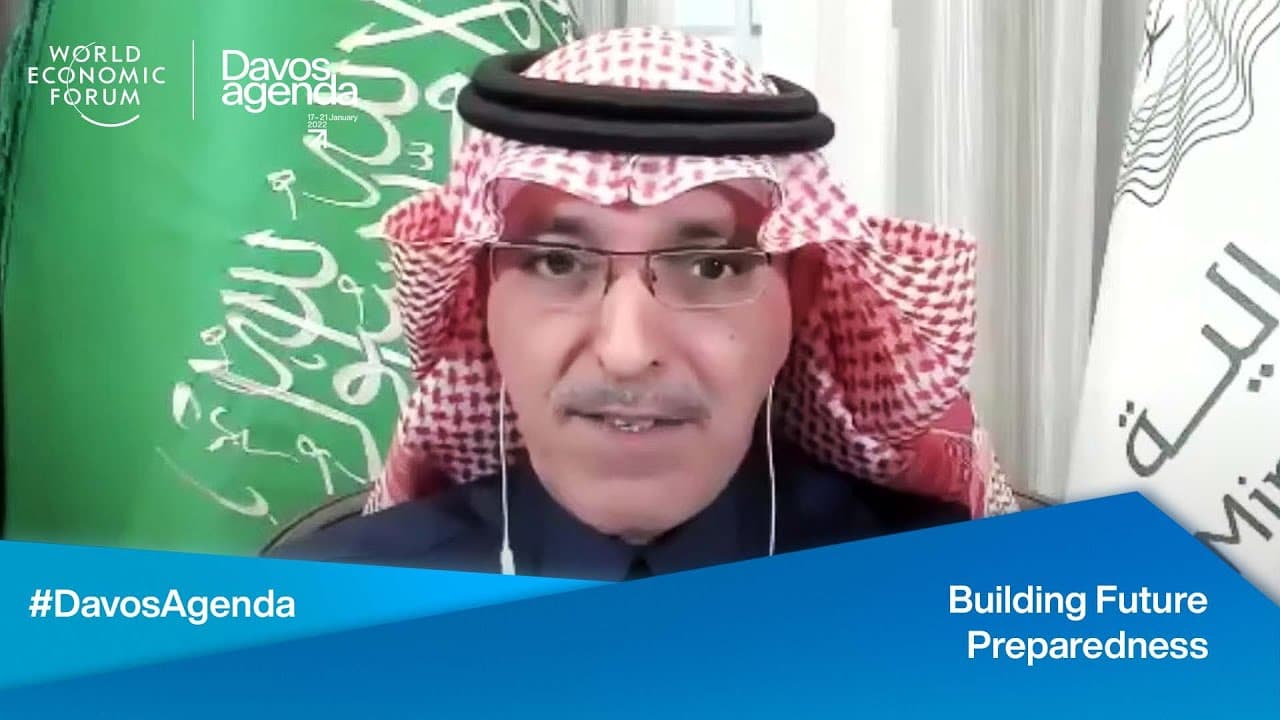
Building Future Preparedness | Davos Agenda 2022
TL;DR
Leaders discuss global risks post-pandemic, emphasizing future preparedness and scientific collaboration.
Transcript
hello good morning from new york my name is adam tues i am the director of the european institute at columbia university and it's my great pleasure to welcome you to this session on behalf of the world economic forum on building future preparedness we've all been living through we indeed still are living through one of the great biological shocks p... Read More
Key Insights
- 🌐 Scientific collaboration and preparedness are vital for addressing global risks post-pandemic.
- 🌐 Global leaders emphasize the need for immediate action to assess risks, prepare responses, and build resilience.
- 🫚 Multidisciplinary approaches, scenario planning, and addressing root causes are crucial elements in global risk management.
- 🖐️ Institutions like the G20 play a pivotal role in promoting global cooperation and strategic planning for future crises.
- ✳️ The importance of balancing safety with risks for economic and societal advancement is a critical consideration in risk management.
- ✳️ Strategies to combat groupthink include encouraging diverse perspectives and challenging assumptions for effective risk assessment and preparedness.
- 🌐 Global leaders emphasize the importance of addressing underlying causes like ecological change to prevent future crises.
Install to Summarize YouTube Videos and Get Transcripts
Explore YouTube Video Summarizer or Get YouTube Transcript Extractor
Questions & Answers
Q: How can we balance safety with the need to accept certain risks for economic and societal advancement?
Balancing safety and risks requires informed decision-making, assessing risks comprehensively, and considering the long-term consequences of actions while seeking global cooperation in mitigating risks.
Q: How can institutions like the G20 break the confines of national interests to address global risks collectively?
Institutions like the G20 play a crucial role in promoting global cooperation, ensuring transparency, and aligning international efforts to address shared risks beyond national boundaries.
Q: How can we combat groupthink and ensure diverse perspectives in risk assessment and preparedness?
Encouraging multidisciplinary collaboration, scenario planning, and challenging assumptions can help combat groupthink, promoting critical thinking and diverse viewpoints in risk assessment.
Q: What are the underlying causes and challenges of addressing root issues beyond symptoms like pandemics?
Addressing root causes such as ecological change, urbanization, and global connectivity is essential to prevent future crises and promote sustainable solutions for global challenges.
Summary & Key Takeaways
-
Leaders address the urgent need to prepare for future risks post-pandemic.
-
Discuss the challenges of assessing risks, preparing responses, and building resilience.
-
Emphasis on global cooperation, engagement with scientific expertise, and strategic planning for future crises.
Read in Other Languages (beta)
Share This Summary 📚
Summarize YouTube Videos and Get Video Transcripts with 1-Click
Try YouTube Summary with ChatGPT & Claude or YouTube Transcript Generator
Explore More Summaries from World Economic Forum 📚
Summarize YouTube Videos and Get Video Transcripts with 1-Click
Try YouTube Summary with ChatGPT & Claude or YouTube Transcript Generator