Quantum mechanics as a framework. Defining linearity
TL;DR
Quantum mechanics is a framework that has replaced classical physics and is used to describe various physical phenomena including electromagnetism, strong interaction, optics, and gravity.
Transcript
PROFESSOR: Very good. So it's time to start. So today, I want to talk about general features of quantum mechanics. Quantum mechanics is something that takes some time to learn, and we're going to be doing some of that learning this semester. But I want to give you a perspective of where we're going, what are the basic features, how quantum mechanic... Read More
Key Insights
- 🦾 Quantum mechanics replaced classical physics as the correct description of fundamental theory.
- ❓ It is applied to various physical phenomena and has different branches such as quantum electrodynamics and quantum chromodynamics.
- 🦾 Linearity is a fundamental aspect of quantum mechanics, enabling the combination and scaling of solutions.
Install to Summarize YouTube Videos and Get Transcripts
Explore YouTube Video Summarizer or Get YouTube Transcript Extractor
Questions & Answers
Q: How does quantum mechanics differ from classical physics?
Quantum mechanics has replaced classical physics as the correct description of fundamental theory, as it provides a more accurate and conceptually different understanding of how things work.
Q: What are some applications of quantum mechanics?
Quantum mechanics is applied to different physical phenomena, such as electromagnetism, strong interaction, optics, and gravity. It is used in fields like quantum electrodynamics and quantum chromodynamics.
Q: What is linearity in quantum mechanics?
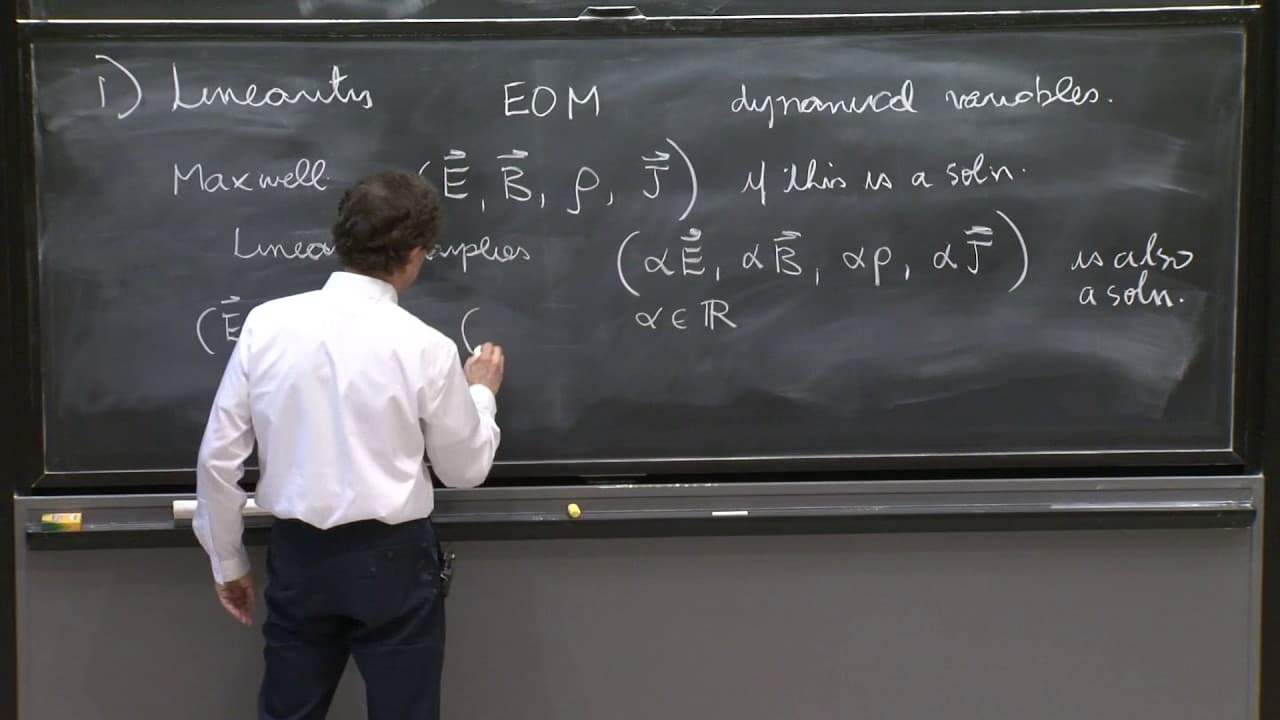
Linearity is a fundamental aspect of quantum mechanics, allowing for the combination of solutions and the scaling of values. In a linear theory, if you have two solutions, you can add them together or scale them by a number and still have a valid solution.
Q: How is linearity demonstrated in Maxwell's theory of electromagnetism?
Maxwell's theory of electromagnetism is an example of a linear theory. It allows for the combination of electromagnetic waves without affecting each other, enabling the simultaneous transmission of multiple phone calls and data.
Key Insights:
- Quantum mechanics replaced classical physics as the correct description of fundamental theory.
- It is applied to various physical phenomena and has different branches such as quantum electrodynamics and quantum chromodynamics.
- Linearity is a fundamental aspect of quantum mechanics, enabling the combination and scaling of solutions.
- Maxwell's theory of electromagnetism is an example of a linear theory, allowing for the simultaneous transmission of electromagnetic waves.
Summary & Key Takeaways
-
Quantum mechanics is a framework that has replaced classical physics as the correct description of fundamental theory.
-
It is applied to various physical phenomena such as electromagnetism, strong interaction, optics, and gravity.
-
Linearity is a fundamental aspect of quantum mechanics, allowing for the combination of solutions and the scaling of values.
Read in Other Languages (beta)
Share This Summary 📚
Summarize YouTube Videos and Get Video Transcripts with 1-Click
Try YouTube Summary with ChatGPT & Claude or YouTube Transcript Generator
Explore More Summaries from MIT OpenCourseWare 📚



Summarize YouTube Videos and Get Video Transcripts with 1-Click
Try YouTube Summary with ChatGPT & Claude or YouTube Transcript Generator