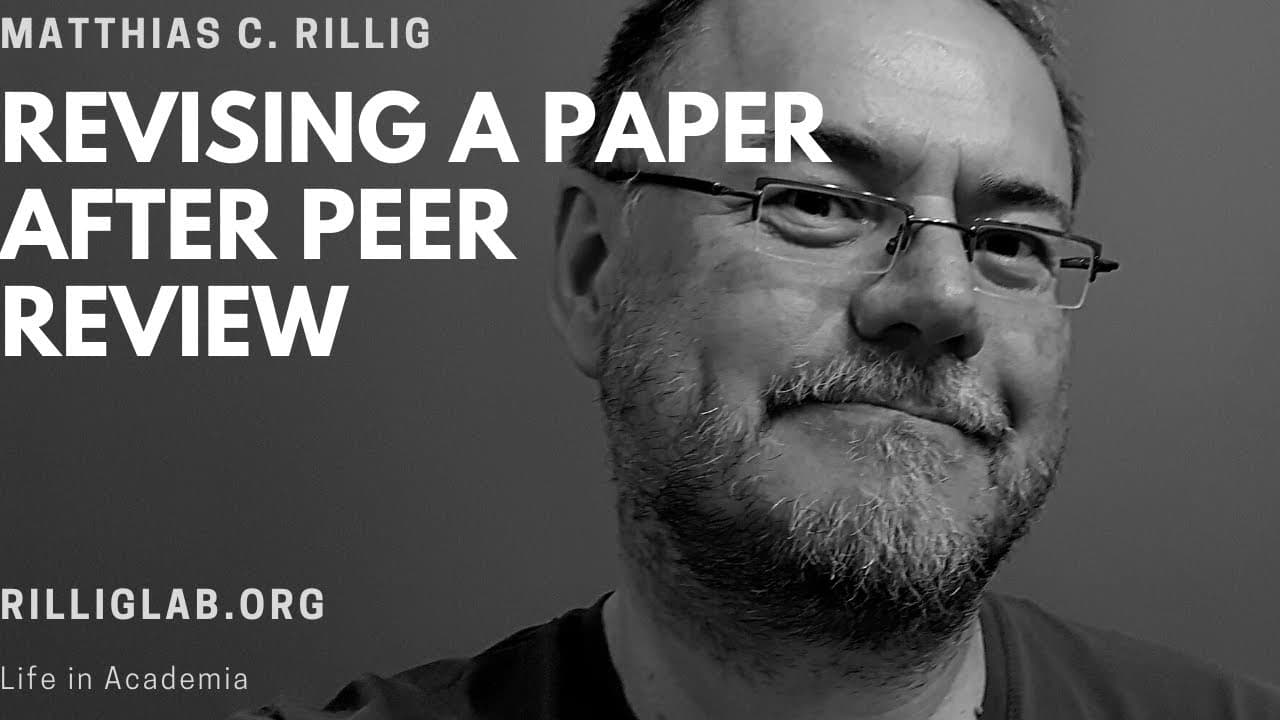
How to Effectively Revise a Paper After Peer Review
TL;DR
Use three key documents—original submission, revised manuscript, and a point-by-point response—to streamline the revision process. Maintain a professional tone, respond to all reviewer comments, and make clear visual distinctions in your response to improve clarity and effectiveness.
Transcript
my name is matthias village and today i'll talk to you about hadron by scientific paper after review so i'm going to divide this into some practical points that i'll talk about first and then i'll speak more about the general attitude and the style so the practical points first first of all you should go about starting this review by having three d... Read More
Key Insights
- 😥 Prepare three essential documents: original submission, revised document, and point-by-point response to reviewer comments.
- ❓ Use visual cues like color, font types, quotation marks, and underlining to clearly distinguish reviewer comments, responses, and changes made in the manuscript.
- 💱 Only make changes in the manuscript as requested by reviewers to avoid giving the impression that the initial submission was incomplete.
- 💬 Respond to every reviewer comment separately, if possible, and seek to improve the manuscript based on their suggestions.
- 🥌 Maintain a professional and non-emotional tone throughout the response, avoiding personal criticism of reviewers or questioning their qualifications.
- 🫵 Be open to understanding the reviewer's point of view and make necessary changes, while also providing clear explanations if you disagree with certain comments.
- 😑 Express gratitude towards reviewers for their time and effort in reviewing the manuscript, and acknowledge particularly helpful comments they provided.
Install to Summarize YouTube Videos and Get Transcripts
Explore YouTube Video Summarizer or Get YouTube Transcript Extractor
Questions & Answers
Q: What are the essential documents needed when starting a review process?
The three essential documents are the original submission, the revised document, and a point-by-point response to reviewer comments. These are crucial for maintaining clarity and organization throughout the review process.
Q: How can one make it easier for the editor to assess the changes made in the manuscript?
Along with stating that changes have been made, it is recommended to quote the text from the revised manuscript and underline the altered sections. This allows the editor to immediately assess the changes without referring to the revised manuscript separately.
Q: Should one make changes in the manuscript that are not requested by reviewers?
No, it is important to only make changes in direct response to reviewer comments. Making changes unrelated to the reviewers' suggestions may give the impression that the manuscript was not finalized when initially submitted, which is not ideal.
Q: What should be done before submitting the revised manuscript?
Before submission, it is crucial to ensure that all co-authors approve the point-by-point response and the revisions made in the manuscript. This ensures that everyone is aligned and supports the changes being made.
Summary & Key Takeaways
-
Before starting a review, ensure you have three documents ready: the original submission, the revised document, and a point-by-point response to reviewer comments.
-
Make it visually clear in the response document by using color, font types, and quotation marks to distinguish between reviewer comments, your responses, and the changes made in the manuscript.
-
Only make changes in the manuscript that are requested by reviewers and ensure all co-authors approve the revisions before submission.
Read in Other Languages (beta)
Share This Summary 📚
Summarize YouTube Videos and Get Video Transcripts with 1-Click
Try YouTube Summary with ChatGPT & Claude or YouTube Transcript Generator
Explore More Summaries from Life in academia 📚

Summarize YouTube Videos and Get Video Transcripts with 1-Click
Try YouTube Summary with ChatGPT & Claude or YouTube Transcript Generator