The Controversial 2023 Nobel Prize Explained
TL;DR
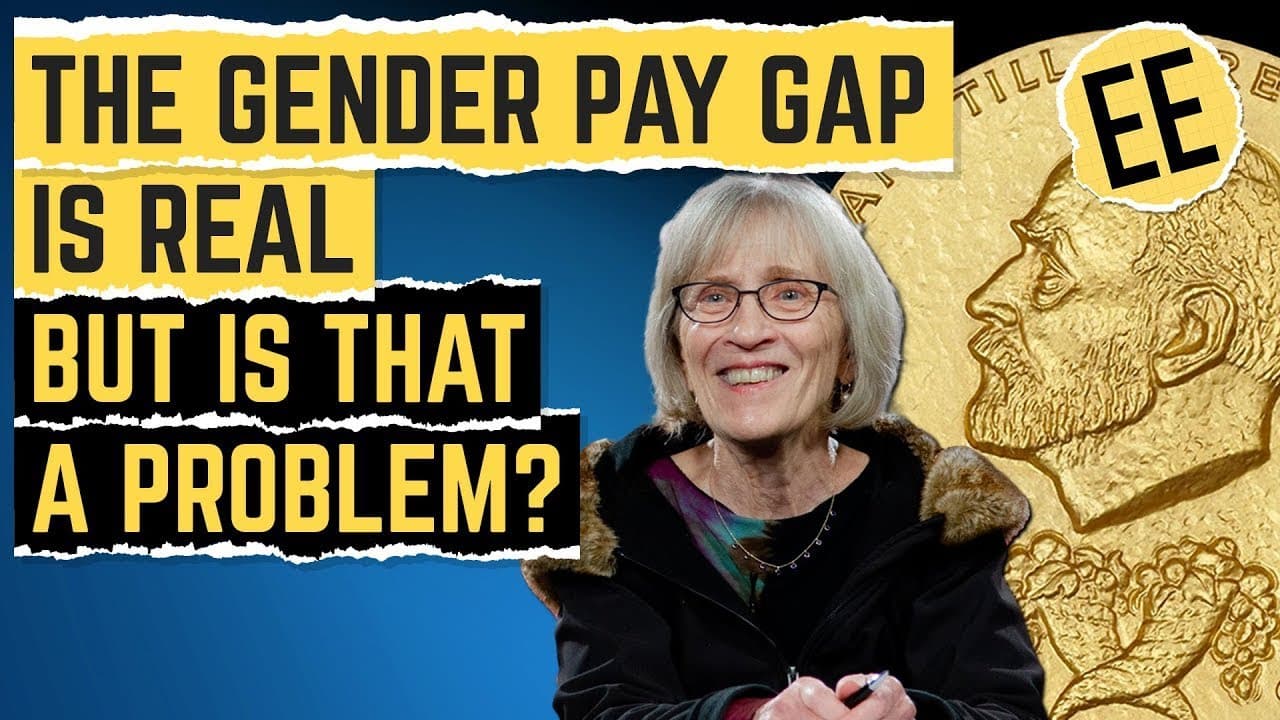
Claudia Goldin wins Nobel for gender pay gap research.
Transcript
This video is sponsored by Brave VPN The Sveriges Riksbank Prize in Economic Sciences in honor of Alfred Nobel, known most commonly as simply the Nobel Prize in Economics, is awarded every year to researchers that have made outstanding contributions to the field, with a particular emphasis on those who put forward new economic theories with real-wo... Read More
Key Insights
- Claudia Goldin's Nobel-winning work focuses on understanding gender pay inequality through extensive historical data analysis, removing emotional biases from the debate.
- The Nobel Prize in Economics was introduced by the Sveriges Riksbank and is funded separately from the original Nobel fields.
- Goldin's research highlights that the gender pay gap is often misunderstood and emphasizes the importance of data-driven analysis over emotional arguments.
- Her work reveals that women's participation in the workforce has historically followed a U-shaped curve, influenced by societal changes and industrial shifts.
- Goldin argues that policy solutions should focus on removing structural barriers for women rather than imposing quotas, which could lead to unfavorable outcomes.
- The historical data used by Goldin extends back to the 18th century, providing a comprehensive view of gender dynamics in labor markets over time.
- Goldin's findings suggest that unexplained pay gaps increased with the rise of white-collar jobs, where promotions are based on seniority instead of output.
- The study warns that rapid policy changes can have unintended consequences and highlights the need for gradual, well-considered adjustments in labor policies.
Install to Summarize YouTube Videos and Get Transcripts
Explore YouTube Video Summarizer or Get YouTube Transcript Extractor
Questions & Answers
Q: What makes Claudia Goldin's research on the gender pay gap significant?
Claudia Goldin's research is significant because it uses extensive historical data to analyze the gender pay gap, providing an objective, data-driven perspective on the issue. Her work removes emotional biases from the debate and highlights the complexities of gender dynamics in labor markets over time, offering insights for effective policy solutions.
Q: How does Goldin's research suggest addressing the gender pay gap?
Goldin suggests addressing the gender pay gap by focusing on removing structural barriers that hinder women's participation in the workforce. She cautions against imposing quotas, which could lead to unfavorable outcomes, and advocates for gradual, well-considered policy changes that enhance opportunities for all economic participants without creating new disparities.
Q: What historical pattern did Goldin identify in women's workforce participation?
Goldin identified a U-shaped pattern in women's workforce participation over time. Initially, women participated in agriculture at rates similar to men. As economies industrialized, their participation declined due to the separation of work from home and the rise of formal jobs. This pattern highlights the influence of societal and industrial changes on gender dynamics in labor markets.
Q: Why does Goldin caution against rapid policy changes to address gender inequality?
Goldin cautions against rapid policy changes because they can have unintended consequences, potentially worsening outcomes for both men and women. Her research emphasizes the importance of understanding the root causes of gender disparities and implementing gradual, well-considered adjustments to ensure that policies effectively enhance opportunities without creating new inequalities.
Q: How does Goldin's research redefine the understanding of pay gaps in white-collar jobs?
Goldin's research redefines the understanding of pay gaps in white-collar jobs by highlighting that unexplained pay gaps increased as these jobs became more prevalent. Promotions in white-collar roles are often based on seniority rather than output, which can disadvantage women who take career breaks, revealing the need for policies that address these systemic issues.
Q: What role does historical data play in Goldin's analysis of the gender pay gap?
Historical data plays a crucial role in Goldin's analysis by providing a comprehensive view of gender dynamics in labor markets over time. By extending her research back to the 18th century, Goldin offers insights into how societal and industrial changes have influenced women's workforce participation, challenging previous assumptions and informing effective policy solutions.
Q: What does Goldin's U-shaped model reveal about women's participation in the workforce?
Goldin's U-shaped model reveals that women's participation in the workforce has fluctuated over time due to societal and industrial changes. Initially high in agriculture, participation declined with industrialization and the rise of formal jobs. This model highlights the complex interplay between economic structures and gender dynamics, informing strategies to address the gender pay gap.
Q: Why is Goldin's research on the gender pay gap considered less controversial than previous Nobel-winning work?
Goldin's research is considered less controversial because it focuses on providing an objective, data-driven analysis of the gender pay gap, removing emotional biases from the debate. Her thorough examination of historical data offers clear insights into gender dynamics, contrasting with previous Nobel-winning work that involved more contentious topics, such as the role of banks in the economy.
Summary & Key Takeaways
-
Claudia Goldin's Nobel Prize-winning research focuses on the gender pay gap, using historical data to provide a clearer understanding of this complex issue. Her work emphasizes the importance of data-driven analysis, revealing that women's workforce participation has historically followed a U-shaped curve influenced by societal and industrial changes.
-
Goldin argues for policy solutions that remove structural barriers for women without imposing quotas, which could lead to unfavorable outcomes. Her research suggests that unexplained pay gaps increased with the rise of white-collar jobs, where promotions are based on seniority rather than output, highlighting the need for gradual policy adjustments.
-
The Nobel Prize in Economics, introduced by the Sveriges Riksbank, recognizes Goldin's extensive analysis of gender dynamics in labor markets over time. Her findings suggest that rapid policy changes can have unintended consequences, emphasizing the need for careful consideration of labor policies to ensure favorable outcomes for all economic participants.
Read in Other Languages (beta)
Share This Summary 📚
Summarize YouTube Videos and Get Video Transcripts with 1-Click
Try YouTube Summary with ChatGPT & Claude or YouTube Transcript Generator
Explore More Summaries from Economics Explained 📚






Summarize YouTube Videos and Get Video Transcripts with 1-Click
Try YouTube Summary with ChatGPT & Claude or YouTube Transcript Generator