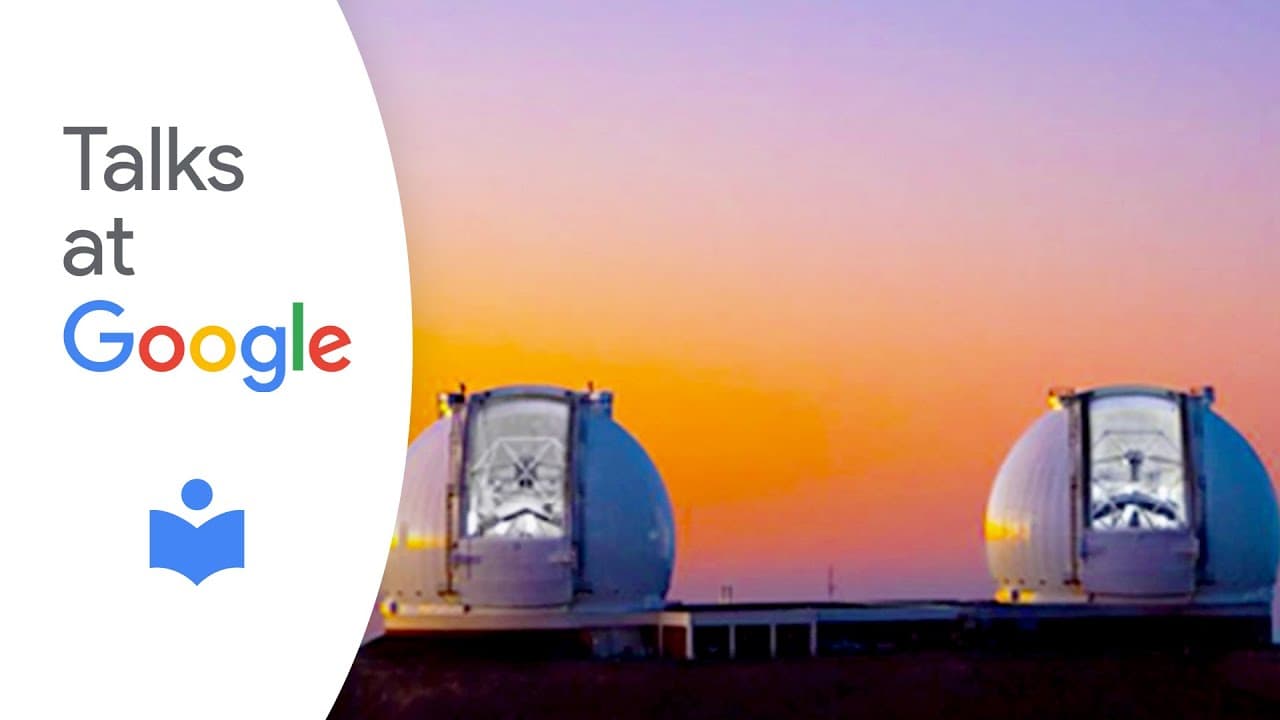
W. M. Keck Observatory | Taft Armandroff | Talks at Google
TL;DR
Keck Observatory, in collaboration with NASA and the astronomy community, is using large data sets and innovative technologies like adaptive optics to study complex astronomical problems and make discoveries in areas such as exoplanets, galactic centers, and dark matter.
Transcript
As we all know one of the things that we really enjoy working with over here at Google are very large data sets, very complex problems. You know, lots and lots of bits coming through. And nowhere is that more true than in the astronomy world, where each night on a telescope run, we have terabytes and gigabytes of data coming through. And all that... Read More
Key Insights
- 😫 Keck Observatory collaborates with NASA and the astronomy community to manage and analyze large data sets, making advancements in various research areas such as studying galaxies, exoplanets, and dark matter.
- 👻 Adaptive optics technology plays a crucial role in enhancing the telescopes' capabilities, allowing for higher resolution imaging and more precise observations.
- 👨🔬 Keck Observatory's research on exoplanets provides insights into their internal structures, compositions, and potential for sustaining life.
Install to Summarize YouTube Videos and Get Transcripts
Explore YouTube Video Summarizer or Get YouTube Transcript Extractor
Questions & Answers
Q: How does Keck Observatory handle the large data sets from telescopes?
Keck Observatory works with NASA and the astronomy community to process and analyze terabytes and gigabytes of data that comes through the telescopes each night. They employ techniques such as sorting, adjusting the signal-to-noise ratio, and processing the data to obtain meaningful insights.
Q: What are some of the research areas that Keck Observatory focuses on?
Keck Observatory focuses on various research areas, including managing telescopes across different locations, studying dwarf and spheroidal galaxies, exploring stellar proportions and the Milky Way galaxy, investigating globular clusters, and understanding the chemical evolution of galaxies and dark matter.
Q: How does adaptive optics work in enhancing the capabilities of Keck Observatory's telescopes?
Adaptive optics is a technology that reduces the blurring effects of the Earth's atmosphere, resulting in clearer and sharper images. Keck Observatory uses adaptive optics to correct for atmospheric turbulence, allowing for higher resolution imaging and more precise observations of celestial objects.
Q: What are some of the key insights gained from studying exoplanets?
By utilizing adaptive optics and spectroscopy, Keck Observatory has detected and studied a significant number of exoplanets. This research has provided insights into the internal structures of planets, their compositions, and their distances from parent stars. It has also opened up possibilities for studying atmospheres and searching for signs of life on exoplanets.
Q: How does Keck Observatory contribute to the understanding of dark matter?
Keck Observatory collaborates with other observatories and researchers to study dwarf galaxies orbiting the Milky Way to investigate the presence and behavior of dark matter. By analyzing the motions of stars and the distribution of dark matter within these galaxies, scientists gather valuable data to further understand the nature of dark matter.
Summary & Key Takeaways
-
Keck Observatory works with NASA and the astronomy community to explore large data sets and solve complex problems, such as sorting and processing terabytes and gigabytes of astronomical data each night.
-
The Observatory uses innovative technologies like adaptive optics to enhance its telescopes' capabilities and make astronomy more accessible to the general public.
-
Keck’s director, Dr. Taft Armandroff, discusses the latest innovations at the Observatory, including advancements in observing exoplanets, studying the galactic center, and investigating dark matter.
Read in Other Languages (beta)
Share This Summary 📚
Summarize YouTube Videos and Get Video Transcripts with 1-Click
Try YouTube Summary with ChatGPT & Claude or YouTube Transcript Generator
Explore More Summaries from Talks at Google 📚

Summarize YouTube Videos and Get Video Transcripts with 1-Click
Try YouTube Summary with ChatGPT & Claude or YouTube Transcript Generator