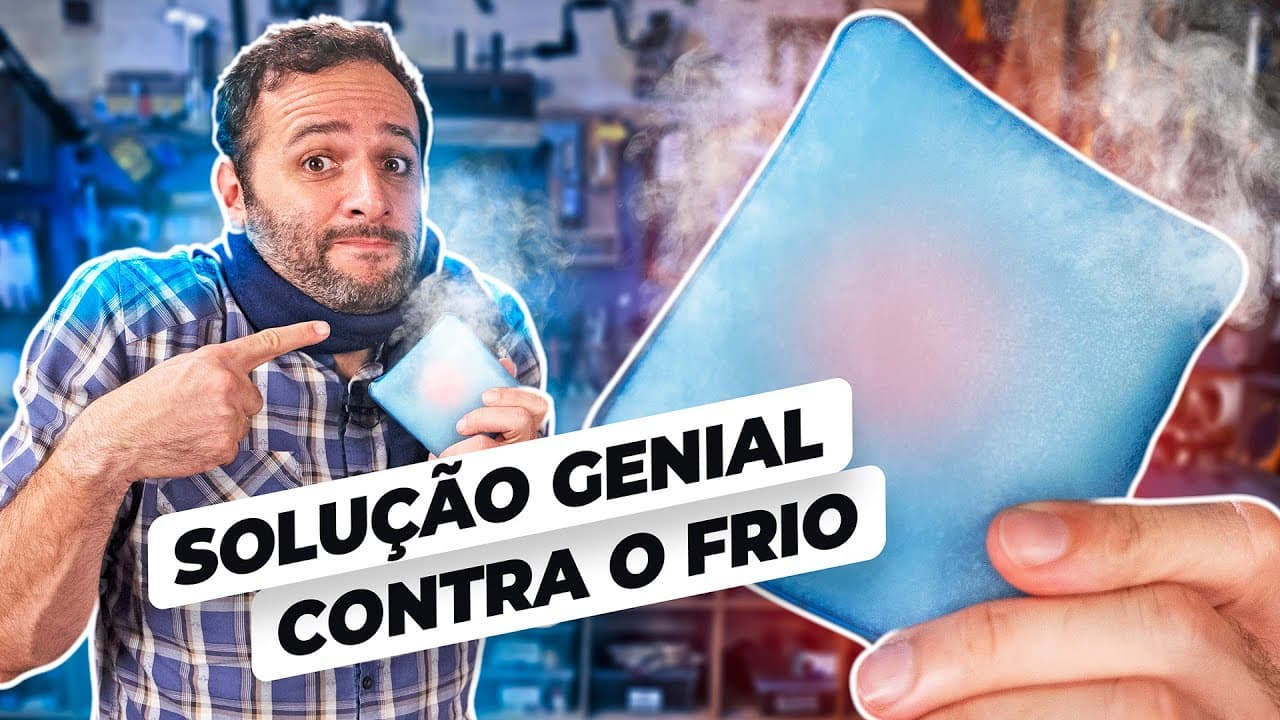
COMO essa BOLSA ESQUENTA SEM ENERGIA ELÉTRICA?
TL;DR
The video explores how thermal bags heat without electricity using chemical reactions.
Transcript
Today we are going to test an instant hot bag that works forever that just arrived here at Manual do Mundo. It's pretty crazy here. There's some liquid inside the bag, it's at room temperature, it looks like any other water, and if I press a little button, a little metal that's inside, it will heat up suddenly. And the craziest thing is that there'... Read More
Key Insights
- The thermal bags tested heat without electricity through chemical reactions, not infinite energy.
- Traditional thermal bags require heating on a stove or microwave, which is not always convenient.
- The Japanese thermal bag heats through an exothermic reaction involving iron powder and oxygen.
- The Brazilian thermal bag uses similar materials and technology as the Japanese one, providing heat for eight hours.
- The reusable thermal bag contains sodium acetate, which crystallizes and releases heat when triggered.
- Sodium acetate solutions have different solubility at varying temperatures, enabling the heating mechanism.
- The process of sodium acetate crystallization is exothermic, generating significant heat.
- The video demonstrates how to perform a similar experiment at home using sodium acetate or potassium alum.
Install to Summarize YouTube Videos and Get Transcripts
Explore YouTube Video Summarizer or Get YouTube Transcript Extractor
Questions & Answers
Q: How do the thermal bags heat without electricity?
The thermal bags heat without electricity through chemical reactions. The Japanese and Brazilian bags contain iron powder, which reacts with oxygen when exposed to air, creating an exothermic reaction that releases heat. The reusable bag uses sodium acetate, which crystallizes and releases heat when triggered by a metal plate.
Q: What is the main difference between the Japanese and Brazilian thermal bags?
The main difference between the Japanese and Brazilian thermal bags is their packaging and slight variation in materials. Both use iron powder, activated carbon, and other ingredients to generate heat through an exothermic reaction. The Brazilian bag includes an adhesive for attaching to clothing, while the Japanese bag does not.
Q: Why can't the thermal bags be reused indefinitely?
The disposable thermal bags can't be reused indefinitely because the chemical reaction between iron powder and oxygen is not easily reversible. Once the iron oxidizes, the reaction is complete, and the bag can no longer produce heat. The reusable bag requires reheating in boiling water to dissolve sodium acetate crystals and reset the reaction.
Q: How does the reusable thermal bag work?
The reusable thermal bag works by using sodium acetate, which is dissolved in water and crystallizes when triggered by a metal plate. This crystallization is an exothermic process, releasing heat. To reuse the bag, it must be boiled to dissolve the crystals, allowing the process to be repeated once the bag cools down.
Q: What is the purpose of the metal plate in the reusable bag?
The metal plate in the reusable bag acts as a trigger for the crystallization of sodium acetate. When the plate is flexed, it initiates the crystallization process, causing the sodium acetate to solidify and release heat. This mechanism allows the bag to provide immediate warmth without external heating.
Q: Can the thermal bags be used directly on the skin?
The thermal bags should not be used directly on the skin, especially the disposable ones, because they can reach high temperatures that may cause burns. It is recommended to place them in pockets or wrap them in fabric to prevent direct contact with the skin while still providing warmth.
Q: What are some alternative methods to create similar heating effects at home?
An alternative method to create similar heating effects at home involves using sodium acetate or potassium alum. Sodium acetate can be dissolved in hot water and allowed to cool, then crystallized by adding a solid sodium acetate crystal or agitating the solution. Potassium alum can be used to grow crystals in eggshells, providing a similar exothermic reaction.
Q: Why is sodium acetate used in the reusable thermal bag?
Sodium acetate is used in the reusable thermal bag due to its ability to dissolve in hot water and crystallize upon cooling, releasing heat. This property allows the bag to be reused by reheating the solution to dissolve the crystals, making it a practical choice for a self-heating mechanism that can be reset and reused multiple times.
Summary & Key Takeaways
-
The video tests thermal bags that heat without electricity, using chemical reactions. The Japanese and Brazilian bags contain iron powder, which reacts with oxygen to produce heat. The reusable bag uses sodium acetate, which crystallizes to release heat when triggered.
-
Traditional thermal bags require external heating, but the tested bags offer convenience by self-heating. The Japanese and Brazilian bags provide heat for eight hours, while the reusable bag can be reheated by boiling. The video explains the science behind these reactions.
-
The video provides a detailed explanation of the chemical processes involved in the thermal bags. It also offers a DIY experiment with sodium acetate or potassium alum, allowing viewers to explore the science at home and understand the reactions better.
Read in Other Languages (beta)
Share This Summary 📚
Summarize YouTube Videos and Get Video Transcripts with 1-Click
Try YouTube Summary with ChatGPT & Claude or YouTube Transcript Generator
Explore More Summaries from Manual do Mundo 📚


Summarize YouTube Videos and Get Video Transcripts with 1-Click
Try YouTube Summary with ChatGPT & Claude or YouTube Transcript Generator