What Is the Freshwater Paradox in Fish Species Diversity?
TL;DR
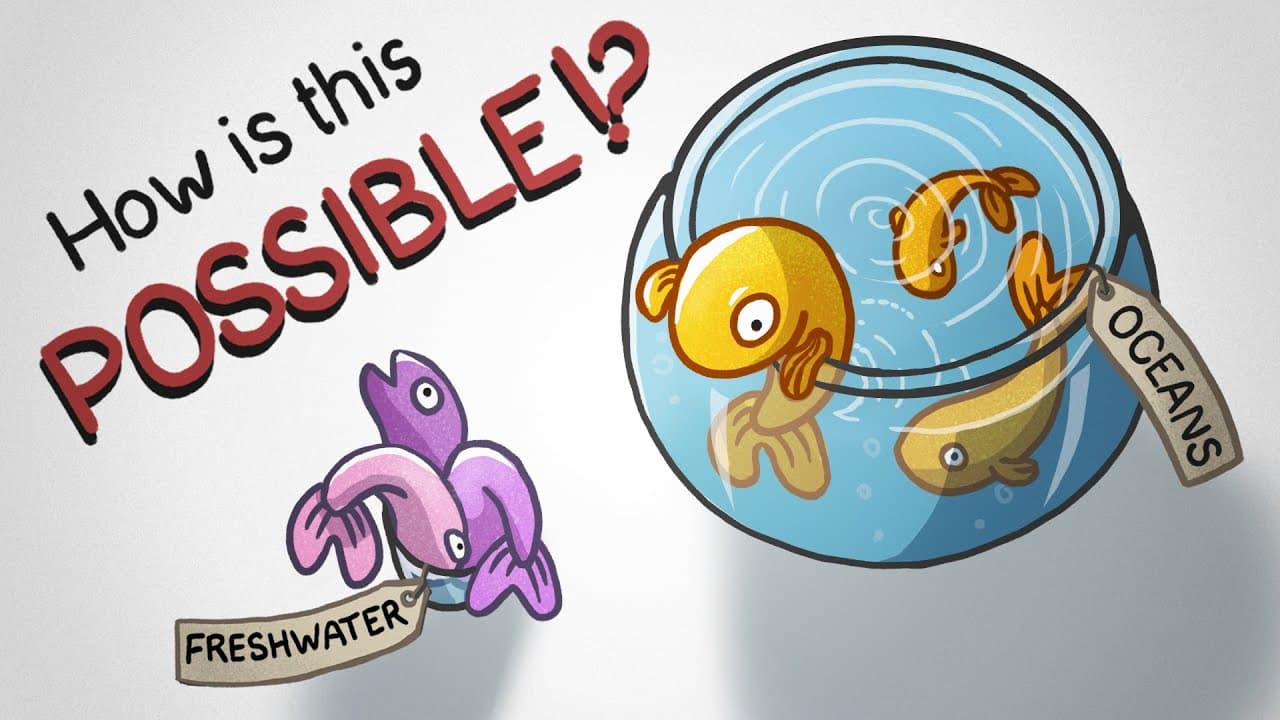
The freshwater paradox refers to the phenomenon where freshwater ecosystems, which constitute less than 0.1% of Earth's water, contain half of all fish species. Factors such as isolation, competition, and ecological niches contribute to this diversity, but extinction events and fossilization biases complicate our understanding. The exact reasons for this paradox remain uncertain.
Transcript
Less than a tenth of one percent of the water on Earth is freshwater lakes and rivers – yet that teeny tiny percentage of Earth’s water contains about half of all the world’s fish species! Ocean water, which accounts for a whopping 99.6% of Earth's water, contains the other half. You might think the vast ocean has comparatively few species ... Read More
Key Insights
- 💦 Less than 0.1% of Earth's water contains half of all fish species.
- 🧑🏭 The isolation of lakes and rivers was once considered the primary reason for the freshwater paradox, but recent studies suggest other factors are involved.
- 👶 The combination of isolation, competition, ecological niches, and a stable environment in lakes promotes the rapid evolution of new fish species.
- 🐟 Extinction events have impacted ocean fish more than freshwater fish, helping to explain the similar number of fish species in both habitats.
- 🐟 Fossilization processes may lead to a bias towards more fossilized ocean fish species, making it difficult to accurately determine historical fish diversity.
Install to Summarize YouTube Videos and Get Transcripts
Explore YouTube Video Summarizer or Get YouTube Transcript Extractor
Questions & Answers
Q: Why does freshwater have more fish species compared to the ocean?
The freshwater paradox has been attributed to isolation and the development of new species in disconnected lakes and rivers. However, recent research showed that both rivers and the ocean develop new species at similar rates, suggesting other factors are involved.
Q: What are the factors that contribute to the high number of fish species in lakes?
Lakes offer a combination of isolation, competition, a variety of ecological niches, and a stable environment, which together promote the fast evolution of new species. These factors contribute to lakes being species-rich habitats.
Q: How do extinctions play a role in the freshwater paradox?
The fossil record indicates that there have been more ocean fish species throughout history. However, many of these species have become extinct or transitioned to rivers. Freshwater fish have been less affected by extinction events, explaining the high number of species in freshwater.
Q: Is there a definitive explanation for the freshwater paradox?
Currently, there is no conclusive explanation. It could be a combination of various factors such as isolation, competition, extinction, or it may be an unexplained natural phenomenon. Further research is needed to unravel the freshwater paradox.
Summary & Key Takeaways
-
Less than 0.1% of Earth's water is freshwater lakes and rivers, but they house half of the world's fish species.
-
The ocean makes up 99.6% of Earth's water but has a relatively smaller number of fish species.
-
The freshwater paradox, which questions why freshwater has more fish species, is not explained solely by isolation or new species development rates.
Read in Other Languages (beta)
Share This Summary 📚
Summarize YouTube Videos and Get Video Transcripts with 1-Click
Try YouTube Summary with ChatGPT & Claude or YouTube Transcript Generator
Explore More Summaries from MinuteEarth 📚




Summarize YouTube Videos and Get Video Transcripts with 1-Click
Try YouTube Summary with ChatGPT & Claude or YouTube Transcript Generator