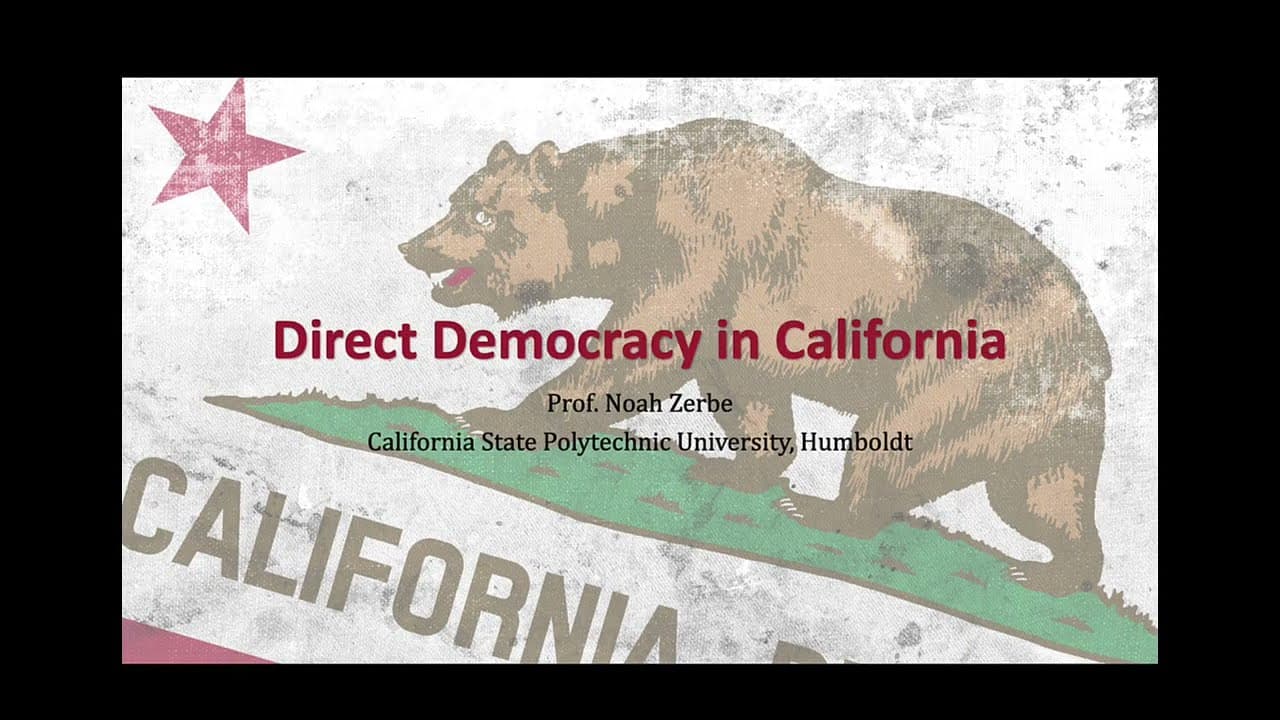
The Power of the People: Direct Democracy in California's Political Landscape
TL;DR
Direct democracy in California allows citizens to directly participate in policy decisions through initiatives, referendums, and recalls.
Transcript
in 1911 a group of progressive reformers radically changed how politics in California was done introducing direct democracy Republican hyram Johnson then governor of the state celebrated this change saying the cure for the ills of democracy is more democracy but what did he mean by this and how did this shift impact California politics and the poli... Read More
Key Insights
- 📁 Direct democracy in California was introduced in 1911, bringing about a significant shift in the state's political landscape.
- 🥺 Representative democracy allows for practical decision-making in large societies, but it can lead to a disconnect between the public and legislative action.
- ✋ Direct democracy requires active citizen participation and promotes higher levels of engagement and representation.
- 📁 California utilizes referendums, recalls, and initiatives as mechanisms of direct democracy.
- 👻 Referendums allow voters to approve or reject laws passed by the state legislature.
- ❤️🩹 Recall elections enable voters to remove elected officials from office before their term ends.
- 👶 Initiatives enable citizens to propose and vote on new laws or amendments to the state constitution.
Install to Summarize YouTube Videos and Get Transcripts
Explore YouTube Video Summarizer or Get YouTube Transcript Extractor
Questions & Answers
Q: How does direct democracy differ from representative democracy?
In representative democracy, citizens elect officials who make policy decisions on their behalf, while direct democracy allows citizens to directly vote on laws and policies.
Q: What are some advantages of direct democracy?
Direct democracy promotes higher levels of citizen engagement and representation, as policies reflect the public's will more directly. It also allows citizens to have a direct say in decision-making.
Q: What are the drawbacks of direct democracy?
Direct democracy can be impractical for large populations or making complex policy decisions. It may lead to a tyranny of the majority, where minority rights are overlooked, and it can be influenced by special interests.
Q: What are some examples of direct democracy in California?
Examples include Proposition 25 in 2020, which asked voters to replace cash bail, and Proposition 67 in 2016, which banned single-use plastic bags.
Summary & Key Takeaways
-
Direct democracy, introduced in 1911, changed the political landscape in California, allowing citizens to make policy decisions directly.
-
In representative democracy, citizens elect officials to make policy decisions on their behalf, while direct democracy involves citizens voting directly on laws and policies.
-
Direct democracy in California is facilitated through referendums, recalls, and initiatives, providing opportunities for citizen engagement and representation.
Read in Other Languages (beta)
Share This Summary 📚
Summarize YouTube Videos and Get Video Transcripts with 1-Click
Try YouTube Summary with ChatGPT & Claude or YouTube Transcript Generator
Explore More Summaries from Noah Zerbe 📚


Summarize YouTube Videos and Get Video Transcripts with 1-Click
Try YouTube Summary with ChatGPT & Claude or YouTube Transcript Generator