All Art is Political, Even Rothko
TL;DR
All art, including abstract art, is inherently political, as it challenges the notion of a single correct interpretation and promotes individualized experiences and responses.
Transcript
so in 1946 george orwell wrote an essay called why i write and in it he states the opinion that art should have nothing to do with politics is itself a political attitude and when i discuss this statement in class i will inevitably find myself defending the claim that all art is political this is an old claim that props up in different phrasing all... Read More
Key Insights
- 🥰 Art is inherently political as it challenges norms and expectations, promotes individual interpretations, and evokes emotional responses.
- 🥰 Abstract art, like Mark Rothko's paintings, defies traditional artistic elements such as figures, narratives, and patterns, emphasizing emotional engagement.
- 🥋 Abstract art served as a form of cultural imperialism for the US in promoting democratic values during the Cold War era.
- 🥰 The absence of explicit political symbols does not negate the political nature of abstract art, as it challenges and resists control and fixed meanings.
- 🥰 Abstract art, including Rothko's paintings, fosters subjective experiences and responses, acknowledging the individual's role in creating meaning.
- 🥰 The Nazi regime's hostility towards abstract art through their "degenerate art" exhibition highlights the political implications and fear associated with these artistic expressions.
- 🕰️ Artistic intention is less important than the individual's response to the artwork, as subjective experiences shape the overall meaning of the piece.
Install to Summarize YouTube Videos and Get Transcripts
Explore YouTube Video Summarizer or Get YouTube Transcript Extractor
Questions & Answers
Q: Is abstract art inherently political?
Yes, abstract art challenges traditional norms and expectations, promoting individual interpretation and emotional engagement. It defies the notion of a single correct interpretation and allows for diverse political and personal responses.
Q: Can art be political without having overt political symbols or messages?
Absolutely. Art can be political through its form, technique, and approach. Abstract art, even without explicit political symbolism, is political in its defiance of traditional boundaries and its promotion of subjective experiences.
Q: How did abstract expressionism serve as a form of cultural imperialism?
In the 1950s, the US funded exhibitions of abstract expressionist paintings across Europe to spread the values of individualism and self-expression. By promoting this art movement, the US aimed to showcase its democratic and decentralized ideals to counter totalitarian regimes.
Q: How does abstract art challenge the control of totalitarian governments?
Totalitarian governments seek to control the behaviors and thoughts of their population. Abstract art, by emphasizing individual interpretation and resisting overt meanings, undermines such control, promoting personal freedom and autonomy.
Key Insights:
- Art is inherently political as it challenges norms and expectations, promotes individual interpretations, and evokes emotional responses.
- Abstract art, like Mark Rothko's paintings, defies traditional artistic elements such as figures, narratives, and patterns, emphasizing emotional engagement.
- Abstract art served as a form of cultural imperialism for the US in promoting democratic values during the Cold War era.
- The absence of explicit political symbols does not negate the political nature of abstract art, as it challenges and resists control and fixed meanings.
- Abstract art, including Rothko's paintings, fosters subjective experiences and responses, acknowledging the individual's role in creating meaning.
- The Nazi regime's hostility towards abstract art through their "degenerate art" exhibition highlights the political implications and fear associated with these artistic expressions.
- Artistic intention is less important than the individual's response to the artwork, as subjective experiences shape the overall meaning of the piece.
- Engaging in discussions and debates about art can lead to valuable art history lessons and a deeper understanding of its political implications.
Summary & Key Takeaways
-
The essay explores the claim that all art is political, using various historical examples to support the argument.
-
The author discusses the challenges faced when defending the political nature of abstract art in a classroom setting.
-
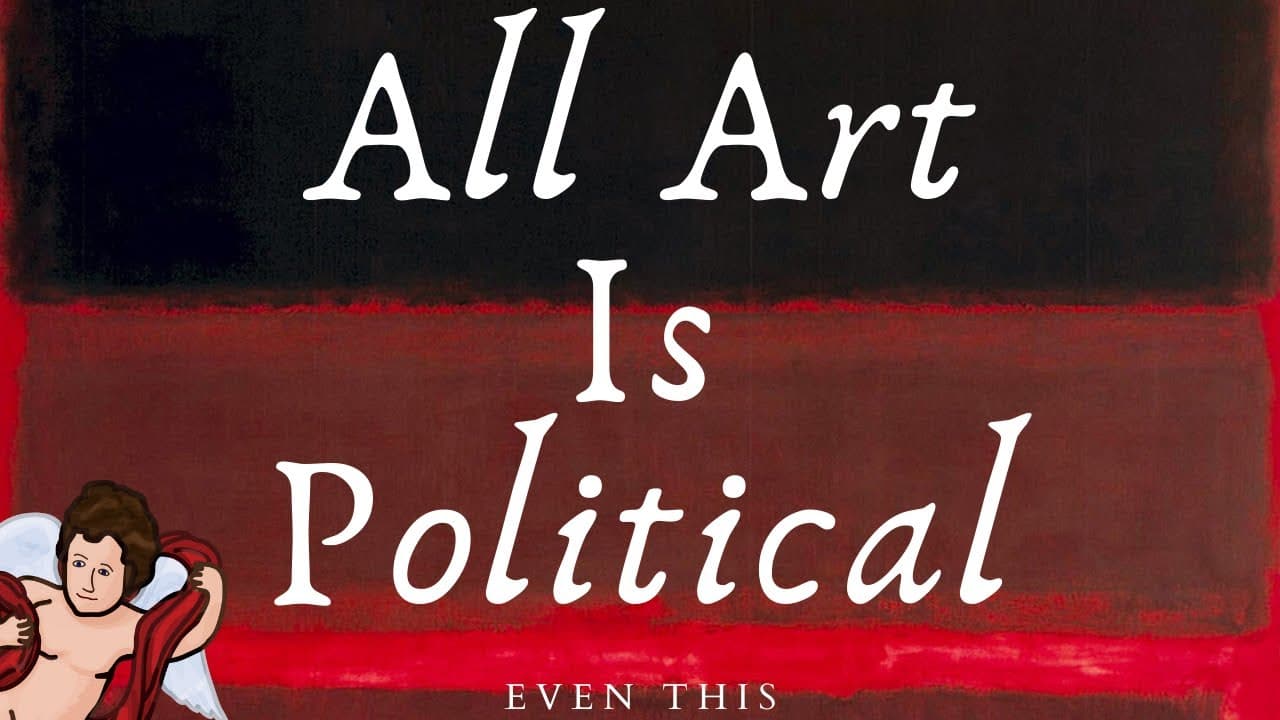
The video focuses on Mark Rothko's "Four Darks on Red," highlighting the absence of figures, narratives, and patterns, and the consequent emphasis on emotional response.
Read in Other Languages (beta)
Share This Summary 📚
Summarize YouTube Videos and Get Video Transcripts with 1-Click
Try YouTube Summary with ChatGPT & Claude or YouTube Transcript Generator
Explore More Summaries from Amor Sciendi 📚
Summarize YouTube Videos and Get Video Transcripts with 1-Click
Try YouTube Summary with ChatGPT & Claude or YouTube Transcript Generator