How to Resolve Google Search Ranking Issues
TL;DR
For multilingual websites, ensure content is unique per country to avoid duplicate content issues. Use hreflang markup to indicate language versions. If URLs from different countries are indexed incorrectly, check site structure and canonical links. Engage with Google's Webmaster Help forum for unresolved issues.
Transcript
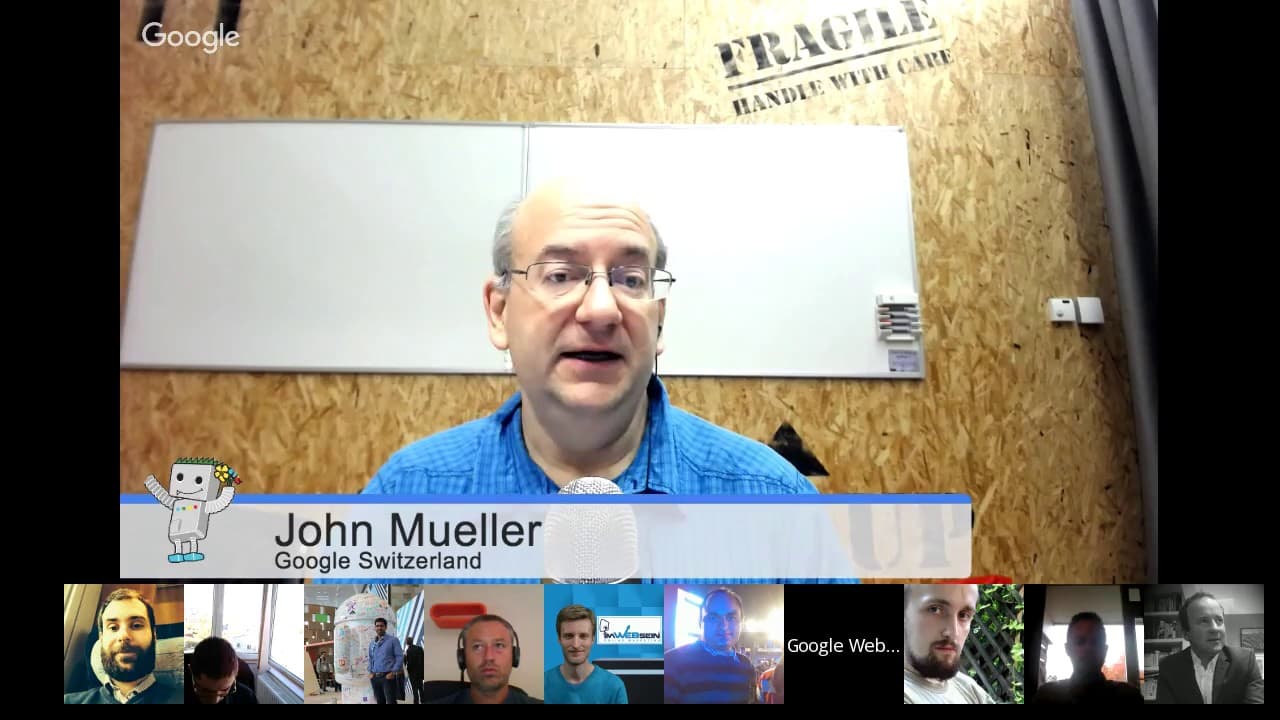
JOHN MUELLER: All right. Welcome, everyone, to today's Google Webmasters Central Office Hours Hangout. My name is John Mueller. I'm a webmaster trends analyst, here at Google in Switzerland. And part of what we do is talk with webmasters and publishers, like the ones here in the Hangouts. As always, if there are any of you who are kind of new to th... Read More
Key Insights
- John Mueller is a Webmaster Trends Analyst at Google.
- Duplicate content can cause issues if identical pages are indexed for different countries.
- hreflang is a strong signal for Google but not a guarantee if content is too similar.
- Social media metrics do not directly influence Google's search algorithms.
- Site links in search results use normal ranking algorithms, not manual inputs.
- Canonicalization issues can occur if redirects aren't properly recognized.
- Google's algorithms evaluate site quality but do not directly review every page.
- Switching to HTTPS should be combined with domain migration if planned.
Install to Summarize YouTube Videos and Get Transcripts
Explore YouTube Video Summarizer or Get YouTube Transcript Extractor
Questions & Answers
Q: How to resolve duplicate content issues on multilingual websites?
Ensure that each language version of your site has unique content. Use hreflang markup to indicate the language of each page. This helps Google understand which version to show in search results. Avoid using identical content for different country versions, as it may lead to pages being folded together by Google's algorithms.
Q: Does Google use social media metrics in search rankings?
No, Google does not directly use social media metrics such as likes, shares, or comments in its search ranking algorithms. While social media can help drive traffic to your site, it does not influence Google's search algorithms directly.
Q: What are site links in Google search results?
Site links are additional links that appear under a search result, directing users to specific pages within a website. They are generated by Google's algorithms based on the site's structure and internal linking. Previously, webmasters could influence site links through Search Console, but the tool has been deprecated.
Q: How does Google handle canonicalization with redirects?
Google considers multiple factors in canonicalization, including redirects, internal links, and external links. Even with redirects, Google might sometimes show the redirect source URL if it deems it more appropriate. Ensure your canonical tags and redirects are correctly set up to guide Google on the preferred URL.
Q: Does regaining rich snippets indicate a site's quality?
Regaining rich snippets does not necessarily mean your site is free from quality-related issues. While rich snippets are influenced by site quality and compliance with Google's guidelines, a site can still be affected by other quality algorithms like Panda. Continuously work on improving site quality.
Q: Should I migrate to HTTPS and change domains simultaneously?
If you are planning a domain migration, it is advisable to switch to HTTPS at the same time. This minimizes disruptions and allows you to consolidate changes. Ensure the final site structure is optimal to avoid additional complexity during the transition.
Q: Why are some search queries 'not provided' in Google Analytics?
Google Analytics shows 'not provided' for search queries due to privacy reasons, as Google strips the query from the referrer information. To access search query data, use the Search Analytics report in Google Search Console, which provides details on search queries leading to your site.
Q: How does Google evaluate site quality?
Google's algorithms assess site quality based on various factors, including content relevance, user engagement, and compliance with guidelines. However, Google does not manually review each page. High-quality content and a positive user experience can indirectly improve site perception and rankings.
Summary & Key Takeaways
-
Google's John Mueller advises ensuring unique content for multilingual sites to prevent being folded into a single version by Google's algorithms. Use hreflang markup to guide Google on language versions. For URL indexing issues, verify site structure and canonical links. Engage with Google's Webmaster Help forum for further assistance.
-
Social media metrics are not directly incorporated into Google's ranking algorithms. Site links in search results rely on normal ranking algorithms rather than manual inputs. Ensure clear site structure for better site link results.
-
Canonicalization issues might arise if redirects are not properly set up. Google's algorithms evaluate site quality, but they do not directly review each page. Consider combining HTTPS migration with domain changes to minimize disruption.
Read in Other Languages (beta)
Share This Summary 📚
Summarize YouTube Videos and Get Video Transcripts with 1-Click
Try YouTube Summary with ChatGPT & Claude or YouTube Transcript Generator
Explore More Summaries from Google Search Central 📚




Summarize YouTube Videos and Get Video Transcripts with 1-Click
Try YouTube Summary with ChatGPT & Claude or YouTube Transcript Generator