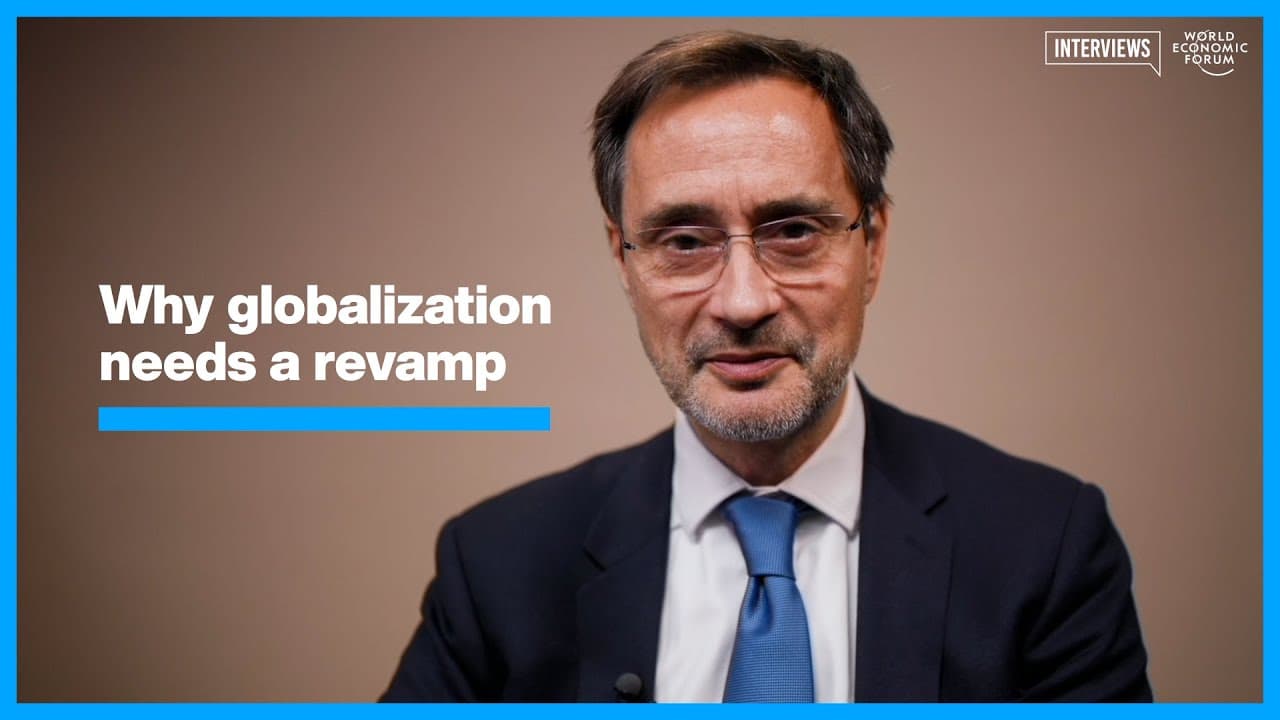
Why globalization needs a revamp
TL;DR
Globalization faces new challenges post-financial crisis, shifting power dynamics, winners, and losers, redefining partnerships and geopolitical strategies.
Transcript
Globalization is sort of rebooting itself in all sorts of ways to try to take into account the geopolitics of today. I'm Robin Niblett. I was director of Chatham House for 15 years through to summer of '22, and now I'm a distinguished fellow at Chatham House CSIS and Asia Society, and I do a bit of advisory work on the side. Well a lot has happened... Read More
Key Insights
- 🥺 Post-2008 financial crisis, globalization experienced a reset, leading to new partnerships and challenges for winners.
- ❤️🩹 Shifts in power dynamics have created a complex landscape, highlighting winners at the top end of globalization and marginalized economies.
- 💐 Regional partnerships like RCEP are reshaping globalization, focusing on lowering trade barriers and fostering economic integration.
- 🤔 Think tanks play a crucial role as interlocutors, promoting dialogue and understanding in the evolving geopolitical landscape.
Install to Summarize YouTube Videos and Get Transcripts
Explore YouTube Video Summarizer or Get YouTube Transcript Extractor
Questions & Answers
Q: How did the 2008 financial crisis impact globalization?
The crisis led to a reset in global cooperation, with the formation of G-20 and shifts in power dynamics as countries like China provided stimulus.
Q: What are some key challenges faced by winners at the top of globalization?
Winners face trust issues in traditional markets, leading to a reevaluation of partnerships and strategies to navigate a shifting landscape of globalization.
Q: How is globalization evolving towards regional partnerships?
Globalization is moving towards regional trade agreements like RCEP to integrate economies and lower barriers to trade, focusing on specific services and manufacturing sectors.
Q: What role do think tanks play in the evolving landscape of globalization?
Think tanks act as interlocutors, promoting dialogue and understanding amidst geopolitical competition, contributing to resilience and adaptation in the global system.
Summary & Key Takeaways
-
Globalization faced turmoil post-2008 financial crisis, leading to new partnerships like G-20 and shifts in power dynamics.
-
Winners at the top end of globalization now navigate a more complex landscape while marginalized economies seek a stronger voice.
-
Focus shifts towards regional partnerships, diversification, and sustainability as globalization evolves amidst geopolitical competition.
Read in Other Languages (beta)
Share This Summary 📚
Summarize YouTube Videos and Get Video Transcripts with 1-Click
Try YouTube Summary with ChatGPT & Claude or YouTube Transcript Generator
Explore More Summaries from World Economic Forum 📚
Summarize YouTube Videos and Get Video Transcripts with 1-Click
Try YouTube Summary with ChatGPT & Claude or YouTube Transcript Generator