How to Fix Facebook Ads Location Issues
TL;DR
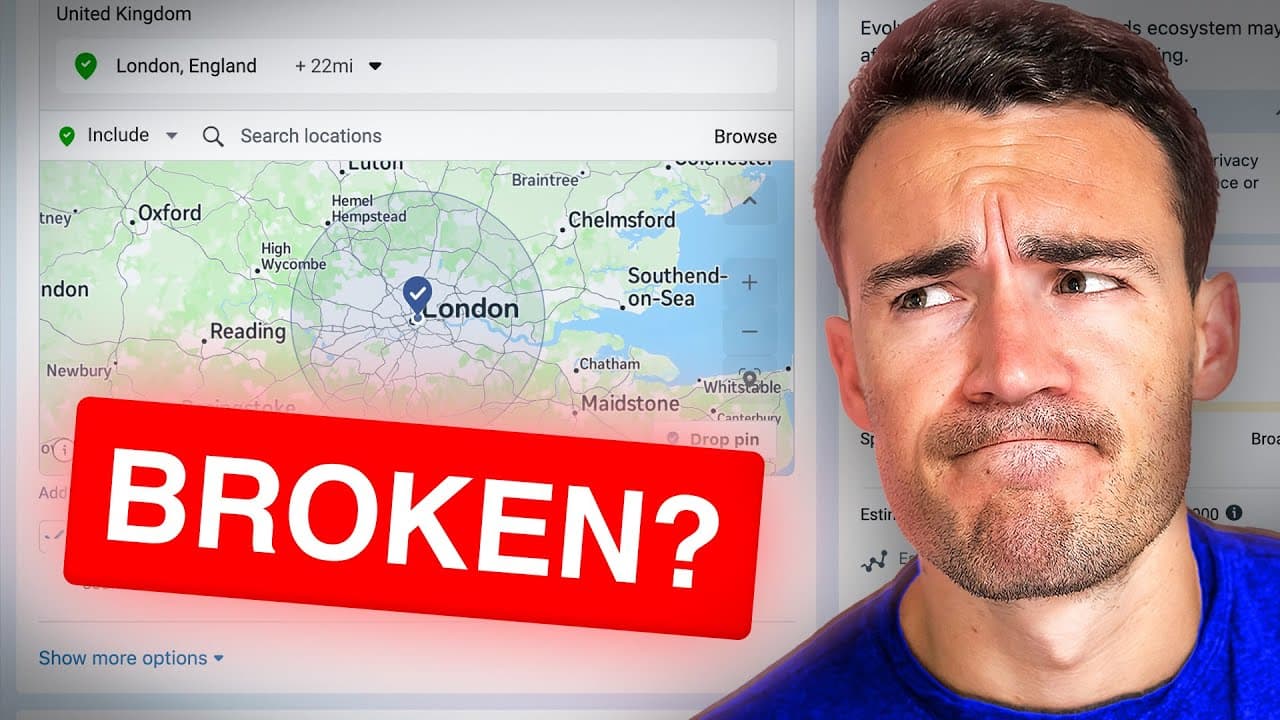
To fix Facebook Ads location targeting issues, use geofencing to exclude areas where you don't want your ads to appear. This method helps ensure ads are shown to people actually living in the target location, reducing wasted budget. Additionally, use the call-out method in ad copy to further refine audience targeting.
Transcript
a lot of Facebook advertisers have been struggling with location targeting since meta changed the location targeting settings last year I've seen firsthand in our client ad accounts that sometimes your Facebook ads can be put in front of people in the complete wrong location which is a big waste of money fortunately we've worked out how to fix this... Read More
Key Insights
- Facebook's location targeting changes have caused issues for advertisers wanting to target specific areas.
- Geofencing can help exclude areas where you don't want ads to appear, ensuring ads reach the right people.
- The default location targeting option now includes people living in or recently in the location.
- Businesses like plumbers and gyms need precise location targeting to avoid wasting ad spend.
- Geofencing involves setting exclusion zones around your target area to refine ad delivery.
- The call-out method in ad copy helps ensure ads engage the right audience by mentioning the location.
- Meta's algorithm will learn to deliver ads to those engaging with location-specific content.
- Testing geofencing and call-out methods can help determine the best strategy for your campaigns.
Install to Summarize YouTube Videos and Get Transcripts
Explore YouTube Video Summarizer or Get YouTube Transcript Extractor
Questions & Answers
Q: How to fix Facebook Ads location targeting issues?
To fix Facebook Ads location targeting issues, use geofencing to exclude areas where you don't want your ads to appear. This involves creating exclusion zones around your target area, ensuring that ads are shown to people actually living in the desired location. Additionally, using the call-out method in ad copy can further refine audience targeting by engaging those who identify with the specified location.
Q: What is geofencing in Facebook Ads?
Geofencing in Facebook Ads is a method used to refine location targeting by creating exclusion zones around the target area. This ensures that ads are shown only to people living within the desired location, reducing wasted ad spend on audiences outside the intended area. It helps advertisers reach the right audience by setting precise geographical boundaries.
Q: Why did Facebook change location targeting options?
Facebook changed location targeting options to address privacy concerns and avoid potential backlash from tracking user locations too closely. The new default setting includes people living in or recently in the location, which can cause issues for businesses needing precise targeting. This change aims to balance advertising effectiveness with user privacy considerations.
Q: How does the call-out method work in Facebook Ads?
The call-out method in Facebook Ads involves using location-specific language in ad copy to engage the right audience. By directly addressing the target audience with phrases like 'New Yorkers,' advertisers can attract people who identify with that location. This method helps train Meta's algorithm to deliver ads to those more likely to engage, optimizing ad performance over time.
Q: What types of businesses benefit from precise location targeting?
Businesses that rely on local clientele, such as plumbers, gyms, cafes, and restaurants, benefit significantly from precise location targeting. These businesses need to reach customers within a specific geographic area to ensure serviceability and avoid wasting ad spend on audiences they cannot serve, thus maximizing the effectiveness of their advertising budget.
Q: Can geofencing and the call-out method be used together?
Yes, geofencing and the call-out method can be used together to enhance location targeting in Facebook Ads. Geofencing sets geographical boundaries, while the call-out method refines audience engagement through ad copy. Combining these strategies can help advertisers ensure their ads reach the right people, reducing wasted budget and improving campaign performance.
Q: What are the limitations of geofencing in Facebook Ads?
The limitations of geofencing in Facebook Ads include the potential to miss out on some good prospects who live within the target area but have recently traveled to excluded zones. This method requires careful setup and can be time-consuming, as advertisers must manually create exclusion zones. Despite these limitations, geofencing remains an effective strategy for precise location targeting.
Q: How can advertisers test the effectiveness of location targeting strategies?
Advertisers can test the effectiveness of location targeting strategies by implementing both geofencing and the call-out method separately and comparing results. Monitoring key metrics such as ad impressions, engagement, and lead quality from different locations can help determine which strategy works best for their specific business needs. Continuous testing and analysis are crucial for optimizing ad performance.
Summary & Key Takeaways
-
Facebook's location targeting changes require new strategies to ensure ads reach the desired audience. Geofencing is an effective method to exclude unwanted areas, ensuring ads appear to people living in the target location. This approach helps reduce wasted budget by preventing ads from being shown to people outside the intended area.
-
The call-out method in ad copy is another strategy to refine audience targeting. By mentioning the location directly in the ad, advertisers can engage the right audience, as people who identify with the location are more likely to interact. This method reinforces ad delivery to the correct audience over time.
-
Testing different strategies such as geofencing and the call-out method can help optimize Facebook Ads campaigns. Each business may have unique needs, so experimenting with these techniques can reveal which approach works best for specific products, services, and locations, ultimately leading to better ad performance and reduced wasted spend.
Read in Other Languages (beta)
Share This Summary 📚
Summarize YouTube Videos and Get Video Transcripts with 1-Click
Try YouTube Summary with ChatGPT & Claude or YouTube Transcript Generator
Explore More Summaries from Ben Heath 📚

Summarize YouTube Videos and Get Video Transcripts with 1-Click
Try YouTube Summary with ChatGPT & Claude or YouTube Transcript Generator