How eclipses proved that the Earth is slowing down
TL;DR
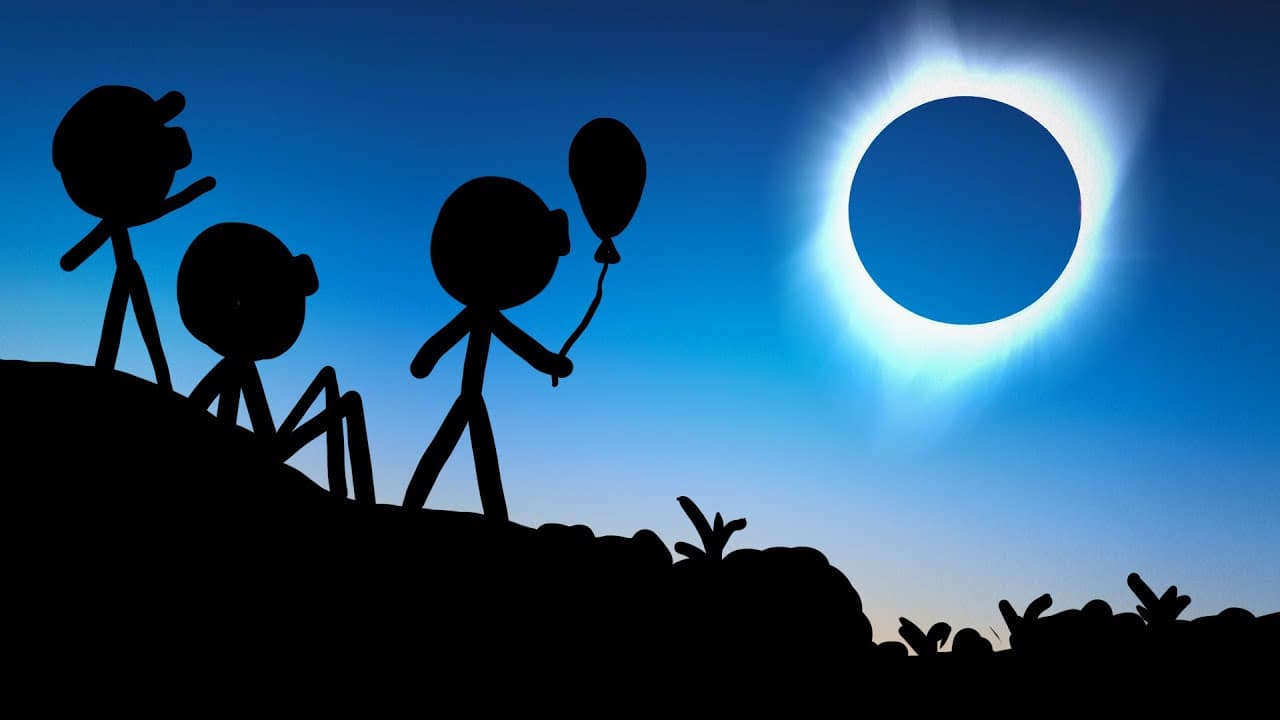
Solar eclipses have provided valuable insights into the Earth's spin, confirmed Einstein's theory of General Relativity, and led to the discovery of helium.
Transcript
Solar eclipses are amazing and awe-inspiring phenomena – and they’ve also been great for science. Hi, I’m Cameron, and this is MinuteEarth. Solar eclipses are intriguing and remarkable, so even ancient civilizations were careful to write them down when they happened. This means we have lots of detailed eclipse records from throughout history. Many ... Read More
Key Insights
- 🪈 Solar eclipses have been recorded throughout history, providing detailed records for scientific study.
- 🥳 The Earth's spin is slowing down over time, with the length of a day increasing by 1.8 milliseconds per century.
- 🙂 Eclipse observations confirmed Einstein's theory of General Relativity, which predicts the bending of light by massive objects.
- 🥺 Solar eclipses have led to the discovery of helium in the Sun's corona.
- 💨 The Sun's corona and solar winds can be studied using eclipse observations.
- 👨🔬 Solar eclipses provide opportunities for scientific research and discovery.
- 🫵 There are upcoming opportunities to view solar eclipses in North America on October 14, 2023, and April 8, 2024.
Install to Summarize YouTube Videos and Get Transcripts
Explore YouTube Video Summarizer or Get YouTube Transcript Extractor
Questions & Answers
Q: How have ancient eclipse records helped scientists understand the Earth's spin?
By studying eclipse records, scientists noticed that their predictions of past eclipses were increasingly inaccurate, leading them to conclude that the Earth's spin is slowing down over time.
Q: How did solar eclipses contribute to the confirmation of Einstein's theory of General Relativity?
Scientists took photos of stars appearing next to the Sun during a total eclipse and compared them to photos taken at night. The apparent shift in the positions of stars confirmed that massive objects, like the Sun, have gravity that bends light.
Q: How did a solar eclipse lead to the discovery of helium?
During a total eclipse, the Sun's corona, which is usually invisible, becomes visible as a ring. Scientists analyzed the wavelengths of light coming from the corona and identified helium as one of the elements present.
Q: How have solar eclipses been used to study the Sun's corona and its effects on Earth?
Solar eclipses have provided opportunities to study how the Sun's corona creates solar winds and how these winds affect the Earth's atmosphere.
Summary & Key Takeaways
-
Solar eclipses occur in a predictable pattern and have been recorded by ancient civilizations, providing detailed eclipse records throughout history.
-
Studying eclipse data revealed that the Earth's spin is slowing down over time, with the length of a day increasing by 1.8 milliseconds per century.
-
Eclipses were used to confirm Einstein's theory of General Relativity and to discover helium in the Sun's corona.
Read in Other Languages (beta)
Share This Summary 📚
Summarize YouTube Videos and Get Video Transcripts with 1-Click
Try YouTube Summary with ChatGPT & Claude or YouTube Transcript Generator
Explore More Summaries from MinuteEarth 📚



Summarize YouTube Videos and Get Video Transcripts with 1-Click
Try YouTube Summary with ChatGPT & Claude or YouTube Transcript Generator