Where Does Technological Innovation Come From?
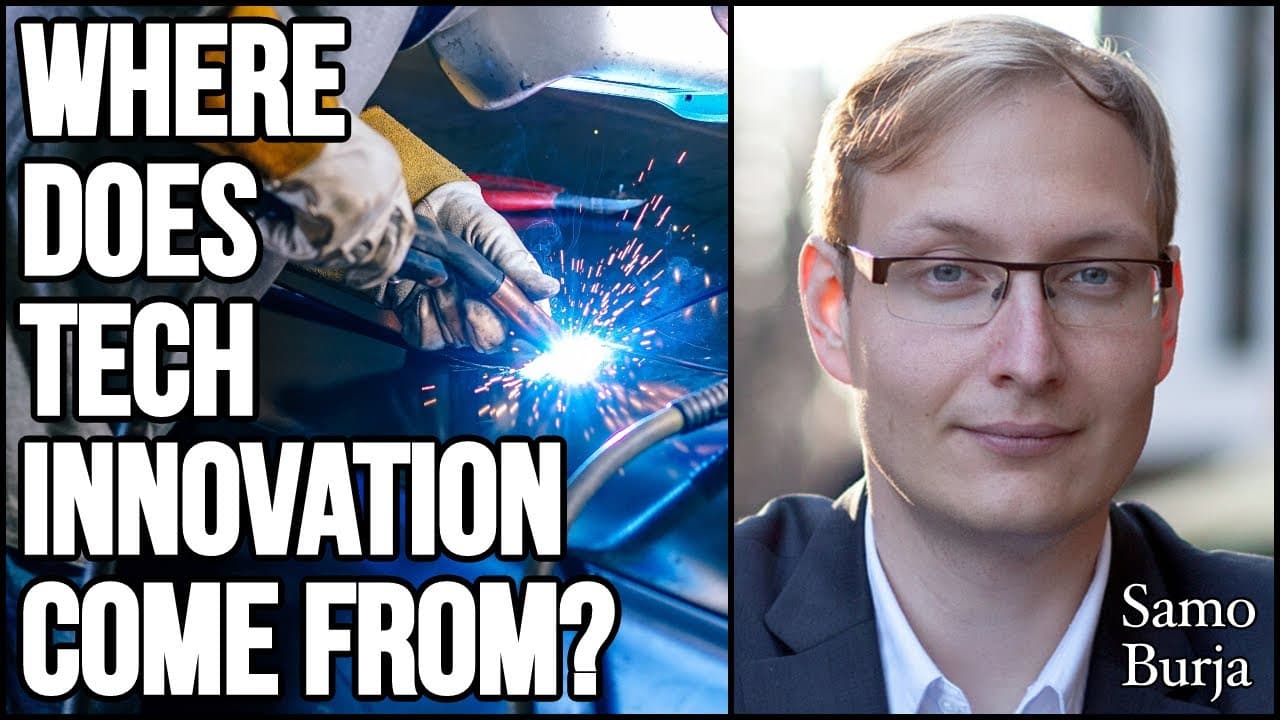
TL;DR
Technological progress is crucial for society, but adoption and societal acceptance are equally important for its success.
Transcript
our society is rightly proud of the material progress it has made of the last few centuries technological progress is not sufficient for a society fit for humans but it is an important and necessary component where does technological progress come from a vital distinction to understand is one of invention versus adoption both invention and adoption... Read More
Key Insights
- ❓ Technological progress requires both invention and social adoption.
- ❓ Social norms and acceptance can either facilitate or hinder technological progress.
- ❓ Tolerance towards eccentric individuals is crucial for invention, while recognition of something outside society is essential for adoption.
- 👶 Adoption involves making new technologies acceptable and integrating them harmoniously into the social fabric.
- 😌 Decision-making power for technology acceptance lies with influential individuals or founder archetypes.
- 😒 The value of new technologies lies in their usability and the decentralized incentive to use and maintain them.
- ❓ Some technologies have steadily advanced over thousands of years, while others are forgotten when centralized incentives disappear.
Install to Summarize YouTube Videos and Get Transcripts
Explore YouTube Video Summarizer or Get YouTube Transcript Extractor
Questions & Answers
Q: How can social norms affect technological progress?
Social norms can either facilitate or hinder technological progress. If society is unfriendly to innovators, they may face discrimination or even have their inventions outlawed. Therefore, societal acceptance and tolerance towards eccentric individuals are crucial for technological progress.
Q: What is the role of adoption in technological progress?
Adoption is essential for technological progress as it determines if a new technology will be used by society. The challenge lies in ensuring permissibility and incentive for adoption. It involves attaching the technology to acceptable social narratives and conventions, integrating it harmoniously into the social fabric, and determining the role of those maintaining and building the technology.
Q: Who gets to decide the acceptance of new technologies?
The acceptance of new technologies is influenced by various factors and stakeholders. However, the idea proposed is the need for a founder archetype, someone who understands how to organize the social fabric of society. They may use various means, such as religious epics or marketing campaigns, to teach and integrate the technology into society.
Q: What is the value provided by new technologies?
The value of new technologies lies in their usability and the incentive to use them. Some technologies, like small-scale metallurgy or advances in agriculture, provide inherent reasons for people to use and maintain them. However, technologies lacking decentralized incentives, like indoor plumbing, may be forgotten when centralized authorities collapse.
Summary & Key Takeaways
-
Technological progress requires both invention and adoption, with inventors conceiving new devices and society finding them economically or socially useful.
-
Social norms and technology can either facilitate or hinder invention and adoption.
-
Society's tolerance towards eccentric individuals and their dedication to the material world is crucial for invention, while adoption requires the recognition of something outside of society and the integration of new technologies into the social fabric.
Read in Other Languages (beta)
Share This Summary 📚
Summarize YouTube Videos and Get Video Transcripts with 1-Click
Try YouTube Summary with ChatGPT & Claude or YouTube Transcript Generator
Explore More Summaries from Samo Burja 📚






Summarize YouTube Videos and Get Video Transcripts with 1-Click
Try YouTube Summary with ChatGPT & Claude or YouTube Transcript Generator