Decision making and diagnostics - Tim Barnett MRCVS
TL;DR
Accurate diagnostics improve horse airway surgery outcomes.
Transcript
um so the second lecture before I hand over to Fabric is uh decision- making and diagnostics so basically how we identify these problems and I think um it's incredibly important to there's historically a lot of airway surgery was done on horses cuz it was done on horses and that's still the case let's not pull the wall over anybody's eyes there is ... Read More
Key Insights
- Accurate diagnostics are crucial for successful airway surgeries in horses, as many surgeries are performed without prior diagnostics, leading to suboptimal outcomes.
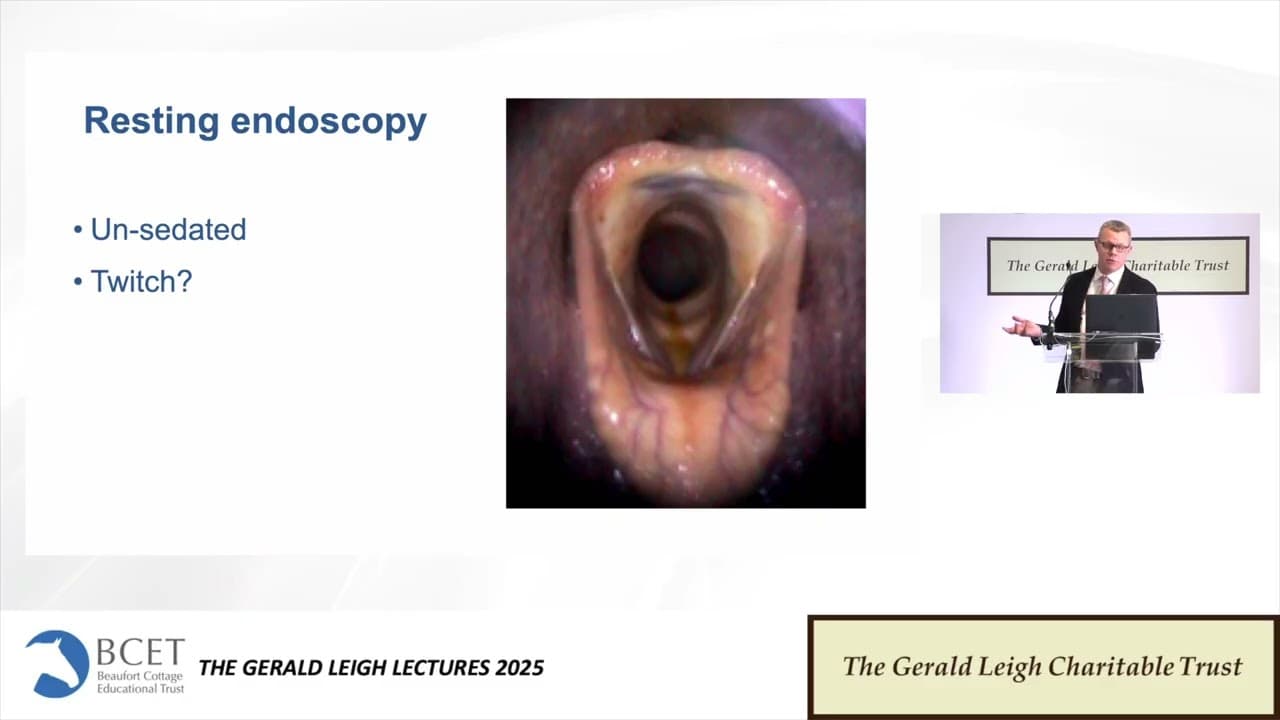
- Resting endoscopy is a common method to evaluate the upper airway in horses, but it is not always reliable, especially in diagnosing recurrent laryngal neuropathy.
- Exercising endoscopy provides a more accurate diagnosis of airway issues by observing the horse's performance during natural exercise conditions.
- Laryngal ultrasonography is becoming increasingly useful in diagnosing subtle conditions and aiding treatment decisions by assessing muscle atrophy and fibrosis.
- Sound analysis for diagnosing upper respiratory tract diseases in horses is still inconclusive despite research efforts, unlike the successful Merlin bird app for identifying birds.
- Overground endoscopy is preferred over high-speed treadmill endoscopy due to its natural assessment conditions, although it may result in false negatives if maximum exertion is not achieved.
- Management decisions post-diagnosis should consider the horse's future use, potential complications of surgeries, and economic factors, including time out of training.
- The prevalence of recurrent laryngal neuropathy in thoroughbreds is high, with studies suggesting 100% nerve presence, but only 25% become clinically significant.
Install to Summarize YouTube Videos and Get Transcripts
Explore YouTube Video Summarizer or Get YouTube Transcript Extractor
Questions & Answers
Q: Why is accurate diagnostics important before horse airway surgery?
Accurate diagnostics are crucial before horse airway surgery because many surgeries are performed without prior diagnostics, leading to suboptimal outcomes. By identifying the specific airway issues beforehand, the success rates of surgeries can be significantly improved, ensuring that the right surgical approach is taken and reducing the need for repeat procedures.
Q: What are the limitations of resting endoscopy in diagnosing horse airway issues?
Resting endoscopy, while commonly used, has limitations in accurately diagnosing horse airway issues. It is not always reliable, especially for conditions like recurrent laryngal neuropathy. Studies have shown that many horses appearing normal at rest may exhibit problems during exercise, and some horses with visible issues at rest may have different problems during exercise, necessitating more dynamic diagnostic methods.
Q: How does exercising endoscopy improve diagnosis accuracy?
Exercising endoscopy improves diagnosis accuracy by evaluating the horse's airway performance under natural exercise conditions. This method allows veterinarians to observe how the airway functions during actual exertion, providing a more realistic assessment of potential issues. It helps identify problems that may not be apparent during resting endoscopy, leading to more accurate and effective treatment plans.
Q: What role does laryngal ultrasonography play in horse airway diagnostics?
Laryngal ultrasonography plays a significant role in horse airway diagnostics by allowing for the assessment of muscle atrophy and fibrosis, which are indicators of conditions like recurrent laryngal neuropathy. This technique helps veterinarians make informed decisions about treatment options, such as whether to perform a nerve graft or other surgical interventions, based on the extent of muscle degeneration.
Q: Why is sound analysis not yet a reliable diagnostic tool for horse airway issues?
Sound analysis is not yet a reliable diagnostic tool for horse airway issues due to the complexity of accurately interpreting the sounds produced by the horse's airway. Despite research efforts, no conclusive evidence has been found to support its accuracy in diagnosing upper respiratory tract diseases. The variability in sound production and the influence of different conditions make it challenging to develop a standardized diagnostic approach using sound analysis.
Q: What are the advantages of overground endoscopy compared to treadmill endoscopy?
Overground endoscopy offers several advantages over treadmill endoscopy. It assesses the horse's airway under natural exercise conditions, providing a more realistic evaluation of performance. This method allows for the use of rider interventions and avoids the unnatural surface of a treadmill, which can affect the horse's gait and breathing. Additionally, it reduces reliance on large teams and specialized equipment, making it more practical for routine diagnostics.
Q: How do management decisions impact the treatment of diagnosed airway conditions?
Management decisions impact the treatment of diagnosed airway conditions by considering the horse's future use, potential complications of surgeries, and economic factors. Decisions should factor in the desired outcome, such as returning to racing or transitioning to a different career, and the risks associated with various surgical options. Economic considerations include the cost of surgery, time out of training, and the impact on the horse's competitive schedule.
Q: What is the prevalence of recurrent laryngal neuropathy in thoroughbreds?
The prevalence of recurrent laryngal neuropathy in thoroughbreds is high, with studies suggesting that 100% of nerves are present in these horses. However, only about 25% of cases become clinically significant, meaning they develop into a condition that affects the horse's performance. This highlights the importance of accurate diagnostics to identify and manage the condition before it impacts the horse's racing career or quality of life.
Summary & Key Takeaways
-
Accurate diagnostics are essential for improving the success rates of airway surgeries in horses. Resting endoscopy is common but not always reliable, especially for diagnosing recurrent laryngal neuropathy. Exercising endoscopy offers a more accurate diagnosis by evaluating the horse's performance under natural conditions.
-
Laryngal ultrasonography is increasingly used to diagnose subtle conditions and guide treatment decisions by assessing muscle atrophy and fibrosis. Sound analysis for upper respiratory tract diseases remains inconclusive, unlike the successful Merlin bird app for identifying birds.
-
Overground endoscopy is preferred over treadmill endoscopy due to its natural assessment conditions, though it may result in false negatives if maximum exertion is not achieved. Management decisions should consider future use, surgical complications, and economic factors, including training downtime.
Read in Other Languages (beta)
Share This Summary 📚
Summarize YouTube Videos and Get Video Transcripts with 1-Click
Try YouTube Summary with ChatGPT & Claude or YouTube Transcript Generator