Mid-Term Review

TL;DR
The review covers three types of questions on the exam (true/false/uncertain, multiple choice, and pset-style), key topics such as time preferences, risk preferences, social preferences, and examples of questions and answers.
Transcript
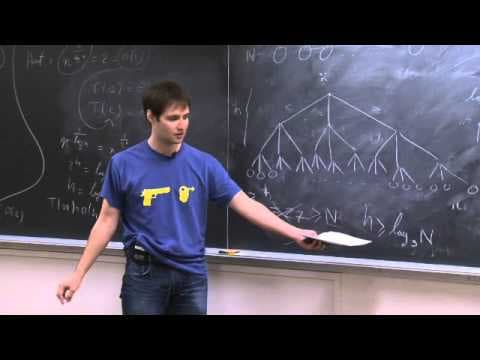
[SQUEAKING] [RUSTLING] [CLICKING] FRANK SCHILBACH: Welcome to the mid-term review of 14.13. Tonight, as I mentioned before, there will be three types of questions on the exam. There will be true/false/uncertain questions. These are questions where you're given a statement, and you can ascertain whether the statement is true or false or uncertain. T... Read More
Key Insights
- 🤲 The quality of answers on the exam is important, not just getting the correct answer.
- 🤳 Social preferences are influenced by social image concerns and self-image concerns.
- 🥺 Present bias can lead to preference reversals and suboptimal choices.
- ❓ Different discounting models (exponential, hyperbolic) have different implications for decision-making.
- 😒 The opt-in policy for laptop use aligns with the social planner's objective of maximizing utility.
Install to Summarize YouTube Videos and Get Transcripts
Explore YouTube Video Summarizer or Get YouTube Transcript Extractor
Questions & Answers
Q: What are the three types of questions on the exam?
The three types of questions on the exam are true/false/uncertain questions, multiple choice questions, and pset-style questions. Students should explain their answers for true/false/uncertain questions.
Q: What topics are covered under time preferences?
Time preferences include exponential and quasi-hyperbolic discounting models, estimating preferences, demand for commitment, and empirical applications.
Q: What is the expected utility model?
The expected utility model is a model of risk preferences that assumes individuals can assign utility values to different outcomes and make decisions based on expected utility.
Q: What evidence supports prospect theory?
Evidence such as risk aversion in the gain domain and risk lovingness in the loss domain supports prospect theory. The model explains preference reversals and diminishing sensitivity.
Summary & Key Takeaways
-
The exam will have true/false/uncertain questions, multiple choice questions, and pset-style questions.
-
Students are responsible for lectures, recitations, psets, and relevant readings up to lecture 12.
-
Time preferences: topics include exponential and quasi-hyperbolic discounting models, estimating preferences, demand for commitment, and empirical applications.
-
Risk preferences: expected utility model, risk aversion, concavity, measurement of risk aversion, and prospect theory.
-
Social preferences: dictator games, ultimatum games, trust games, evidence of social preferences, and preference reversals.
Read in Other Languages (beta)
Share This Summary 📚
Summarize YouTube Videos and Get Video Transcripts with 1-Click
Try YouTube Summary with ChatGPT & Claude or YouTube Transcript Generator
Explore More Summaries from MIT OpenCourseWare 📚


Summarize YouTube Videos and Get Video Transcripts with 1-Click
Try YouTube Summary with ChatGPT & Claude or YouTube Transcript Generator