How Are Shadows Formed by Light?
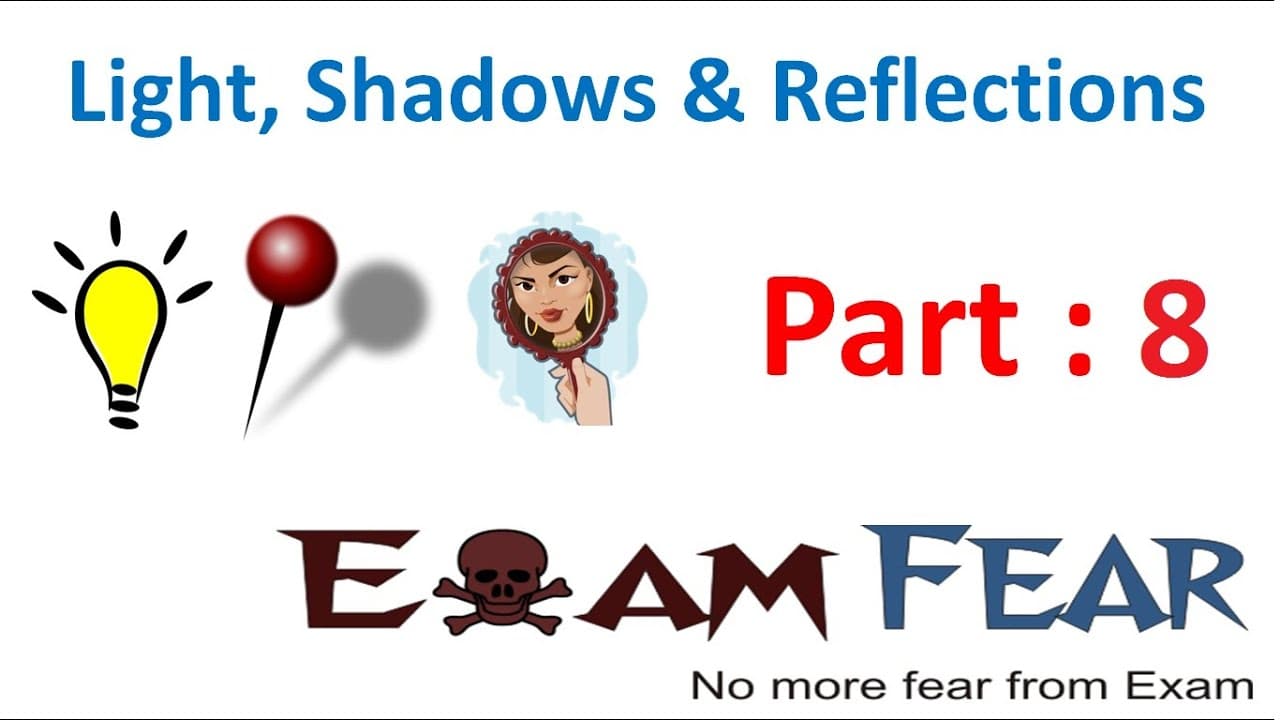
TL;DR
Shadows are created when opaque objects block light, resulting in a dark area where light cannot reach. The shape of a shadow is influenced by the angle and direction of the incoming light and may differ from the object's actual shape. Translucent objects can cast shadows too, but they are less distinct than those formed by opaque objects.
Transcript
hello friends this video on light shadows and reflection part 8 is brought to you by example calm no more fear from exam now we have been talking about images we have been talking about reflection but having ever noticed that with a lot of objects images are not formed rather shadows are formed so anyway these objects are placed in presence of ligh... Read More
Key Insights
- 🙂 Shadows are formed when light is blocked by opaque objects, creating a dark area.
- 😓 Translucent objects can also cast shadows, but the shadows formed by opaque objects are more distinct.
- 💠 The shape of a shadow depends on the direction and angle of the incident light, as well as the shape of the object casting it.
- 🙂 Transparent objects do not cast shadows because they allow light to pass through them.
- 🙂 Shadows can have different shapes than the objects casting them, depending on the orientation of the incident light.
- 🤗 Shadows can be used creatively to make shapes and images with hands or other objects.
- 🙂 The shape of a shadow can vary for the same object, depending on the orientation of the incident light.
Install to Summarize YouTube Videos and Get Transcripts
Explore YouTube Video Summarizer or Get YouTube Transcript Extractor
Questions & Answers
Q: What is a shadow?
A shadow is a dark area where light is blocked by an opaque object, preventing it from reaching that specific area.
Q: Can translucent objects cast shadows?
Yes, translucent objects can partially block light, resulting in shadows. However, the shadows formed by opaque objects are usually clearer.
Q: Why do transparent objects not cast shadows?
Transparent objects allow light to pass through them, so there are no areas where light is completely blocked, and therefore no shadows are formed.
Q: How is the shape of a shadow determined?
The shape of a shadow is determined by the direction and angle from which the light is incident on the object casting the shadow. It is not necessarily the same as the shape of the object.
Summary & Key Takeaways
-
Shadows are formed when light is blocked by opaque objects, creating a dark area where light cannot reach.
-
Translucent objects can also cast shadows, but the shadows formed by opaque objects are more distinct.
-
The shape of a shadow is not necessarily the same as the shape of the object casting it, and it depends on the direction and angle of the incident light.
Read in Other Languages (beta)
Share This Summary 📚
Summarize YouTube Videos and Get Video Transcripts with 1-Click
Try YouTube Summary with ChatGPT & Claude or YouTube Transcript Generator
Explore More Summaries from LearnoHub - Class 11, 12 📚



Summarize YouTube Videos and Get Video Transcripts with 1-Click
Try YouTube Summary with ChatGPT & Claude or YouTube Transcript Generator